Li Wei did not sleep the night the servers nearly melted.
He sat in a dimly lit office in Beijing, the hum of cooling fans vibrating through the floorboards. On his left monitor, a scrolling wall of green code signaled frantic, unprecedented traffic. On his right, a video was rendering. It was a five-second clip of a mythical creature—a dragon—weaving through neon-drenched skyscrapers, its scales catching the artificial light with terrifying realism.
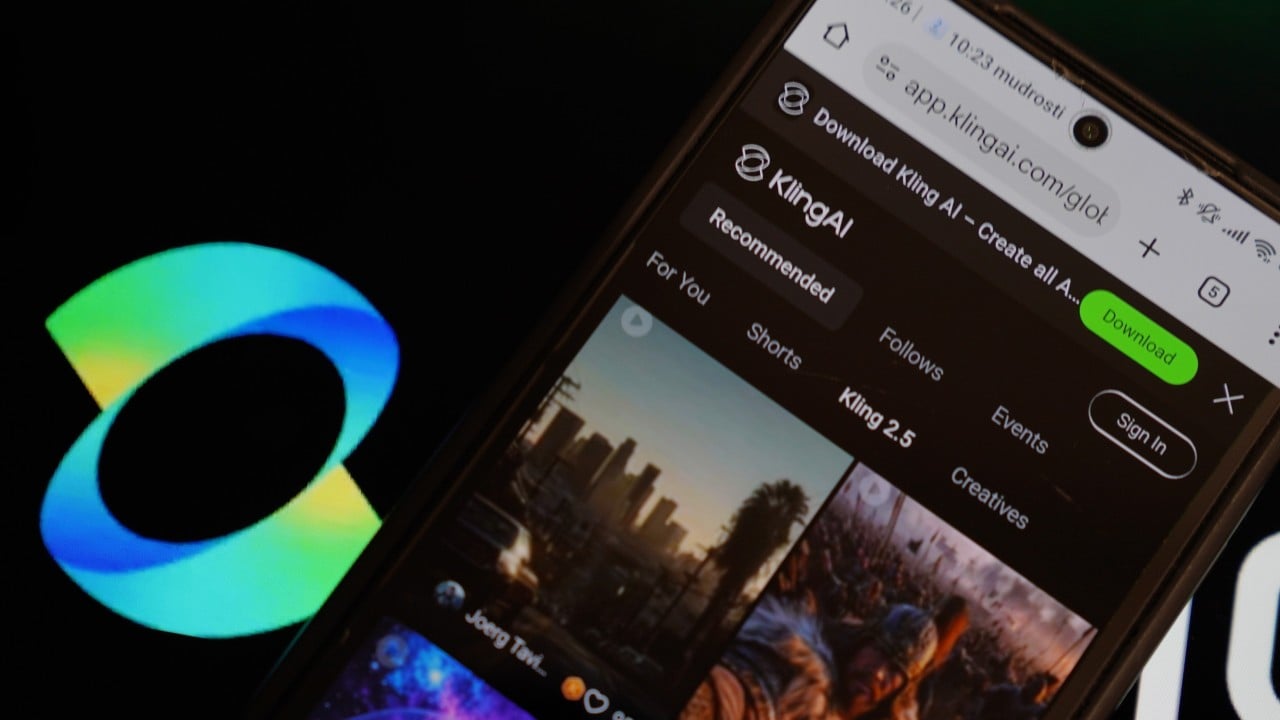
This was not a multi-million-dollar Hollywood studio production. It was the output of Kling AI, an artificial intelligence video generator built by Kuaishou Technology.
For years, Western tech giants treated Kuaishou as the scrappy, rural cousin of ByteDance’s TikTok. Kuaishou was the platform where farmers showed off their harvests, where street food vendors streamed their midnight rushes, and where small-town creators found an audience. It was deeply human, raw, and fiercely provincial. But while the world looked away, Kuaishou was quietly building an engine that would reshape the global creator economy.
When the quarterly financial results dropped, Wall Street analysts rubbed their eyes. Kuaishou hadn’t just beaten revenue estimates; it had shattered them. The driving force behind this financial surge was a staggering 300% explosion in revenue directly tied to Kling AI.
Numbers on a spreadsheet look clean. They look inevitable. They hide the sweat, the high-stakes gambles, and the invisible shift in how humanity creates art.
The Mirage of the Creative Monopoly
For the past few years, the narrative surrounding generative video had a distinct Western bias. Silicon Valley promised a revolution. We were told that Hollywood would be decentralized overnight by OpenAI’s Sora or a handful of heavily funded California startups. We waited. We watched highly curated, hyper-polished demos.
But you cannot eat a demo.
While the West guarded its research behind closed beta groups and waitlists, Kuaishou did something radically different. They gave the tool to the masses. They embedded Kling AI directly into an ecosystem already teeming with hundreds of millions of active users.
Think of it as the democratization of the paintbrush. If you give a complex tool only to elite artists, you get beautiful, rare masterpieces. If you give it to every person on the street, you get a cultural renaissance.
Consider a hypothetical creator named Xiao Chen. He runs a small online clothing store from a second-tier city in Sichuan province. He cannot afford a camera crew, a lighting director, or visual effects artists. Before Kling AI, his marketing consisted of static photos taken on his phone.
Now, Xiao Chen types a single sentence into his phone: A silk dress flowing in a hyper-realistic underwater ballroom, light fracturing through the surface.
Seconds later, he has a cinematic commercial. His sales double. Kuaishou’s ad revenue swells. Multiply Xiao Chen by ten million creators, and that 300% revenue jump stops looking like a statistical anomaly and starts looking like an economic tidal wave.
The Gravity of the Infrastructure
It is easy to get lost in the magic of the output. We see a hyper-realistic video and marvel at the intelligence of the machine. But AI does not exist in the ether. It is anchored to the earth by massive, power-hungry infrastructure.
Every time a user asks Kling AI to generate a video, a massive cluster of graphics processing units (GPUs) grinds into motion. They calculate the trajectory of light, the physics of hair, and the complex fluid dynamics of a splashing wave. This requires an astronomical amount of capital.
This is where the financial beat becomes critical. Kuaishou’s traditional business—short-form video ads and live-streaming e-commerce—served as the financial bedrock. It was the oxygen that allowed the AI experiment to breathe. Many AI startups are currently burning through venture capital with no clear path to profitability, essentially selling dollars for ninety cents. Kuaishou, conversely, built a closed loop. The core business funded the AI research, and the AI research immediately supercharged the core business by giving advertisers better tools to spend money.
The strategy worked because it understood human psychology. Creators do not want to leave their favorite app, log into a separate complex software platform, pay a heavy subscription fee, and then export the video back to their social media. They want to create, edit, and monetize in the same space where their audience already lives.
The Blur of Authenticity
This rapid acceleration brings a profound sense of vertigo. As an observer of this space, I feel the unease acutely. There is a specific, eerie beauty to these generated videos, but it comes with a lingering question: what happens to the value of human effort?
When we watch a traditional film, we subconsciously respect the labor behind it. We know a human cinematographer stood in the freezing rain to get that shot. We know an actor spent months preparing for that emotional breakdown. When that labor is compressed into a three-word text prompt, the relationship between the viewer and the art changes.
Yet, talking to creators on the ground reveals that they do not view this as a replacement. They view it as an equalizer.
The traditional gatekeepers of media—the production houses with big budgets and deep connections—no longer hold a monopoly on imagination. The kid in a rural village now has the same production value at their fingertips as a boutique agency in Shanghai or New York. The playing field hasn't just been leveled; it has been completely folded and reimagined.
The Quiet Giant
The financial markets are reactive. They see the 300% jump and talk about stock buybacks, average revenue per user, and operating margins. They treat Kuaishou’s triumph as a triumph of corporate efficiency.
But the real story is about momentum.
While the technology world spent months debating the ethics, the timelines, and the theoretical frameworks of AI video, Kuaishou built a functional, highly profitable reality. They proved that the true value of artificial intelligence is not found in how smart it is in a laboratory, but in how useful it is on the factory floor of the creator economy.
Back in the Beijing office, the clock ticked past 4:00 AM. Li Wei watched the final render of the dragon complete. It moved with a terrifying, fluid grace across the screen, a digital phantom born from code and computing power. He closed his laptop, the hum of the servers fading slightly as the morning shift prepared to take over.
The dragon was out of the laboratory. It was already running wild in the marketplace, and there was no turning back.