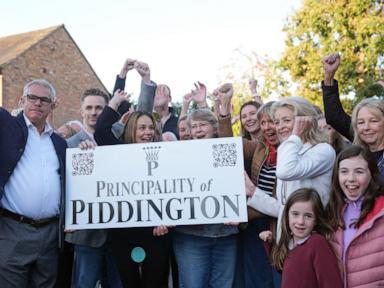
When a tiny Oxfordshire village decides to stage a mock referendum and declare independence from the rest of the country, people tend to laugh. But the situation in Piddington isn't a joke to the locals who live there. Facing government plans to drop over 1,200 single male asylum seekers onto a former Ministry of Defence storage site right next to a community of just a few hundred residents, residents did the only thing they felt they could do to grab headlines. They voted overwhelmingly to form the "Principality of Piddington".
It’s a symptom of a much deeper fracture in British politics. You can dismiss it as NIMBYism if you want, but ignoring the reality of rural infrastructure strain misses the point entirely.
The Anatomy of a Rural Protest
Piddington is a quiet village of roughly 350 people located about 15 miles outside Oxford. When word got out that the former Bicester MOD storage site was slated for conversion into a massive processing or housing facility for roughly 1,256 asylum seekers, panic set in.
The math alone terrifies locals. Dropping over 1,200 men into an area with negligible infrastructure means the local population profile shifts overnight. Local GP practices already lack spare capacity, sewage systems are ancient, and rural roads aren't built for heavy facility traffic.
So, organized by local campaigners, 312 residents cast ballots in a symbolic poll. 285 voted in favor of breaking away from the United Kingdom to pursue self-determination, while only 26 voted to stay. One ballot was spoiled. Sure, the vote had zero legal standing, and Whitehall didn't lose any sleep over losing Oxfordshire territory on paper. But it put a spotlight on how disconnected national housing strategies feel to small countryside towns.
The Clash Between Whitehall and the Countryside
Despite the protests, local outrage, and global media attention, the government pushed forward. Housing and Communities Secretary Angela Rayner officially granted full planning permission for the phased, temporary use of the site.
For the government, the logic is purely transactional. Finding space to house asylum seekers is an ongoing crisis, and empty military installations look like cheap, ready-made solutions on a spreadsheet.
Critics from across the political spectrum see it differently. Opposition figures and local members of parliament called the approval a disaster, arguing that rural communities are being forced to shoulder burdens they have no resources to handle. On the flip side, humanitarian groups like the Refugee Council point out that dumping thousands of men into isolated former military barracks isn't great for the asylum seekers either, often worsening social friction and isolation.
Why This Keeps Happening
Piddington is far from an isolated case. Whenever central authorities look at rural maps for vacant crown land or old barracks, local resistance follows a predictable script.
- The Announcement: Locals find out through media leaks or sudden planning notices rather than genuine community consultation.
- The Infrastructure Shock: Residents point out that local policing, healthcare, and sewage cannot support a sudden influx of hundreds or thousands of temporary residents.
- The Escalation: Town meetings turn fierce, leading to dramatic symbolic actions—like Piddington’s declaration of independence—to force politicians to listen.
- The Ministerial Override: Central government approves the project anyway, leaving rural voters feeling ignored and resentful.
This cycle deepens a profound cynicism toward national leadership. When small towns feel like their concerns are written off as mere obstructionism, political trust evaporates.
The "Principality of Piddington" might fade from the front pages now that planning permission is officially locked in, but the underlying friction isn't going away. Until urban-centric policymakers figure out how to build consensus and upgrade local infrastructure before dropping massive projects into tiny hamlets, expect more villages to look for ways to secede, if only in spirit.
A village fights back against an asylum facility plan
This news report covers the local perspective and grassroots protests in Piddington following the controversial village vote.