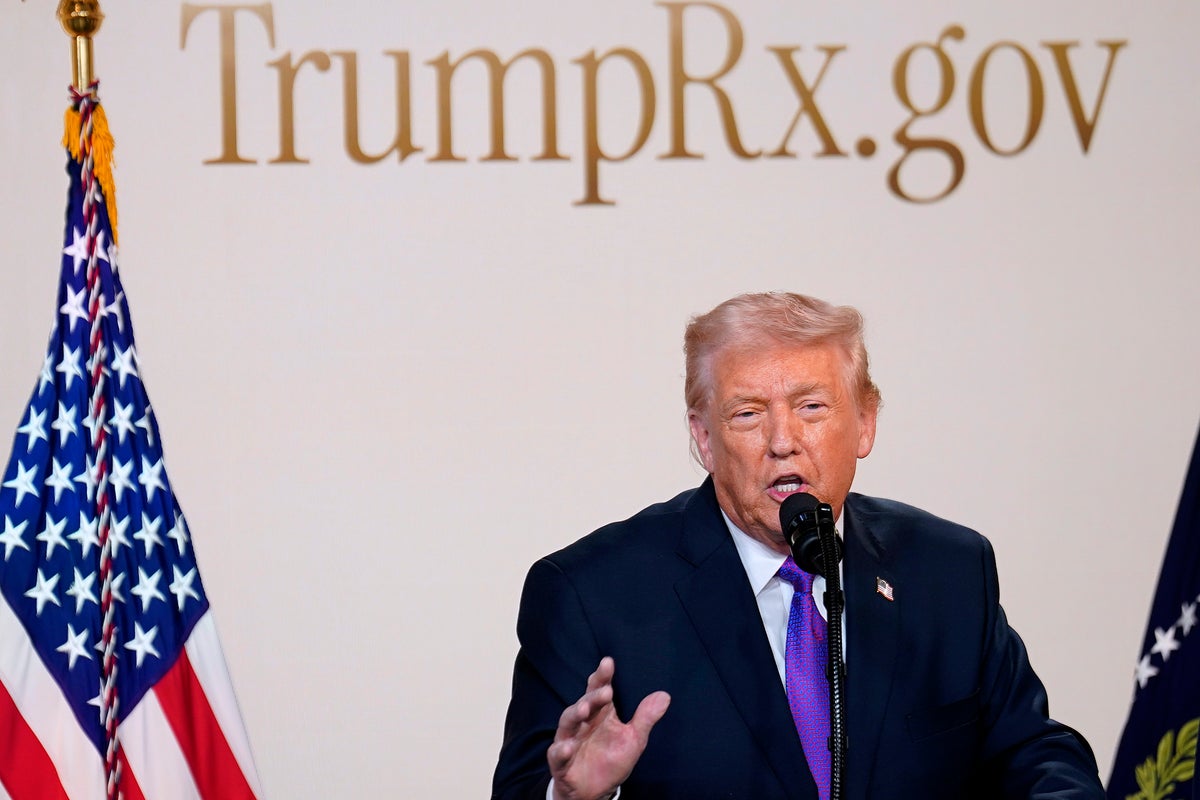
The discrepancy between executive branch rhetoric and pharmaceutical market behavior stems from a fundamental misunderstanding of the fiduciary obligations of publicly traded life sciences companies. While political narratives often frame drug pricing as a matter of "deals" or "handshakes," the actual movement of list prices is governed by a rigid interplay of patent lifecycles, pharmacy benefit manager (PBM) rebate structures, and the necessity of maintaining gross-to-net spreads. A Senate investigation into the outcomes of 2018-2020 drug pricing initiatives reveals that voluntary commitments from manufacturers to freeze prices are structurally incompatible with the current American healthcare reimbursement model.
The Structural Incentives for List Price Appreciation
Drug manufacturers do not set prices in a vacuum; they operate within a "gross-to-net" bubble where the list price (Wholesale Acquisition Cost or WAC) is increasingly divorced from the actual revenue the company realizes. To understand why companies raised prices despite public-facing agreements with the Trump administration, one must analyze the three primary levers of the pharmaceutical revenue function.
- Rebate Aggregation: PBMs often demand rebates that are calculated as a percentage of the WAC. If a manufacturer freezes its list price, it loses the ability to increase the rebate percentage to maintain "preferred" status on a formulary without eroding its own net price.
- The Patent Expiration Velocity: As a drug nears its loss of exclusivity (LOE), manufacturers typically accelerate price increases to maximize the Net Present Value (NPV) of the asset before generic entry collapses the market share.
- Operational Expenditure Recoupment: High-margin legacy products often subsidize the R&D burn of early-stage pipelines. When a voluntary price freeze is implemented, it creates a capital allocation bottleneck for the next generation of therapeutics.
The Senate report highlights that while companies like Pfizer, Novartis, and others initially signaled cooperation with the administration’s "American Patients First" blueprint, the actual data showed mid-year or subsequent year price hikes. This was not necessarily a breach of contract—as no legally binding contracts existed—but rather a reversion to the mean of market-driven pricing logic.
The Failure of Jawboning as a Regulatory Tool
Political "jawboning"—the use of public pressure to influence private sector behavior—fails in the pharmaceutical sector because it lacks the enforcement mechanisms of formal rulemaking or legislative reform. The 2018-2020 period relied on social signaling rather than statutory change. This created a bifurcated reality where public relations departments issued statements of cooperation while treasury departments executed price adjustments required to hit quarterly earnings targets.
The "deal" struck was essentially a tactical delay. Manufacturers utilized the optics of a price freeze to stall more aggressive legislative interventions, such as international reference pricing or direct Medicare negotiation. Once the immediate political pressure subsided or the news cycle shifted, the underlying economic pressures (inflation, supply chain overhead, and shareholder expectations) forced a correction.
Quantifying the Inflationary Gap
The Senate Permanent Subcommittee on Investigations found that despite the administration's claims of "historic" price decreases, the reality was a net increase across several hundred National Drug Codes (NDCs). The logic of these increases follows a specific pattern:
- Asymmetric Pricing: Companies frequently froze prices on high-visibility, "blockbuster" drugs that were under heavy media scrutiny while simultaneously raising prices on less-visible, specialty medications where the patient population is smaller but the per-unit profit is significantly higher.
- The January Effect: Pharmaceutical companies traditionally implement price hikes in January and July. Even when companies agreed to "postpone" a July hike, they often compensated by implementing a larger-than-average increase the following January. This maintains the Compound Annual Growth Rate (CAGR) of the product’s revenue stream regardless of the temporary pause.
The PBM Bottleneck and the Net Price Illusion
A critical oversight in the analysis of the Trump-era drug deals is the role of the Pharmacy Benefit Manager. The administration's focus was almost exclusively on the manufacturer, ignoring the intermediaries that capture a significant portion of the "spread."
In the current ecosystem, a manufacturer may increase its list price by 10%, but after accounting for rebates, fees, and discounts paid to PBMs and insurers, the net price realized by the manufacturer might actually decrease or stay flat. However, the patient's co-insurance is often calculated based on the list price. Therefore, a manufacturer could technically "lower" their take-home revenue while the consumer still sees an increase in out-of-pocket costs at the pharmacy counter. This misalignment means that any "deal" focusing solely on list prices without addressing the rebate system is fundamentally flawed and incapable of delivering broad consumer relief.
The Limitations of Voluntary Transparency
Transparency alone does not lower prices; it merely documents their rise. The administration’s push for including list prices in television advertisements—a policy eventually struck down in court—was based on the assumption that "shaming" would drive down costs.
In a standard consumer market, price transparency works because the consumer is the payer and has the power of substitution. In the pharmaceutical market:
- The Patient is not the Payer: Insurance companies and employers foot the bulk of the bill.
- Inelastic Demand: For life-saving medications (e.g., insulin, oncology drugs), there is no price point at which a patient will simply choose not to "consume" the product if they have the means to pay.
- Lack of Substitution: Patent protection prevents competitors from offering a lower-priced version of the exact same molecule, rendering traditional "price shopping" impossible for the most expensive therapies.
Strategic Implications for Future Policy
The data from the Senate report suggests that "gentlemen's agreements" between the executive branch and industry leaders are an ineffective substitute for structural reform. To achieve a measurable reduction in the cost of care, the focus must shift from optics-based negotiation to the underlying mechanics of the market.
Rebate Reform and Net-Price Alignment
The decoupling of PBM compensation from the list price of drugs is the only way to remove the incentive for manufacturers to constantly inflate the WAC. If PBMs were paid a flat service fee rather than a percentage of the "spread," the pressure on manufacturers to hike list prices to maintain formulary position would evaporate.
Automatic Triggers for Patent Extension
Instead of voluntary freezes, a more rigorous framework would involve tying patent longevity to pricing stability. For instance, a manufacturer that exceeds a certain threshold of annual price increases (e.g., CPI + 2%) could face a mandatory reduction in their period of market exclusivity. This creates a quantifiable trade-off: short-term price gains versus long-term market dominance.
Direct Price Negotiation vs. Reference Pricing
The shift from the Trump administration's "Most Favored Nation" model to the direct negotiation model seen in subsequent legislation (such as the Inflation Reduction Act) acknowledges that the U.S. government, as the largest purchaser of drugs through Medicare and Medicaid, must exercise its monopsony power. Relying on "deals" assumes the government is a mediator; direct negotiation assumes the government is a market participant.
The Competitive Response Landscape
Pharmaceutical companies are currently re-tooling their pricing strategies to account for a more litigious and investigative environment. We are seeing a move away from broad, annual price hikes across an entire portfolio toward more targeted "value-based" pricing. Under this model, a company justifies a high price point based on the avoided costs of other healthcare interventions (e.g., a $2 million gene therapy that prevents a lifetime of $100,000-a-year treatments).
However, even value-based models do not address the immediate cash-flow burden on the healthcare system. The strategic play for stakeholders is no longer to wait for a "deal" or a "handshake" from Washington. Instead, the focus must be on the internal cost-benefit analysis of each drug. Payers are increasingly utilizing "Institute for Clinical and Economic Review" (ICER) benchmarks to determine if a drug’s price aligns with its clinical utility.
The era of the "unrestricted hike" is ending, not because of political pressure, but because the gap between list prices and the actual ability of the system to pay has reached a breaking point. Manufacturers that do not proactively align their pricing with clinical outcomes and net-price reality will find themselves excluded from formularies, regardless of their public-facing promises to the executive branch.
The move forward requires a clinical detachment from the rhetoric of "lowering prices" and a shift toward managing the total cost of care. This involves a rigorous audit of the supply chain, a removal of the PBM "kickback" incentives, and a legislative framework that treats drug pricing as a structural economic challenge rather than a personality-driven negotiation.