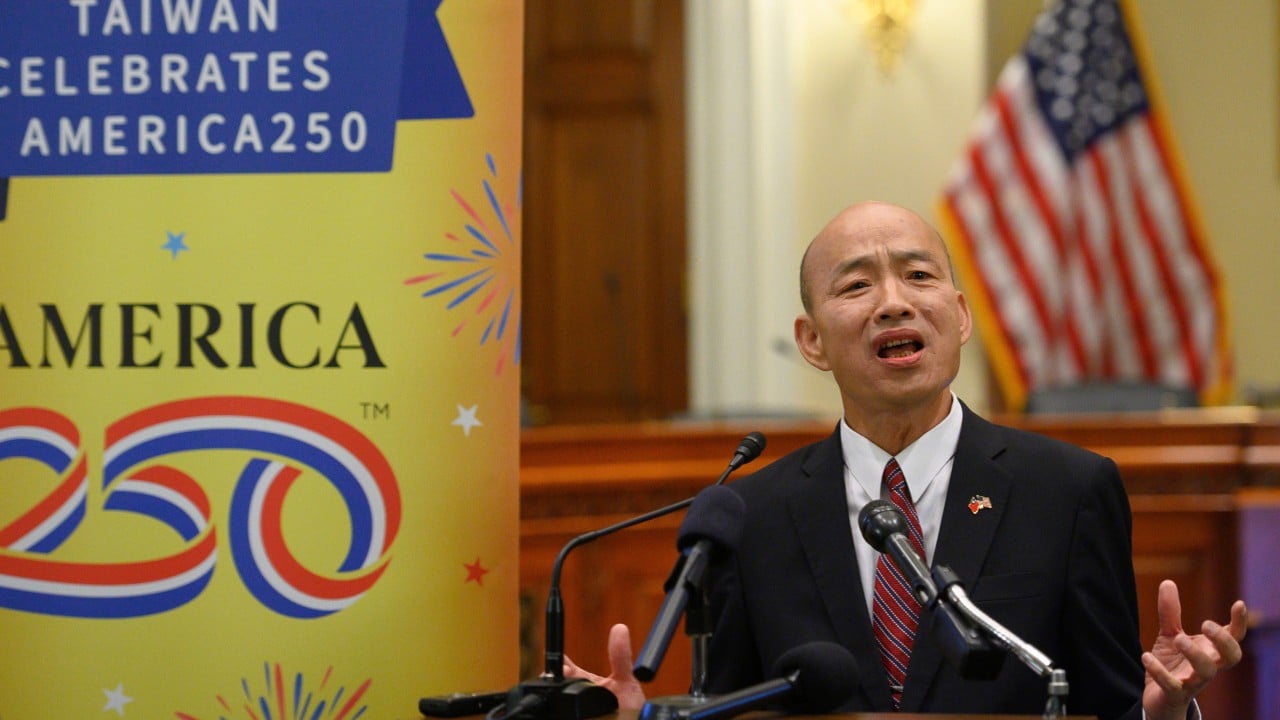
When Taiwan Legislative Yuan Speaker Han Kuo-yu touched down in Washington this week, the political commentators quickly fell back on their favorite narrative. They framed the high-profile reception on Capitol Hill as a calculated American play to sway Taiwan's opposition party, the Kuomintang (KMT). It makes for a great headline. The problem is, it totally misreads how Washington actually handles Taipei.
Let's look at the facts. Han did not travel alone as a solo KMT rogue agent. He led an eight-person cross-party delegation that included three lawmakers from the ruling Democratic Progressive Party (DPP) and one from the Taiwan People's Party (TPP). More than 30 U.S. House representatives, from progressive Democrat Nancy Pelosi to conservative Republican Michael McCaul, packed into the Longworth House Office Building to welcome them.
Washington is not trying to buy off the KMT or play favorites in Taiwan's domestic theater. This is about institutional deterrence, microchips, and a clear signal to Beijing that American support remains absolute, no matter who holds the gavel in Taipei.
The Real Reason Capitol Hill Opened Its Doors
American foreign policy toward Taiwan operates on a single track: institutional continuity. When U.S. lawmakers roll out the red carpet for Taiwan's legislative speaker, they are respecting the office, not treating the individual as a political asset to be converted.
Han's visit happened during a precarious geopolitical moment. The Trump administration is currently reviewing a massive $14 billion arms sales package to Taiwan. Beijing is watching like a hawk. By welcoming Han with public declarations of love and solidarity, U.S. officials showed China that a change in Taiwan's legislative majority does not equal a crack in the U.S.-Taiwan partnership.
The opposition KMT has spent months fighting internally over national defense spending and cross-strait policy. Some party factions have actively blocked national security bills and defense budgets back home. If Washington wanted to punish the KMT for dragging its feet on defense, it could have ignored Han. Instead, U.S. leaders chose engagement. Senator Dan Sullivan previously called out the KMT over defense budget delays, yet the willingness of U.S. policymakers to sit down with KMT leadership demonstrates a practical reality: you work with the leaders the Taiwanese people elect.
Silicon over Sovereignty
Before Han and his colleagues even arrived in Washington, they made a critical pit stop in Phoenix, Arizona. Why? To tour the sprawling manufacturing complex belonging to Taiwan Semiconductor Manufacturing Co. (TSMC).
Taiwan has quietly surpassed Germany to become the fourth-largest trading partner of the United States. That staggering statistic is fueled almost entirely by advanced microchips that run everything from smartphones to artificial intelligence infrastructure.
U.S. Top Trading Partners (By Recent Tech-Driven Volume)
1. Canada / Mexico
2. China
3. Japan
4. Taiwan (Surpassed Germany)
The economic reality makes any hand-wringing about "swaying the KMT" irrelevant. The U.S. needs Taiwan's tech ecosystem to remain secure, open, and stable. Han notes that on the international stage, Taiwan feels "very lonely in its heart" due to Beijing systematically blocking it from global bodies like the World Health Organization. The economic ties are the life support system keeping Taiwan integrated globally.
The Three Camps in the KMT Washington Rush
Han isn't even the only KMT heavyweight who booked a ticket to the U.S. recently. In fact, he is the third major party figure to head west just this year.
- The Party Chair: Cheng Li-wun spent 15 days touring the U.S. earlier this month trying to smooth things over after her highly publicized trip to Beijing to meet Xi Jinping.
- The Southern Hope: Taichung Mayor Lu Shiow-yen made her own trip across the Pacific back in March to build up her international credentials ahead of the 2028 presidential race.
- The Institutional Speaker: Han Kuo-yu used the cover of a cross-party delegation to play the statesman, keeping the focus entirely on bipartisan trade and security.
These overlapping trips expose the real dynamic at play. Washington isn't chasing the KMT; the KMT is desperately chasing Washington's stamp of approval. The opposition knows it cannot win a presidential election in Taiwan if the electorate thinks the party will compromise the island's vital relationship with the United States.
What Happens Next on the Ground
Forget the grand theories about diplomatic manipulation and look at the actionable realities established by this visit.
First, keep a close eye on the $14 billion arms package review. Bipartisan members of Congress used Han's presence to publicly pressure the White House to clear those weapons for delivery without further delays. The legislative branch is using these meetings to lock in defense commitments, regardless of executive branch hesitation.
Second, watch the skies. Han's delegation is scheduled to return to Taipei on an inaugural, nonstop EVA Air flight directly connecting Washington Dulles to Taoyuan International Airport. It is a highly symbolic piece of infrastructure. Commercial logistics and deep tech supply chains are fastening these two societies together faster than political disagreements can pull them apart.
The U.S. is not trying to bend Taiwan's opposition party to its will. It is simply showing everyone in Taipei that the guardrails of the relationship are firmly bolted into the floorboards of Capitol Hill.