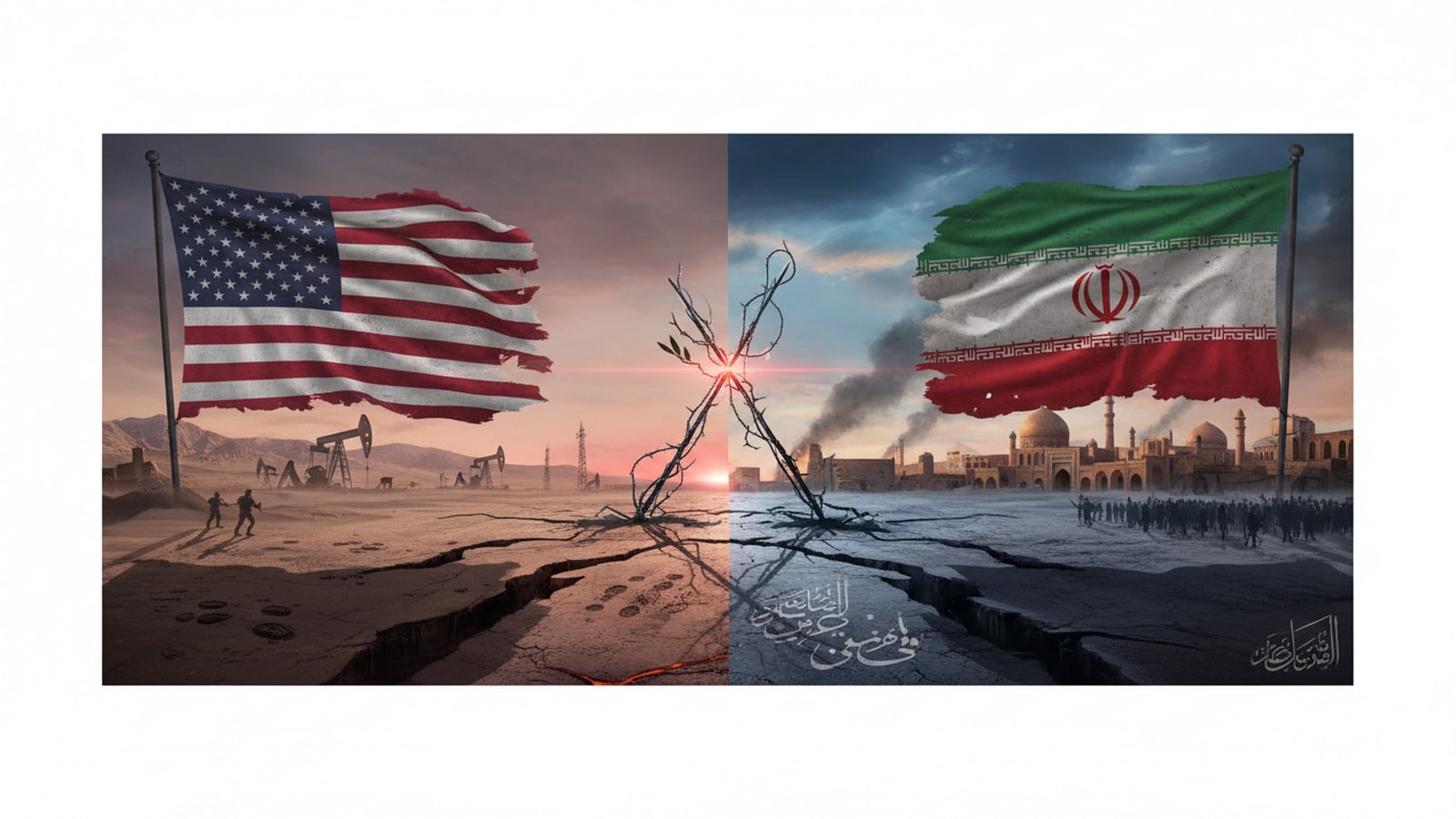
The fragile interim deal between Washington and Tehran is effectively dead, and you shouldn't be surprised.
Over the weekend, U.S. Central Command went all out. American fighter jets, warships, and drones pounded over 140 targets across Iran. It's the most intense wave of strikes we've seen since the conflict flared back up. President Donald Trump didn't mince words either, flatly declaring on national television that the United States "bombed the hell out of them." For another look, see: this related article.
But if you turn on the news, you're likely seeing a confusing mess of conflicting reports. Washington says the Strait of Hormuz is wide open. Tehran swears it's locked down tightly. What's actually happening in the world's most critical maritime chokepoint isn't just a localized firefight. It's a fundamental disagreement over who owns the rules of global trade.
The Chaos on the Water
Let's look at what triggered this latest round of violence. The Islamic Revolutionary Guard Corps (IRGC) Navy targeted the M/V GFS Galaxy, a Cyprus-flagged container ship transiting the strait. Iran claims they merely fired "warning shots" because the vessel was taking an unauthorized route and ignored orders. Similar insight regarding this has been shared by The Washington Post.
The reality? The ship didn't just get a warning. It caught fire, suffered massive engine room damage, and a civilian crew member is missing.
Strait of Hormuz Escalation Tracker (July 2026)
-----------------------------------------------------------
June 17: U.S. and Iran sign interim deal to open the strait
June 20: Iran closes strait, alleging diplomatic violations
June 25: Iranian drone strikes commercial vessel
July 8:  President Trump declares the ceasefire "over"
July 12: U.S. hits 140 targets; Iran retaliates across Gulf
-----------------------------------------------------------
Immediately after the ship was hit, the IRGC announced the Strait of Hormuz was closed until further notice. Then the American bombs started dropping on coastal bases, missile sites, and communications towers in Bandar Abbas, Qeshm Island, and Bushehr.
This isn't a minor skirmish. It's an outright battle for control.
The Illusion of the Open Waterway
Here is what most people miss about the Strait of Hormuz. The U.S. military keeps insisting that shipping traffic is flowing normally. Technically, they aren't lying. Some heavily armed or incredibly brave vessels are still making the transit under the watchful eye of Western navies.
But talk to anyone running a commercial maritime fleet, and they'll tell you a different story.
Insurance rates for transit have gone through the roof. Energy analysts at places like Rystad Energy note that major tanker traffic has essentially ground to a halt because nobody wants to risk a multi-million dollar hull in a war zone. When the U.S. says the strait is open, they mean they are keeping it open by force. When Iran says it's closed, they mean they've made it too dangerous for normal commerce to exist. Both things are true at the same time.
Why the June Interim Deal Failed
It's tempting to think this escalation came out of nowhere, but the cracks were forming back when the interim deal was signed on June 17. Under that memorandum of understanding, Iran agreed to keep the strait open in exchange for a partial lifting of naval blockades and a seat at the negotiating table in Qatar.
It sounded great on paper. It failed miserably in practice.
Iran thinks it has the legal right to dictate shipping lanes inside the strait. Mohammad Bagher Ghalibaf and other Iranian officials have pointed to clauses in their diplomatic agreements suggesting Iran is responsible for "making arrangements" for maritime traffic. They view the northern half of the strait as their territorial waters.
The U.S. views the strait as an international waterway where freedom of navigation is absolute. You can't bridge a diplomatic gap that wide. Every time Iran tried to police a ship, Washington saw it as piracy. Every time the U.S. protected a ship, Tehran saw it as an invasion.
The Regional Spillover is Already Here
If you think this is contained to a tiny strip of water between Iran and Oman, think again. The IRGC didn't just take the American strikes lying down. Over the last 24 hours, they launched an aggressive, coordinated response hitting back at what they view as America's regional launchpads.
- Kuwait: The IRGC claimed direct missile strikes on two military airbases, targeting Patriot missile defense batteries and radar installations.
- Bahrain: Alarm sirens blared in Manama as projectiles targeted the Sheikh Isa Air Base, hitting helicopter maintenance hangars.
- Jordan and Oman: Iranian state media claimed successful strikes against logistical support hubs used by the U.S. Navy, including the Port of Duqm.
- Qatar: Ballistic missiles were fired toward the sprawling Al Udeid Air Base, forcing regional air defenses into overdrive.
This is exactly how a localized maritime dispute turns into a regional war. Allies like the UAE and Qatar are busy intercepting incoming missiles, while oil markets are panicking, pushing crude prices up over 3% in a matter of hours.
What You Should Do Next
If you're managing supply chains, trading energy commodities, or just trying to figure out how this impacts your wallet, stop looking at the daily political rhetoric. Focus on the hard operational realities instead.
First, reroute your logistics immediately if you have any exposure to Persian Gulf shipping. Relying on the strait right now is a gamble you'll lose. Look toward overland routes through Saudi Arabia or alternative ports outside the chokepoint if possible.
Second, prepare for prolonged energy volatility. Brent crude is already flirting with the $80 mark again, and with U.S. Central Command digging in for a long campaign to "degrade" Iranian capabilities, those prices aren't coming down anytime soon.
The U.S. military has the firepower to keep blasting Iranian radar towers and small boats. They can keep the shipping lanes physically clear. But they can't force commercial insurance companies to cover the ships, and they can't stop Iran from launching missiles at the ports next door. The battle for the Strait of Hormuz is no longer about diplomacy. It's about endurance.


