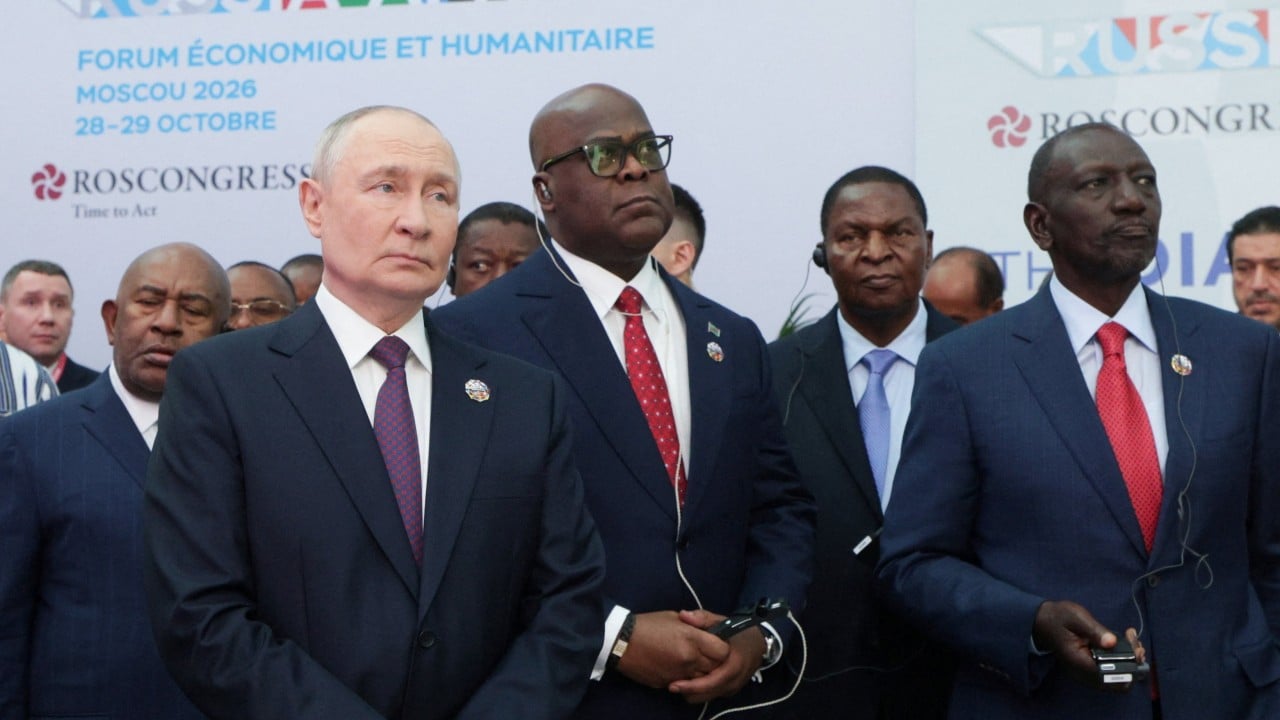
Vladimir Putin stood before delegates from 48 African nations in Moscow this past October and delivered a familiar, punchy message. Russia, he claimed, is Africa's premier partner against a "colonial" West still trying to trap the continent in debt and strip its natural wealth.
It makes for great headlines. Honestly, it plays well in rooms where memories of European extraction aren't ancient history—they're living memory.
Yet if you look past the Kremlin's stagecraft from the October 28–29, 2026 summit, a completely different reality emerges. The real story isn't that Russia is replacing the West in Africa. It's that African leaders are treating Moscow like just another vendor in a crowded marketplace, taking the cheap grain and security deals while ignoring the ideological lecture.
The Math Behind Russia's Anti-Colonial Pitch
Speeches don't build railways or fund hospitals. Money does. And when you look at the actual balance sheets between Russia and Africa, Moscow's grand rhetoric runs straight into a brick wall.
Back at the inaugural 2019 summit in Sochi, Putin promised to double Russia-Africa trade to $40 billion within five years. He missed that mark by a mile. According to data analyzed by the European Council on Foreign Relations, Russia's total goods trade with the entire African continent sat at roughly $27 billion in 2025—about the same amount Russia trades with Kazakhstan alone.
Compare that to the "colonial" powers Putin spent two days attacking. EU-Africa goods trade hit €356 billion over the same period. Even more telling is foreign direct investment. Russia accounts for less than 1% of Africa's inward investment stock, trailing far behind China, the European Union, and the United States.
- Trade volume gap: At roughly $27.8 billion in recent tallies, Russia remains a second-tier economic player compared to China and Europe.
- Revised targets: Having missed the $40 billion goal, Moscow pushed the goalpost out to $50 billion by 2030 during the October 2026 meetings.
- Local processing claims: Putin told delegates that Russian firms don't engage in predatory extraction and instead build local processing facilities to create jobs and tax revenue. In practice, Russian commercial ventures across the continent remain heavily concentrated in raw mining concessions and state-backed energy contracts.
Why African Leaders Still Showed Up in Moscow
If the investment numbers are so thin, why did delegations from 48 countries—including 22 heads of state, alongside African Union Chairman-in-Office Evariste Ndayishimiye—fly to Moscow?
Because African foreign policy in 2026 isn't about picking a Cold War side. It's ruthlessly transactional.
First, look at the attendance drop. In 2019, 43 African heads of state attended the first summit. By the second summit in 2023 and this third gathering in October 2026, head-of-state attendance had shrunk by nearly half. Many presidents sent lower-level ministers instead. They showed up because showing up costs nothing and keeps diplomatic options open, especially when Washington and Brussels demand alignment on global conflicts.
Second, Russia actually delivers in two narrow, critical sectors: food and fertilizer.
Putin noted during the plenary session that Russia supplied 13 million metric tons of agricultural products to Africa in the first nine months of 2026 alone, serving more than 40 countries. Russian agricultural exports to the continent jumped 35% in value during the first half of 2026 compared to 2025, reaching $2.9 billion. For governments facing domestic inflation and climate-driven crop shocks, discounted Russian wheat and fertilizer aren't ideological tokens—they're political survival tools.
The Friction Nobody Mentions on Stage
Of course, there's a massive contradiction sitting right in the middle of Moscow's food security pitch. Russia's ongoing war in Ukraine is the very reason Black Sea shipping lanes and Ukrainian grain exports remain disrupted, driving up global food volatility in the first place. African leaders know this. They'll buy the discounted Russian grain while privately pressing Moscow to stop choking off competing supplies.
Even worse for Moscow's image is the quiet outrage over military recruitment. Across countries like Kenya and South Africa, revelations that African citizens have been recruited—often under false pretenses—to fight in Russia's war in Ukraine have triggered government investigations and public backlash. You can't preach anti-colonial solidarity on Wednesday while sending young African men to die in a European trench war on Thursday.
Security Deals and Nuclear Promises
When Western analysts talk about Russian influence in Africa, they usually obsess over mercenaries and arms sales. That picture is changing fast, too.
Russia's security footprint in the Sahel—spanning Mali, Burkina Faso, and Niger—remains its loudest calling card. Moscow reopened its embassy in Burkina Faso and deployed additional military instructors after Ouagadougou's ruling junta cut ties with France. Yet according to Chatham House, Russian global arms exports dropped by 64% between 2021 and 2025, leaving Russia third behind both the US and China in major arms supplies to Africa. The war in Ukraine is eating up Russia's own factory output, and Russian paramilitary deployments in the Sahel haven't actually stopped insurgent violence from spreading.
To compensate for shrinking conventional arms deliveries, the Kremlin spent the October 2026 summit pitching long-term infrastructure and nuclear energy:
- Floating and land-based nuclear plants: Officials from Rosatom, Russia's state nuclear corporation, announced talks with multiple African governments to build nuclear power stations, including coastal floating reactors.
- Sanctions-evasion manufacturing: Putin openly invited African nations to host Russian production plants—a move explicitly aimed at helping Russian companies bypass Western sanctions while pitching local industrial growth to host governments.
- Institutional seat-sharing: Moscow backed calls for greater African representation at the International Monetary Fund and the World Bank, tapping into genuine frustration over how global financial rules are written.
Here's the catch with Rosatom's nuclear diplomacy. Agreements are easy to sign at a summit; reactors take decades and billions of dollars to finish. Egypt's El Dabaa nuclear plant is still under construction, and Ethiopia's nuclear agreement remains in its early prospective stages. Until concrete gets poured and grids light up, nuclear cooperation stays mostly on paper.
How African Publics Actually View Moscow
If you only watch state media clips from the Kremlin, you'd think Africans are cheering Russia's confrontation with the West. The polling tells a much cooler story.
An Afrobarometer survey across 38 African countries found that public perception of Russian influence lagged noticeably behind China, the United States, and the European Union. Even more striking, 72% of respondents who knew about the war in Ukraine said their country should remain strictly neutral.
Africans aren't buying the "Russia as savior" narrative. They've seen foreign powers promise liberation before, only to extract minerals and leave behind debt. As analyst Tighisti Amare at Chatham House pointed out ahead of the summit, Russia's own foreign ministry admitted earlier in 2026 that previous summits produced far more declarations than actual deals.
What Smart Observers Should Watch Next
If you're tracking geopolitics, trade, or emerging markets across Africa, stop reacting to Putin's anti-Western soundbites and start watching the execution metrics over the next 12 months.
- Track ratified contracts, not summit declarations. The 2026 summit produced joint statements and a 2027–2029 action plan, including a declaration on AI cooperation. Ignore the press releases and watch whether sovereign wealth funds or commercial banks actually finance those projects.
- Watch local-currency payment mechanisms. Russia's biggest hurdle in Africa isn't diplomatic resistance—it's Western banking sanctions that make dollar and euro settlements a nightmare. Until Moscow and African central banks build functional local-currency clearing systems, bilateral trade will stay stuck near that $27 billion ceiling.
- Follow the Gulf and Asian alternatives. African governments aren't choosing between Paris and Moscow anymore. They're signing port deals with the UAE, battery mineral agreements with China, and tech partnerships with India. Watch how African negotiators use Russia's presence in the room simply to extract better financing terms from Brussels, Washington, and Beijing.
For deeper context on the speeches from Moscow, you can watch Putin's remarks on Western hypocrisy at the Russia-Africa Summit, which highlights the exact anti-colonial framing the Kremlin used to court delegates in October 2026.