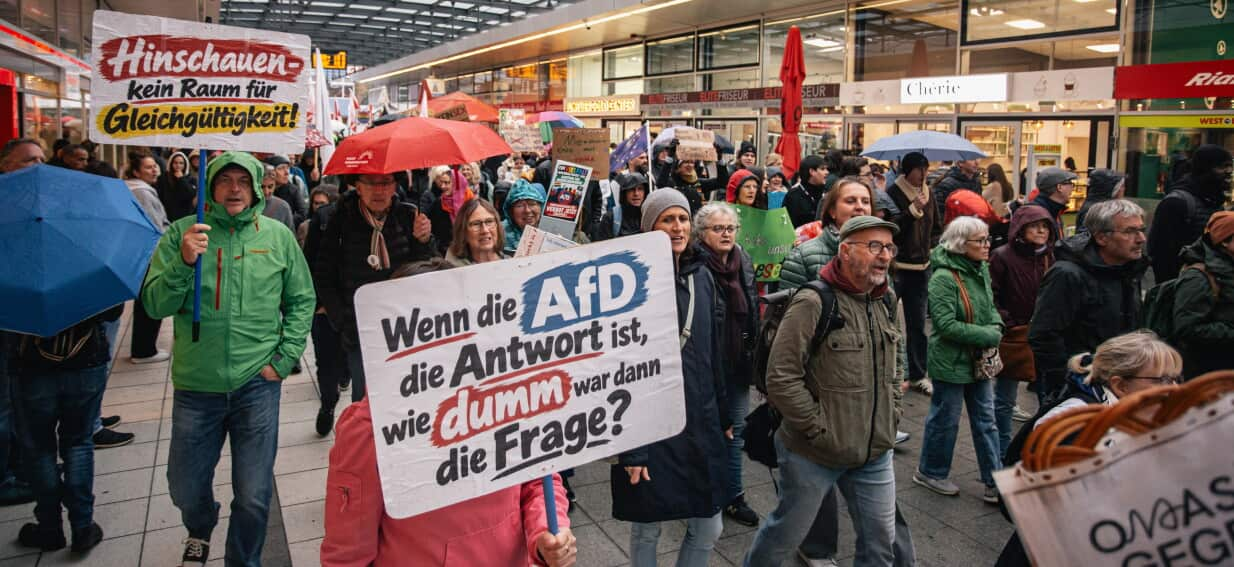
Walk through central Paris, Berlin, or Brussels on a Saturday afternoon, and you'll probably run into a protest before you find a decent espresso. That's the reality right now. The growing unrest across Europe isn't just background noise anymore—it's reshaping elections, toppling coalitions, and forcing governments into sudden policy U-turns.
Most commentators blame a single villain. Some point strictly at inflation. Others blame immigration, green energy mandates, or social media algorithms. They're all missing the bigger picture. What's happening across the continent is a collision of long-term economic stagnation, housing desperation, and a deep sense that the traditional political bargain has broken down.
I've spent years tracking European policy and street-level labor movements, and the pattern is unmistakable. People aren't protesting over abstract ideology anymore. They're protesting because the math of everyday life stopped working.
The Cost of Living Crunch Never Really Ended
Headline inflation numbers cooled down after the post-pandemic and energy shock peaks of 2022 and 2023. Central bankers celebrated. Politicians pointed to charts showing price growth slowing toward the European Central Bank's 2 percent target.
Try telling that to someone buying groceries in Warsaw or paying rent in Dublin.
Slowing inflation doesn't mean prices went back down. It just means they stopped rising quite as fast. Cumulative price increases between 2021 and 2026 permanently reset the cost of basic survival, while real wages in several major European economies struggled to catch up.
Housing is where the anger burns hottest. Across cities like Amsterdam, Lisbon, Madrid, and Munich, housing costs have swallowed an unsustainable share of take-home pay. According to Eurostat data on housing costs, millions of European households spend over 40 percent of their disposable income just keeping a roof over their heads.
When young professionals with full-time jobs can't afford a one-bedroom apartment without parental help, resentment builds fast. You saw massive housing demonstrations erupt across Spain in late 2024 and continue through 2025 and 2026, with tens of thousands marching in Madrid and Barcelona demanding rent caps and curbs on short-term tourist rentals. That isn't fringe activism. That's mainstream middle-class panic.
Why Farmers and Industrial Workers Are Leading the Charge
If you want to understand why European protests feel different today, look at who is blocking the roads. It isn't just student groups or traditional urban unions.
Over the past two years, farmers in France, Germany, Poland, Belgium, and the Netherlands turned tractors into political battering rams. They blocked highways, dumped manure outside government ministries, and ringed the European Parliament in Brussels.
Their grievances expose a massive policy contradiction. European regulators demanded stricter environmental rules, lower fertilizer use, and reduced emissions from local producers, while simultaneously negotiating trade deals—like the EU-Mercosur agreement—that allow cheaper agricultural imports produced under looser standards. Farmers felt squeezed from both sides. They were told to go green while being undercut on price.
Industrial workers face a remarkably similar trap. High energy costs following the loss of cheap Russian pipeline gas hammered energy-intensive sectors like chemicals, steel, and automotive manufacturing. Germany's industrial heartland took a brutal hit. When major employers like Volkswagen announce plant closures and tens of thousands of layoffs in Germany—something unthinkable a decade ago—labor unrest stops being theoretical.
Strikes across rail networks, airlines, ports, and factories have become routine. Workers aren't striking for luxury perks. They're fighting to stop their industries from hollowing out entirely.
The Green Transition Backlash Is About Fairness
Let's be honest about climate policy in Europe. Broadly speaking, most Europeans still care about climate change. Polling from the European Commission's Eurobarometer consistently shows majority support for renewable energy and environmental protection.
Support collapses, though, the moment people feel the financial bill is rigged against them.
Think back to France's Gilets Jaunes (Yellow Vests) movement in 2018. It started over a fuel tax hike that punished rural drivers who had no public transit alternatives, while wealthy urbanites got subsidies for electric vehicles. European policymakers promised they learned their lesson.
They didn't.
Policies like low-emission zones in major cities, bans on gas boilers, and carbon pricing on heating and transport fuels have repeatedly triggered fierce pushback. When a working-class family is told their older diesel car is banned from the city center where they work, and they can't afford a €35,000 electric replacement, climate policy starts looking like class warfare.
Right-wing populist parties across France, Germany, Italy, and the Netherlands seized on this exact vulnerability. They didn't have to convince voters that climate change was fake. They just had to point at household utility bills and ask who was paying for the transition.
Immigration and the Strain on Public Services
You can't talk honestly about European unrest without addressing migration and integration. Avoiding the topic only leaves the floor to extremists.
Over the past decade, high levels of irregular migration and asylum claims placed heavy pressure on municipal budgets, social housing, schools, and healthcare systems in countries from Sweden and Germany to Italy and Greece. In many towns, local mayors—often from mainstream center-left and center-right parties—were the first to sound the alarm that reception centers were full and local infrastructure couldn't keep up.
When citizens wait months for a doctor's appointment or watch local school resources stretch thin, frustration boils over. Opportunistic far-right networks have actively exploited these tensions, turning localized crimes or housing disputes into full-scale street riots, as seen in the UK during the summer of 2024 and in periodic flare-ups across France and Ireland.
At the same time, heavy-handed policing and polarizing rhetoric from hardline politicians have fueled counter-protests from anti-racism groups and civil rights advocates. The result is a volatile street dynamic where rival demonstrations frequently clash, stretching riot police to their limits.
A Crisis of Trust in Traditional Institutions
Behind all these specific triggers sits a deeper rot. Europeans simply don't trust their political institutions to deliver basic competence anymore.
Look at voter turnout patterns and party fragmentation across the continent. In country after country, the old post-war consensus—where moderate center-left and center-right parties traded power smoothly—has shattered. Coalitions now require three, four, or even five incompatible parties just to cobble together a parliamentary majority.
Germany's "traffic light" coalition collapsed under its own internal contradictions. France plunged into legislative paralysis after snap elections produced a hung parliament with no workable majority. Belgium and the Netherlands routinely spend months—sometimes over a year—just trying to form a government.
When governments spend all their energy arguing internally and watering down every reform into useless compromises, voters conclude that voting doesn't change anything. Taking to the streets starts feeling like the only lever left that actually forces politicians to listen. And frankly, given how quickly Brussels watered down agricultural rules after tractors blockaded the city, protesters learned a clear lesson. Disruption works.
Foreign Disinformation Pouring Fuel on the Fire
Domestic grievances are real, and pretending otherwise is naive. Still, hostile foreign actors are actively amplifying the chaos.
Intelligence agencies across France, Germany, Poland, and the Baltic states have documented extensive Russian influence operations designed to widen European divisions. Disinformation networks pump out fabricated stories, manipulate videos of protests, and boost extreme voices on platforms like Telegram, TikTok, and X.
The goal isn't necessarily to make Europeans pro-Kremlin. The goal is exhaustion and paralysis. If European governments are constantly putting out domestic fires, dealing with general strikes, and fending off populist surges, they have far less political bandwidth and public support to fund defense, support Ukraine, or maintain unity inside NATO and the European Union.
It's cheap, asymmetric warfare, and it works precisely because it latches onto genuine anger that already exists.
What Actually Calms the Streets Down
Politicians love quick fixes—temporary energy vouchers, emergency police powers, or watered-down compromises kicked down the road until after the next election. None of that solves the underlying pressure.
If you're trying to track where Europe goes from here—whether as an investor, a business operator, or just someone trying to make sense of the headlines—watch three specific indicators instead of daily protest counts.
First, watch municipal housing construction permits and zoning reforms. Until major European cities dramatically increase housing supply and stop treating real estate purely as an investment asset, youth and middle-class anger will keep boiling over.
Second, pay attention to industrial electricity prices relative to the United States and China. Europe cannot maintain social peace if its manufacturing base continues to deindustrialize. Grid modernization and pragmatic energy policy matter far more than flashy climate pledges.
Third, look at local wage growth versus core service inflation. Protests subside when ordinary households feel their paychecks actually buy a little more each year rather than a little less.
Europe isn't collapsing, despite what clickbait headlines claim. The continent has weathered far worse crises over the past century. What we're watching is a painful, noisy renegotiation of the European social contract—and until leaders start fixing the basic economics of housing, energy, and wages, the crowds in the streets aren't going home.