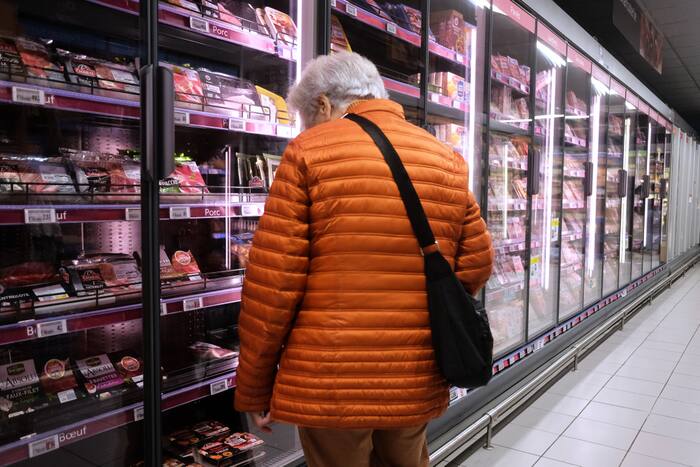
When headlines broke that French officials suspected Iran of hacking supermarket refrigerators, half the internet laughed. People pictured smart home fridges ordering milk on their own or displaying political slogans on door screens.
They missed the point completely. Building on this theme, you can find more in: Trump Backing Jensen Huang Amid Espionage Probes Is Not a Political Favor.
This wasn't a kitchen prank. On the night of October 11, 2026, attackers compromised industrial refrigeration controllers across up to 700 supermarkets in France—including major chains like Intermarché, Carrefour, Coopérative U, Monoprix, and E.Leclerc. Instead of locking computers for ransom, the hackers remotely forced commercial freezers and chillers into continuous defrost cycles overnight. Temperatures swung from minus 27 degrees Celsius to well above 50 degrees Celsius in hours. At one Normandy store, units hit 80 degrees Celsius. Equipment melted. Fires sparked. Overhead sprinklers flooded entire aisles, destroying thousands of tons of food and causing tens of millions of euros in damage.
By November 9, 2026, French Foreign Minister Jean-Noël Barrot stood at the G7 summit in Paris and formally blamed Iran's Islamic Revolutionary Guard Corps (IRGC) and an affiliated unit called Shahid Kaveh. Analysts at ZDNet have provided expertise on this matter.
Why Commercial Refrigerator Hacks Are Actually Physical Sabotage
Most cyberattacks steal credit cards or encrypt spreadsheets. Targeting cold-chain infrastructure crosses a completely different line because it turns software code into physical destruction.
Think about what happens inside a supermarket after closing time. Nobody is walking the aisles at 2:00 AM. Commercial refrigeration units rely on automated programmable logic controllers (PLCs) and internet-connected building management systems to regulate compressor cycles and defrost heaters. During a normal defrost cycle, heating elements warm the evaporator coils briefly to melt frost buildup before cooling resumes.
The attackers didn't break complex encryption to manipulate those heaters. They simply hijacked exposed remote management interfaces and overrides the safety cutoffs. Because the manipulation mimicked an authorized maintenance command, automated monitoring alarms stayed silent. For six straight hours, heating coils ran unchecked inside insulated cabinets packed with meat, dairy, and frozen produce.
I've audited operational technology (OT) setups in commercial facilities for years, and the pattern is always the same. Facility managers buy connected controllers so technicians can adjust temperatures from a laptop instead of driving across town. Then those devices sit directly on the public internet with factory-default credentials or unpatched firmware. As Proofpoint senior threat researcher Saher Naumaan noted regarding the incident, the sabotage showed less about elite Iranian hacking wizardry and far more about how dangerously exposed industrial systems remain.
Inside France's Attribution to Iran and Shahid Kaveh
Initially, French investigators kept quiet while media outlets like Reuters reported that officials privately suspected Tehran. Once France's national cybersecurity agency (ANSSI) finished tracing the intrusion, Paris dropped all diplomatic caution.
French authorities laid out specific forensic and geopolitical evidence tying the attack to Iran:
- Infrastructure and language footprints: According to the Paris Public Prosecutor's Office and ANSSI, investigators traced command traffic back to IP addresses linked to devices in Iran alongside residual traces of Farsi language artifacts inside the attack tooling.
- Named suspects and warrants: Paris prosecutor Laure Beccuau opened a formal judicial investigation into organized cybercrime serving a foreign power, requesting international arrest warrants for the head of the IRGC-linked Shahid Kaveh unit and two deputies.
- Prior operational history: Security researchers at Wavestone pointed out that Shahid Kaveh has operated since at least 2020, consistently targeting Western industrial control systems—most notably American water treatment controllers—rather than traditional corporate IT networks.
- Propaganda links: Investigators also connected the digital infrastructure to online propaganda channels that had previously taunted Western targets over domestic unrest.
France summoned the Iranian ambassador in Paris and pushed for coordinated European Union sanctions. Tehran, sticking to its standard playbook, denied involvement and ignored requests for comment from international press.
The Bigger Pattern Across Europe and the United States
If you think France was an isolated incident, look at the timeline surrounding October 2026. The French supermarket raid was one node in a much wider wave of cold-storage disruptions.
Two months earlier, in August 2026, freezers and chillers inside at least six U.S. military commissaries overheated overnight, ruining food supplies and prompting a Pentagon investigation into suspected Iranian cyber interference. In the spring, suspected IRGC-linked operatives using the persona Cyber Isnaad Front sabotaged an Israeli industrial food processing plant.
Then came the spillover after France got hit. In late October 2026, hackers breached refrigeration controllers at cold stores operated by the French blood service (EFS), cranking defrost thresholds to dangerous levels. Fortunately, technicians caught the alarms in time and physically disconnected the units before blood reserves were ruined. By early November, retailers and food suppliers across 11 European nations—including the UK, Belgium, the Netherlands, Sweden, Finland, Ireland, and Estonia—reported similar tampering with commercial chillers. Dutch retail giant Ahold Delhaize warned that quarterly sales could take a hit of up to 250 million euros. At a London produce wholesaler, staff only halted an active temperature spike by walking over to the wall and yanking the internet cable out of the router.
That detail tells you everything about the state of industrial cybersecurity today.
What Businesses and Facility Operators Must Do Right Now
You don't need to run a national grocery chain to get caught in the crossfire of automated OT scanning. Hackers use search engines like Shodan to scan the entire internet for exposed industrial ports 24 hours a day. When geopolitical tensions flare, state-sponsored crews sweep up whatever vulnerable controllers they find—whether they belong to a hospital blood bank, a cold-storage warehouse, or a regional restaurant supplier.
If your organization relies on networked HVAC, refrigeration, or building automation gear, take these concrete steps immediately:
- Pull every controller off the public internet. Audit your external IP space today. Refrigeration PLCs and building management gateways should never be directly reachable via open port forwarding. Place them behind a hardened virtual private network (VPN) with strict firewall allow-lists.
- Enforce phishing-resistant multi-factor authentication. Vendor maintenance accounts are the number one entry point for third-party facility hacks. Require hardware tokens or app-based MFA for every remote technician login, and disable shared contractor passwords.
- Install independent hardware thermal cutoffs. Never rely solely on software logic to stop a heating element from burning down a building. Wire physical, non-networked high-limit thermostats directly into defrost heater circuits so power cuts automatically if cabinet temperatures exceed safe thresholds.
- Segment operational networks from corporate Wi-Fi. Keep building controllers on an isolated VLAN with zero lateral access from office computers, point-of-sale terminals, or guest networks.
- Test physical fail-safes with staff. Train night managers and facility leads on where the network disconnect switches and manual breaker overrides live—because when an automated attack hits at midnight, unplugging a single Ethernet cable can save millions in inventory.