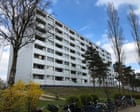
Denmark’s Supreme Court just gave the green light to a housing policy that sounds almost unbelievable on paper. If your neighborhood has too many residents classified as "non-Western," the state can legally terminate your lease, bulldoze or renovate your building, and force you out to change the local demographics.
On November 23, 2026, Denmark's highest court upheld the country's controversial "parallel societies" legislation—widely known as the "ghetto law"—rejecting claims that the evictions constitute illegal ethnic discrimination. The case centered on seven evicted tenants from the Nøjsomhed housing estate in Helsingør, north of Copenhagen, whose leases were terminated so the neighborhood could shed its official government label. Recently making headlines lately: Why a Home Office Algorithm Just Sent More Asylum-Seeking Children to the Scottish Highlands.
Most international coverage paints this as a simple binary fight between progressive European human rights and hard-line anti-immigrant populism. That misses the actual legal mechanics at play. If you look closely at how the Danish Supreme Court navigated around European Union warnings—and how Statistics Denmark defines who is "Western"—you'll see a legal blueprint that could reshape housing policy across Europe.
How the Danish Supreme Court Sidestepped the EU
To understand why Monday's ruling matters, you have to look at what happened in Luxembourg last year. The European Court of Justice (ECJ) reviewed Denmark's housing law and issued a clear warning. The EU judges stated that evicting residents under this law could amount to unlawful discrimination if the "non-Western" label was merely a legal disguise for race or ethnic origin. More insights into this topic are explored by BBC News.
Yet the ECJ stopped short of striking the law down itself. Instead, it kicked the final decision back to the national courts in Copenhagen to determine how the law operates in practice.
Denmark’s Supreme Court took that leeway and ran with it.
In its ruling, the court drew a razor-thin distinction between nationality-based cultural origin and ethnicity. The judges argued that because the law divides people into two broad administrative buckets—immigrants from non-Western countries and their descendants, versus everyone else—people of the exact same ethnic background can end up on opposite sides of the legal line depending on where they hold citizenship or where their parents were born.
"The criterion in the law divides people into two groups: immigrants from non-Western countries and their children, and everyone else," the court stated in its decision. "There are people of very different ethnic origins in both groups; people of the same ethnic origin can be in both groups."
Technically, that's true. Practically, critics say it's legal gymnastics.
Professor Frederik Waage of the University of Southern Denmark noted that the EU ruling gave Danish judges a certain amount of room to maneuver, and the court took full advantage of it. Meanwhile, Eddie Khawaja, the lawyer representing the evicted Nøjsomhed tenants, pointed out the core flaw in the court's reasoning. According to Khawaja, the judges focused strictly on the abstract wording of the statute rather than how housing associations actually implemented the evictions on the ground.
The Strange Math of "Non-Western" Classification
Here is where the policy gets genuinely bizarre if you haven't read the fine print of Danish administrative law.
Under the Public Housing Act, the Danish government publishes an annual list of "parallel societies" (formerly called the "ghetto list" before politicians softened the branding). A social housing estate lands on this list if more than 50 percent of its residents are immigrants or descendants from "non-Western" countries, alongside meeting specific thresholds for unemployment, low income, low education levels, or criminal convictions.
Once a neighborhood stays on the list for several years, it becomes a "hard" parallel society—or transformation area. By 2030, the share of public family housing in these areas must be slashed to a maximum of 40 percent. Housing associations achieve this by selling off buildings to private developers, demolishing blocks, or terminating leases to bring in wealthier, market-rate tenants.
So, who counts as "Western" according to Statistics Denmark?
- All 27 member states of the European Union
- The United Kingdom, Norway, Iceland, Switzerland, and Liechtenstein
- Microstates like Andorra, Monaco, San Marino, and the Vatican
- The United States, Canada, Australia, and New Zealand
Everyone else on planet Earth is legally "non-Western".
That means a millionaire tech executive from Tokyo, a software engineer from Bangalore, or a third-generation Danish citizen born in Copenhagen whose parents immigrated from Turkey all count toward the exact same demographic quota that triggers building demolitions. You don't need to commit a crime to lose your apartment. You don't even need to be unemployed. Your statistical profile alone makes your tenancy a liability to the housing association's compliance targets.
What Actually Happened at Nøjsomhed
The Nøjsomhed estate in Helsingør shows exactly how fast this bureaucratic machinery moves once a neighborhood crosses the threshold.
In December 2018, the Danish government added Nøjsomhed to the list after its share of non-Western residents hit 56.2 percent. The local housing association, Boliggården, didn't wait around for forced state intervention. In 2019, it adopted an aggressive redevelopment plan specifically engineered to get Nøjsomhed off the government blacklist.
By January 2020, residents across seven apartment blocks received notices telling them their leases were being terminated for extensive renovations. In total, Boliggården cancelled 91 tenancy agreements.
It worked—at least on paper. By shrinking the estate and pushing out enough residents to drop the local population below 1,000, Nøjsomhed fell below the statutory threshold. In December 2021, the government officially removed the neighborhood from the list.
Boliggården maintained throughout the legal battle that it worked hard to rehouse the displaced families. Seven of those former tenants didn't accept that as a fair trade. They sued, arguing they were singled out and stripped of their homes based on their backgrounds. They lost in the Eastern High Court in 2022, and on November 23, 2026, they lost for good in the Supreme Court.
Why Denmark’s Political Establishment Backs This
If you're outside Scandinavia, it's easy to assume this law is the brainchild of a far-right fringe party. It isn't.
Denmark’s Social Democrats—the country's main center-left party—have championed and enforced these strict integration rules just as fiercely as their right-wing predecessors. The political consensus in Copenhagen rests on a blunt premise: concentrated public housing creates isolated cultural enclaves where Danish language skills lag, unemployment becomes generational, and parallel legal or social norms take root.
Supporters point to hard numbers to argue the policy is delivering results. According to Danish government data, the number of neighborhoods officially classified under the parallel societies framework dropped from 29 in 2018 down to just five by 2025.
Joachim B. Olsen, a former Danish lawmaker and opinion editor at the newspaper B.T., summed up the pro-government view following the court's verdict. He argued that the Department of Justice thoroughly vets every bill against the constitution and international treaties before parliament votes on it. More importantly, he insists the outcomes justify the disruption.
"Incomes in these areas have risen. Employment is up. So is the educational level," Olsen told CBS News. "Overall, I would say that positives outnumber the negatives."
Housing Minister Jacob Mark echoed that sentiment immediately after the ruling, stating that the court's validation strengthens security, social cohesion, and integration across the country.
The Blind Spot in the Government’s Success Story
Here's what those celebratory government statistics conveniently leave out.
When you demolish low-income apartment blocks and force thousands of disadvantaged families to scatter into other municipalities, the statistical profile of the original neighborhood naturally improves. That doesn't mean the underlying poverty or integration challenges disappeared. It often just means you exported the numbers to neighboring zip codes that aren't large enough to trigger the 1,000-resident list threshold.
Tenants' associations estimate that roughly 11,000 people across Denmark face displacement by 2030 as housing corporations race to meet the 40 percent public housing cap.
Critics also point out a fundamental ideological contradiction in how Denmark treats its social safety net. For decades, Denmark's universal non-profit housing sector (almen bolig) was celebrated globally as a model for preventing urban slums by keeping quality housing accessible to working- and middle-class Danes alike. Now, the state treats dense public housing itself as a structural disease.
As critics of the law have argued, the policy frames public housing as a problem to be solved—and decides that having less public housing is the only cure.
Even worse, the Supreme Court's ruling leaves almost zero recourse for families whose buildings have already been sold off. In Copenhagen's famous Mjølnerparken estate—where more than 1,000 residents were displaced and are pursuing a separate, parallel legal challenge—whole blocks have already been transferred to private buyers. Even if Mjølnerparken residents somehow thread a narrower legal needle in their upcoming hearings, their old homes literally no longer belong to the public housing system.
What Happens Next for European Housing and Legal Challenges
Monday's verdict closes the door on domestic constitutional challenges in Denmark, but the broader legal and political fallout is far from over.
First, keep an eye on the Mjølnerparken litigation. While the Nøjsomhed case failed because the court accepted the housing association's renovation plan as non-discriminatory, Mjølnerparken involves the outright sale of public housing blocks to private investors. Lawyers for those tenants will test whether selling off homes specifically to alter ethnic or national ratios crosses a line the Supreme Court wasn't willing to draw in Helsingør.
Second, expect renewed friction between Copenhagen and Strasbourg. Because the Danish Supreme Court opted for a narrow, literal interpretation of the European Court of Justice's guidance rather than examining the disproportionate real-world impact on minority citizens, human rights advocates are already looking toward the European Court of Human Rights as a final venue.
Finally, watch how other European governments react. Center-right and populist coalitions in Sweden, the Netherlands, and Germany have closely studied Denmark’s aggressive assimilation policies for years. Now that a Western European supreme court has explicitly ruled that demographic quotas in public housing do not constitute illegal racial discrimination, lawmakers across the continent have a tested legal template to copy.
If you want to track how this reshapes European urban policy over the next four years, don't just watch the courtrooms—watch the 2030 construction deadlines in Copenhagen, Aarhus, and Odense. The bulldozers now have full legal clearance to finish the job.


