For the first time since World War II, St. Mary's Trumpet Call went silent over Kraków's Main Square.
If you've ever stood in that cobblestone plaza, you know that five-note bugle melody plays every single hour on the hour, abruptly cutting off mid-note to honor a medieval sentry shot in the throat during a Tatar invasion. Pausing it overnight wasn't just a symbolic gesture by local authorities. It marked the exact moment Poland's long-standing reputation as one of Europe's safest countries against random mass violence shattered.
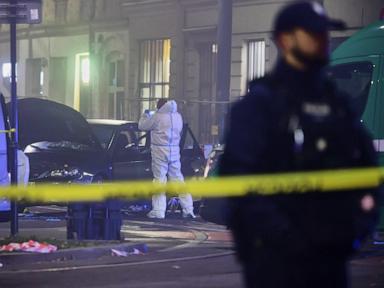
On Saturday, November 7, 2026, around 3 p.m., a 24-year-old gunman drove straight into the pedestrian-heavy heart of Kraków's Old Town and opened fire. Six innocent people died at the square, and 16 others suffered injuries before police shot and subdued the suspect after a high-speed pursuit down Grodzka Street. Hours later, investigators uncovered an even darker layer to the tragedy when they found the bodies of the shooter's parents and his 21-year-old sister at their apartment roughly 150 kilometers northeast in Ostrowiec Świętokrzyski.
The competitor coverage—and most breaking news headlines—framed this event simply as a rare mass killing carried out by a lone individual holding far-right views. That framing misses the bigger picture. When you look closely at the timeline, the online footprint, and the broader security warnings experts have been issuing across Central Europe, the Kraków mass killing looks less like an inexplicable bolt from the blue and more like the culmination of blind spots Poland can no longer afford to ignore.
Why Poland's Safety Bubble Burst in November 2026
People often assume strict gun laws automatically immunize a country against mass shootings. Poland boasts some of the tightest firearm regulations in the European Union, requiring rigorous psychological evaluations, background checks, and documented justification just to obtain a permit. For decades, that system worked remarkably well. Random public massacres were virtually unheard of in modern Polish history.
Until they weren't.
When the 24-year-old perpetrator—identified in reports by his surname, Oksiński—opened fire from his vehicle near the Main Market Square, bystanders initially mistook the cracks of gunfire for firecrackers. That split-second hesitation is telling. Nobody in Kraków expects an active shooter on a Saturday afternoon in a UNESCO World Heritage tourist hub.
Yet the warning signs were already flashing weeks earlier. In early October 2026, the central Mazovia region experienced three separate school attacks involving knives and sharp objects within a four-day span, leaving one person dead and several children injured. Investigators noted that several of those attackers had absorbed nihilistic, far-right online ideologies.
Kacper Rekawek, a senior researcher at the International Center for Counter-Terrorism (ICCT) in The Hague, pointed out that the Kraków massacre shouldn't be analyzed in a vacuum. Writing shortly after the attack, Rekawek highlighted how Poland's supposed "innocence" regarding mass casualty events had been eroding across a two-month stretch of copycat-style violence. When security apparatus focus stays locked almost entirely on external state threats—like Russian espionage, border hybrid warfare, or sabotage plots—domestic digital radicalization slips right through the cracks.
Inside the Kraków Shooting Timeline and the Ostrowiec Connection
Understanding how this attack unfolded reveals how deliberate and methodical the perpetrator actually was. This wasn't a spontaneous snap.
Before ever steering his car toward Kraków, Oksiński fatally shot his mother, father, and sister Magdalena—a 21-year-old queer painter and poet studying at the Kraków Academy of Fine Arts—inside their family apartment in Ostrowiec Świętokrzyski. None of the neighbors in the building reported hearing a single shot. Three days after the rampage, police recovered a suppressor inside the suspect's vehicle, explaining how he executed his family in complete silence before making the two-hour drive southwest.
Once he reached Kraków's Old Town at 3 p.m., the chaos escalated rapidly:
- 3:00 p.m. The gunman drives near the Main Market Square, firing indiscriminately at pedestrians and even shattering the windshield of a passing city tram.
- 3:01 p.m. A local police patrol spots the vehicle and initiates a pursuit as the shooter speeds south along Grodzka Street toward All Saints Square.
- Minutes later Cornered during the chase, the gunman exchanges gunfire with two pursuing officers. Police shoot and critically wound him, bringing the spree to an end.
The human toll was immediate and international. Four Polish citizens—three women aged 47, 53, and 61, alongside a 51-year-old man—were among the six killed at the square. Five foreign nationals from the United Kingdom, Portugal, Germany, Austria, and Russia were counted among the 16 wounded. Two days after the shootout, Oksiński died from his injuries in a Kraków hospital without ever leaving a manifesto explaining his exact grievances.
The Ideological Footprint Authorities Uncovered
When Polish authorities stated the attacker held far-right views, many commentators immediately tried to map his motives onto conventional domestic party politics. That's a mistake. Modern extremist violence rarely fits neatly into traditional left-right ballot boxes.
Agents from Poland's Internal Security Agency (ABW) searched the perpetrator's workplace and found a cryptic four-letter inscription scratched onto his locker: "GGER". Intelligence analysts deciphered the acronym as standing for "Good Game Elliot Rodger"—a direct nod to the 2014 Isla Vista killer whose misogynistic, nihilistic worldview became foundational lore in online extremist and incel subcultures.
Honestly, this detail changes everything about how we should view the Kraków mass killing.
In global counter-terrorism circles, experts call this "salad bar extremism" or nihilistic violent extremism. Young men marinate in encrypted chat rooms and fringe imageboards where white supremacist tropes, misogyny, accelerationism, and gamified mass-murder memes blend into one toxic soup. They don't join structured political parties or march in street rallies. They sit alone in bedrooms, idolize past mass shooters like Rodger, and treat real-world slaughter like a high-score leaderboard.
Security expert Tomasz Safjański warned in Rzeczpospolita that Polish authorities have failed to build adequate detection mechanisms for youth radicalization happening inside schools, local communities, and niche internet spaces. You can't catch an encrypted Discord radical using Cold War counter-intelligence playbooks.
Ordinary Heroes and the Disinformation Wave
In the immediate aftermath of any high-profile tragedy, two very different forces emerge: extraordinary civic courage on the ground and weaponized lies online. Kraków saw plenty of both.
While gunfire echoed off medieval stonework, Warsaw visitor Magdalena Frączak spotted an elderly woman tangled in a lap blanket near a flower planter. Instead of sprinting away, Frączak shoved the woman behind the planter and shielded her with her own body as the gunman passed barely a meter behind her back, leaving Frączak with shrapnel wounds in six places before she dragged the woman into a nearby café. Meanwhile, bystander Grzegorz Wierdak rushed straight toward the wounded police officer who had helped subdue the shooter, applying bare-handed pressure to stop severe chest bleeding until paramedics arrived.
At the exact same time, social media platforms flooded with fabricated claims.
Within hours of the shooting, coordinated accounts began circulating AI-generated images and false narratives blaming fabricated suspects, inventing bogus death tolls, and exploiting Poland's ongoing 2026 Constitutional Tribunal political crisis to claim police had abandoned the city. Polish officials had to divert critical crisis-response bandwidth just to debunk viral falsehoods. The chaos immediately reignited heated debates in Warsaw and Brussels over how the European Union's Digital Services Act handles algorithmic amplification of synthetic disinformation during active terror investigations.
What Needs to Change Before the Next Warning Sign
Prime Minister Donald Tusk called the Kraków shooting an "act of terrorism," while Deputy Prime Minister Władysław Kosiniak-Kamysz stood beside flower-covered memorials urging Poles across political divides to unite. Grief and candlelit vigils at St. Anne's Church and Sławkowska Street show a resilient public, yet sympathy alone won't stop the next radicalized loner.
If Poland wants to protect its public spaces without sacrificing its open society, three concrete shifts need to happen right now:
- Audit illegal suppressor and firearm pipelines. Investigators still haven't fully explained how a 24-year-old acquired a lethal firearm and a functional silencer in a country with strict gun laws. Law enforcement needs tighter cross-border tracking of converted blank guns, 3D-printed components, and black-market smuggling routes stemming from regional conflict zones.
- Train local police and school counselors in digital nihilism. Threat assessment teams must learn to recognize coded references like "GGER" and online gamified terror symbols before an individual transitions from posting memes to buying ammunition.
- Verify breaking news before sharing. As a reader and citizen, your best defense against post-attack disinformation is a strict 30-minute rule during breaking emergencies. Rely directly on verified updates from the Polish Police (Policja), the Internal Security Agency, or established wire services like the Associated Press rather than unverified viral clips on X or TikTok.
Kraków reopened its Main Market Square the very next day, and Magdalena Frączak forced herself to walk back onto those cobblestones so fear wouldn't permanently claim the city she loved. Remembering the victims means honoring that resolve—while refusing to look away from the digital radicalization pipelines that brought terror to Poland's doorstep.
For broadcast footage showing how residents and visitors gathered at the Main Market Square memorial following the attack, watch Poles mourn rare mass killing as authorities say attacker had far-right views.