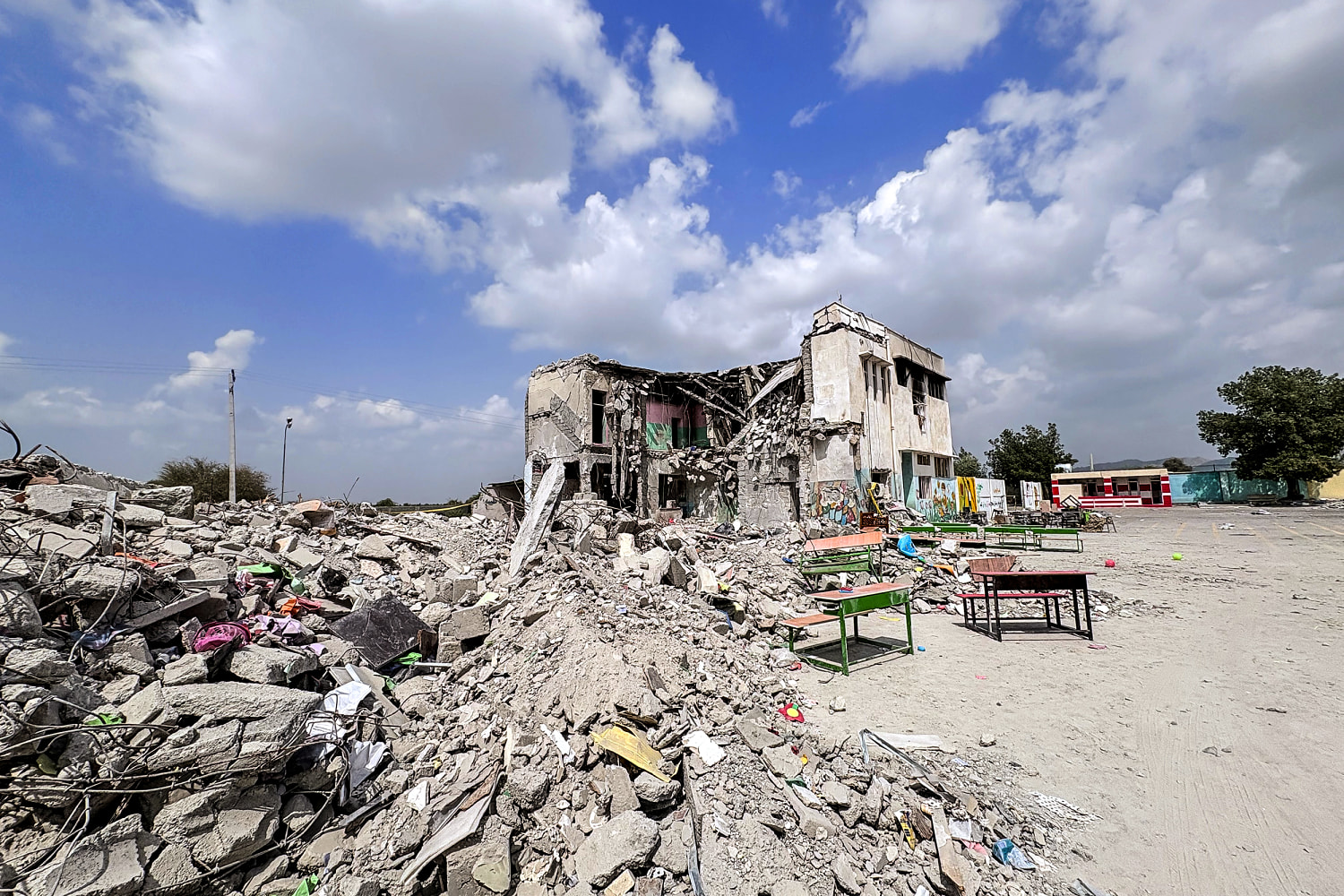
The physical evidence of what happened on the first morning of the war with Iran is brutal. At the Shajareh Tayyebeh Elementary School in the southern city of Minab, the roof collapsed entirely over rooms where young girls were taking lessons. Wall murals featuring bright drawings of crayons and apples were left scorched and covered in soot. Outside, the school soccer and volleyball pitches filled with thick black smoke.
When the missiles hit between 10:23 and 10:45 a.m. on February 28, 2026, the blast killed 156 people. The victims included 120 children, 26 female teachers, a handful of parents trying to rescue their kids, a school bus driver, and a local pharmacy tech. It stands as the single deadliest civilian casualty event involving potential American military action in decades.
Months later, the Pentagon is wrapping up its formal administrative investigation. Yet, the official silence from defense leadership is growing more deafening by the day.
The Old Intelligence Trap
Initial military inquiries quickly pointed toward American forces. Specifically, a Tomahawk cruise missile allegedly slammed into the facility during Operation Epic Fury. Defense Secretary Pete Hegseth confirmed in mid-March that U.S. Central Command designated an outside general officer to run an AR 15-6 command investigation. That is the standard military protocol for evaluating major failures, but the environment surrounding this specific probe is anything but standard.
The core of the issue comes down to catastrophic target verification failures. Independent tracking indicates the targeting data used by U.S. planners relied on military records that were over a decade old.
The school sat right next to the Sayyid al-Shuhada military complex. That base once housed the headquarters of the Asif Brigade, an Islamic Revolutionary Guard Corps Navy unit. The problem is that the military compound had been non-operational for roughly 15 years. The guard posts were ripped out back in 2016, and local authorities converted the old structures into a civilian clinic and a primary school. The kids studied on separate floors based on gender, with the girls occupying the section that took a direct hit.
Military defenders argue the situation on the ground was muddy. Some defense analysts note that Iran frequently integrates tactical infrastructure near civilian areas, and the school shared a wall with an inactive cruise missile base. There are open questions regarding whether local paramilitary Basij forces used the perimeter for training exercises, which could trigger automated surveillance filters looking for military movement.
But a wall is just a wall. For over ten years, the building functioned explicitly as a school. Satellite imagery and local records clearly detailed its civilian shift. U.S. targeters simply failed to cross-check their ancient database against live ground reality before pushing the launch button.
Breaking From the Rules of War
The length of this investigation is raising red flags among former military lawyers. Rachel VanLandingham, a retired Air Force Judge Advocate General and former senior legal adviser at CENTCOM, points out that the current lack of transparency departures sharply from past administrative protocols. In previous conflicts, when a high-profile civilian structure got struck by mistake, the Pentagon usually put out preliminary findings within weeks to get ahead of the narrative and preserve international credibility.
Instead, lawmakers in Washington are getting stone-walled during classified briefings. Members of Congress asking direct questions about American culpability are told that nothing can be shared while the review is active.
This opacity creates massive strategic vulnerabilities. Under international humanitarian law, an attacking force must take all feasible precautions to avoid civilian harm. The updated Department of Defense Law of War Manual explicitly requires a duty of constant care. If investigators find that commanders foresaw civilian casualties but miscalculated the proportion of military advantage, or if they skipped basic data verification steps, the strike crosses the line from an unfortunate accident into a potential war crime.
What Happens When the Report Drops
We already know what a rigorous investigation needs to answer, but we don't know if the Pentagon has the stomach to publish it. The final report must explicitly lay out why ten-year-old data managed to bypass modern intelligence validation tiers. It needs to clarify whether planners knew civilians were present before the missile left the tube.
The strategic fallout from this silence is already doing damage. By locking down information, the Pentagon gives Tehran total control over the public narrative across the Middle East. Pictures of mass funerals in Minab with small coffins draped in Iranian flags have circulated globally for months, fueling intense anti-American sentiment while Washington hides behind a bureaucratic shield.
The investigation is entering its final stages. When the general officer delivers those findings to the desk of the Defense Secretary, the administration faces a stark choice. They can bury the structural failures under a mountain of security redactions, or they can openly admit that an obsolete targeting list killed over a hundred children in their classrooms. True military authority isn't maintained by hiding massive institutional blunders. It is maintained by holding the chain of command accountable when those blunders cost innocent lives.


