The alarms sound. The sirens wail. The push notifications flash across millions of smartphones with standard, cold urgency: "Partial lockdown at Pentagon after hazardous materials incident reported."
Mainstream newsrooms immediately shift into overdrive. Anchors put on their serious faces, talking heads speculate about foreign adversaries, and the public grips their chairs, bracing for a mass-casualty CBRN (Chemical, Biological, Radiological, and Nuclear) event.
It happens every single time. It is a predictable, exhausting script. And it is almost always a total lie.
What the media calls a "hazardous materials incident" at a major government facility is rarely a asymmetric warfare strike or a bioterror plot. Strip away the breathless cable news chyrons, and you find the mundane reality: a broken industrial refrigerator compressor leaking freon, an overcooked bag of microwave popcorn triggering a hyper-sensitive ionization smoke detector, or a piece of suspicious mail that turns out to be cornstarch sent by a confused conspiracy theorist.
The lazy consensus among national security reporters is that these lockdowns represent a terrifying vulnerability in America’s armor. The reality is far more cynical. These incidents are a masterclass in bureaucratic theater—a highly orchestrated, self-serving exercise designed to justify bloated defense budgets, validate redundant emergency response positions, and keep the public in a permanent state of low-grade anxiety.
We need to stop treating every standard workplace safety mishap inside the E-Ring as a national security crisis.
The Logistics of Fear Inside the World's Largest Office Building
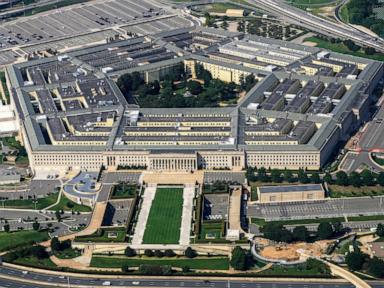
To understand why the media gets this so wrong, you have to understand the sheer scale of the Pentagon. This isn’t just a military headquarters; it is a massive, aging city contained within 6.5 million square feet of concrete and limestone. On any given weekday, roughly 26,000 personnel—ranging from four-star generals to civilian contractors and cafeteria staff—roam its corridors.
It features over 17 miles of hallways. It houses dozens of fast-food joints, a massive heating and cooling plant, and thousands of pieces of commercial-grade machinery.
When a standard commercial office building in downtown Chicago leaks coolant or experiences an electrical short in a server room, the building manager calls a technician. When the exact same mechanical failure happens at the Pentagon, the Pentagon Force Protection Agency (PFPA) activates a full-scale tactical response.
Consider how the typical "hazmat scare" actually plays out behind the scenes.
[Standard Commercial Building] -> Mechanical Malfunction -> Facilities Guy with a Wrench -> Problem Solved
[The Pentagon Building]      -> Mechanical Malfunction -> Sensors Trigger -> Tier-1 Lock-Down -> Cable News Alert
The protocol dictates that if a single sensor registers an anomaly in a mail-sorting facility or a mechanical room, the affected zone must be isolated immediately. This is standard industrial safety practice, framed as a counter-terrorism victory.
The media eats it up because fear sells subscriptions. The Pentagon bureaucracy tolerates—and subtly encourages—the hysteria because a populace convinced that the Department of Defense is under constant, invisible chemical attack is a populace that doesn't question where the money goes.
The Trillion-Dollar Budget Justification Machine
Follow the money. In the defense sector, funding follows perceived vulnerability.
If the Pentagon admitted that its frequent partial lockdowns were merely the result of antiquated HVAC systems and poorly trained mailroom contractors dropping protein powder, congressmen would start asking uncomfortable questions about facility maintenance budgets. They might demand accountability for the billions allocated to infrastructure upgrades that never seem to materialize.
But if those same incidents are categorized under the umbrella of "hazardous materials response and threat mitigation," they become a vital shield against the unknown.
I have watched defense contractors spin these minor operational hiccups into multi-million dollar procurement justifications. A sensor malfunction doesn't mean the sensor is bad; to a defense lobbyist, it means the government needs to buy the next generation of AI-integrated, multi-spectral chemical detection nodes at ten times the cost.
The Federal Emergency Management Agency (FEMA) and the Department of Homeland Security (DHS) have spent decades funding regional hazardous materials teams. The PFPA maintains its own highly specialized CBRN technicians. These teams are packed with highly trained professionals who spend 99% of their careers waiting for something to happen. When a suspicious white powder is detected in a mailroom—even though historical data shows that 99.9% of such substances are completely benign—the temptation to deploy the full circus is irresistible.
It validates their existence. It justifies their headcount. It ensures that when the next budget cycle rolls around, their funding remains untouched.
Dismantling the People Also Ask Panic
The public, fed a steady diet of Hollywood thrillers and sensationalized news reporting, asks the wrong questions whenever a partial lockdown occurs. The collective anxiety centers on the wrong threats entirely.
Is the Pentagon prepared for a real chemical attack?
Yes, but not because of the theatrical lockdowns you see on the evening news. True CBRN defense relies on passive mitigation systems: positive pressure ventilation, advanced air filtration units (HEPA and carbon systems), and architectural zoning that prevents air exchange between public areas and command centers. The public lockdowns are largely psychological operations designed to manage civilian movement and control the flow of information, not stop a weaponized nerve agent that would be neutralized by internal systems anyway.
Why do they lock down the whole section for a simple mail scare?
Because bureaucracy values compliance over efficiency. If a supervisor fails to initiate a lockdown for a substance that turns out to be harmless baking soda, they face an administrative reprimand or a ruined career. If they lock down an entire wedge of the building for four hours over a crushed aspirin tablet, they get praised for practicing "extreme caution." The system incentivizes overreaction.
Are these incidents increasing in frequency?
The incidents aren't increasing; the reporting is. With the rise of real-time open-source intelligence (OSINT), scanner-scraping Twitter accounts, and instant push alerts, a routine industrial safety event that would have gone unnoticed twenty years ago is now broadcast globally within ninety seconds. The noise has amplified, while the actual signal remains flat.
The Tactical Danger of the Over-Response
The insistence on turning every maintenance issue into a national security event carries a severe, unacknowledged risk: response fatigue.
Imagine a scenario where a wolf actually enters the fold, but the shepherd has spent five years screaming about phantom wolves every time a blade of grass moves.
When Pentagon employees are forced to shelter in place multiple times a year because a cleaning crew used too much ammonia in a bathroom, they stop taking the alarms seriously. They don't check their seals. They don't move to designated safe zones with urgency. They check their watches, complain about missing their lunch break, and text their spouses that the building is having another "glitch."
This complacency is the real threat. By treating a minor hazardous materials incident with the same institutional weight as a coordinated biological strike, the command structure degrades the psychological readiness of its personnel.
Furthermore, these false-alarm lockdowns provide free intelligence to foreign adversaries. Nations like China and Russia closely monitor how the Pentagon responds to these minor events. They track response times, observe which gates are locked down, note where personnel are redirected, and analyze the communication chain between local police and federal authorities.
Every time the Pentagon overreacts to a spilled cleaning solvent, it hands its enemies a free blueprint of its emergency protocols. We are giving away our playbook to hide the fact that our facilities are poorly maintained.
Stop Treating the E-Ring Like a War Zone
The Pentagon is an iconic symbol of American military might, but it is also a 1940s-era office building that suffers from the same infrastructure decay plaguing the rest of the country.
The next time you see a breaking news banner declaring a "hazardous materials incident" at the Pentagon, change the channel. Do not buy into the manufactured panic. Do not let the defense apparatus use standard facility maintenance failures to convince you that the homeland is under siege.
Demand that the media report these events for what they actually are: administrative overreactions to mundane maintenance issues. Until we strip away the glamorized veneer of national security from what amounts to basic janitorial and mechanical troubleshooting, we will continue to be hostages to a narrative that serves the bureaucracy, drains the treasury, and weakens our actual readiness.
Stop looking for terrorists in the ventilation shafts. The problem isn't a hostile foreign actor; it’s a broken gasket and a command structure that needs an excuse to keep the lights on.