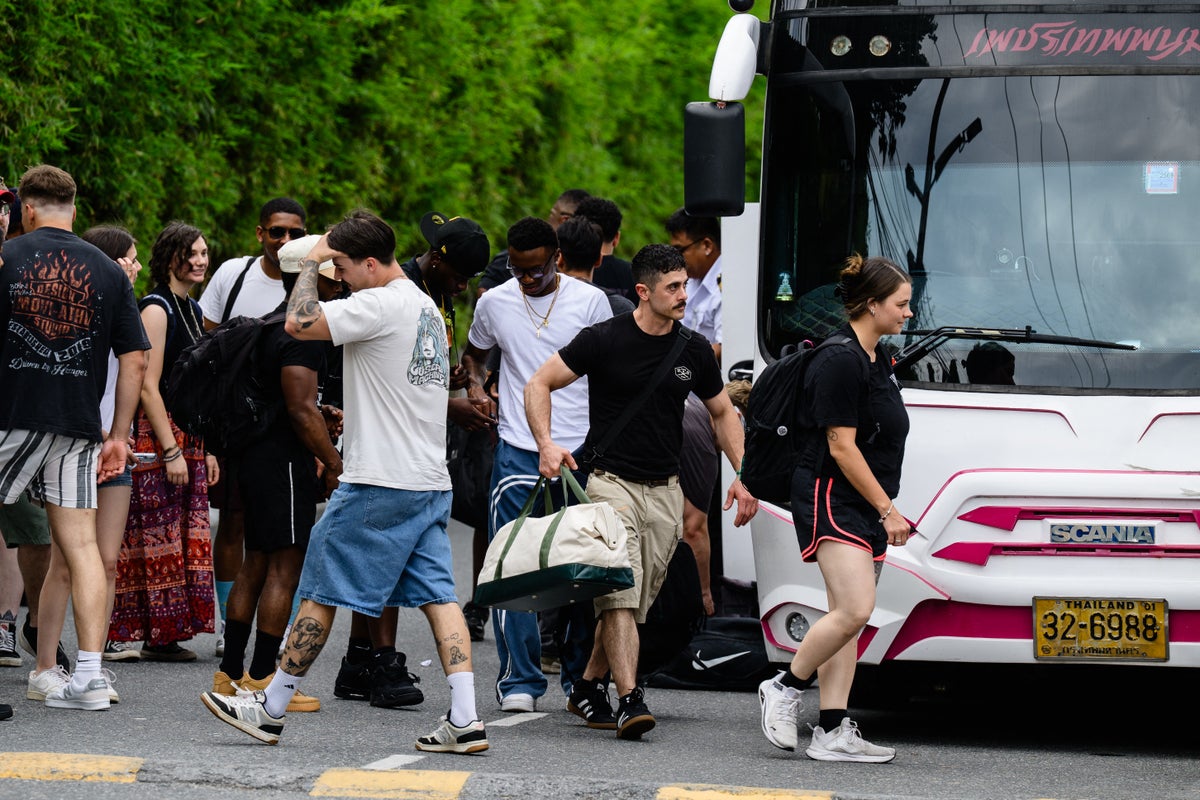
Every time a supercarrier like the USS Abraham Lincoln drops anchor and thousands of sailors flood into Pattaya, the pearl-clutching commentariat loses its collective mind. Travel writers who have never spent twenty minutes outside an air-conditioned hotel lobby dust off the tired clichés. They write about weary sailors, moral decay, and the ghost of a military liberty town from the Vietnam era, framing the whole spectacle as a tragic anachronism.
They are wrong about the sailors. They are wrong about the city. And most importantly, they completely miss the economic machinery that makes the modern port call actually work.
The lazy consensus treats Pattaya as a cautionary tale of hedonism. Strip away the Victorian moral panic, and you find a masterclass in urban resilience, frictionless logistics, and raw economic pragmatism.
The Myth of the Broken Sailor
Let us clear up the first major misconception right away. The narrative of the shore leave bender leading to immediate ruin belongs in a 1970s paperback, not modern naval analysis.
Today's nuclear-powered supercarrier operations require high-level technical precision. The average sailor stepping off a liberty boat today is a digital systems technician, a nuclear reactor operator, or an aviation ordnanceman handling multi-million-dollar munitions. They manage more complexity before breakfast than most critics handle in a fiscal quarter.
When these crews hit the beach after months of deployment isolation, they are not looking for chaos. They are looking for decompression.
I have watched entire strike groups rotate through Western Pacific ports, and the pattern never changes. The vast majority of the crew wants three things: a steak that does not come out of a retort pouch, a stable internet connection to call home, and a beer in a place where nobody asks them to pipe down.
Pattaya delivers this with an efficiency that makes sanitized, overpriced tourist traps look like bureaucratic nightmares. There are no velvet ropes designed to fleece enlisted ranks, no hidden resort fees, and no artificial barriers between the visitor and the local economy.
Why Sanctuary Cities Need Grit
Urban planning theorists love to talk about walkability, curated public spaces, and boutique coffee shops. They hate places like Pattaya because they refuse to wear a costume.
Pattaya grew organically out of a logistical necessity during the Vietnam War, when American servicemen needed a place to decompress from the Tonkin Gulf. Instead of sanitizing that history away, the city leaned into it. It built an infrastructure explicitly designed to handle massive influxes of transient, cash-ready populations overnight.
Think about the logistical nightmare of processing five thousand sailors simultaneously. In a traditional resort city like Honolulu or Sydney, a sudden influx of military personnel strains local transit, sparks hotel booking crises, and triggers noise complaints from retired locals.
Pattaya absorbs the shock effortlessly.
The city operates on pure market responsiveness. If five thousand hungry engineers land on the beach, twenty beachside vendors pivot to meet the demand within the hour. There is no zoning committee meeting to debate the cultural impact of a late-night diner. The supply chain moves at the speed of human desire. That is not moral decay; that is hyper-efficient capitalism in shorts and flip-flops.
The Economic Impact Nobody Mentions
Let us talk about the money, because the pearl-clutchers always ignore the ledger.
When a carrier strike group pulls in, it drops millions of dollars into the local economy in less than ninety-six hours. This is not corporate tourism money that gets funneled back to multinational hotel conglomerates headquartered in Delaware or Zurich. This is direct-to-consumer cash.
It goes straight to the tuk-tuk driver, the family-run seafood joint, the tailor, and the local convenience store owner.
Critics call this exploitation. That is economic illiteracy. Ask the small business owners along Beach Road if they prefer the quiet dignity of a recession or the loud, messy influx of American sailors paying in hard currency. They will laugh you out of the shop.
Maritime communities survive by servicing the sea. The US Navy is the largest corporate customer in maritime history. Treating its personnel like an unwanted nuisance is the height of ingratitude from cities that claim to understand trade and commerce.
Stop Trying to Sanitize the World
The fundamental error critics make is judging foreign ports by domestic suburban standards. They want every corner of the globe to look like an upscale outdoor shopping mall with security guards and manicured lawns.
When they see a city that operates outside those sterile parameters, they panic. They diagnose freedom and chaos as failure.
Pattaya is loud, brash, unapologetic, and occasionally overwhelming. It is also one of the few places left on earth where a nineteen-year-old kid from rural Ohio can step off a warship, walk down the street without a minder, and interact with a completely different culture on his own terms.
That friction builds character. It teaches adaptability. It forces people to navigate the real world rather than a curated bubble.
The next time a carrier group heads for the Gulf of Thailand and the headlines start lamenting the loss of moral standards, ignore the noise. The sailors are getting what they earned. The locals are getting what they need. And the moralists are just upset that nobody asked for their permission.