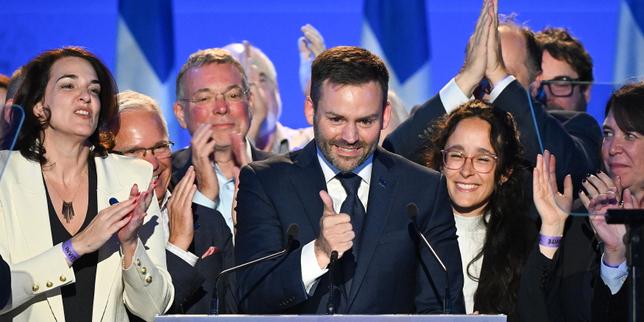
Every political commentator in Ottawa and Montreal is currently hyperventilating over the exact same lazy narrative. The storyline goes like this: the Parti Québécois rises in the polls under Paul St-Pierre Plamondon, and therefore, the eternal constitutional debate over Quebec sovereignty is back from the dead. Pundits dust off their 1995 playbook, sketch out maps of a divided Canada, and start warning investors about impending national unity crises.
They are completely, fundamentally wrong.
If you look past the superficial tribalism of Quebec media, the numbers tell a radically different story. Recent polling data reveals a glaring disconnect that the pundit class refuses to acknowledge: while voters are increasingly willing to hand the keys of the National Assembly to the PQ to fix immediate systemic failures, support for actual separation remains stubbornly low. In fact, recent tracking data shows core support for sovereignty hovering near historical floors, with an overwhelming majority of Quebecers stating that a referendum is the absolute last thing they want on their agenda.
When roughly half of the electorate lists the cost of living and healthcare as their primary concerns—and barely a single-digit fraction cares about setting up a sovereign state apparatus—you are not witnessing a national liberation movement. You are witnessing a high-stakes eviction notice served to a stagnant political establishment.
The Death Of The Constitutional Fetish
For decades, political analysts have suffered from a monocausal delusion. They assume that every political tremor in Quebec must be measured on the Richter scale of constitutional anxiety. This framework ignores how modern voters actually behave.
The Coalition Avenir Québec didn't lose ground because voters suddenly developed a deep spiritual yearning for federalism or separatism; they lost ground because public services cracked under pressure, inflation crushed household budgets, and citizens grew exhausted by managerial incompetence. When voters turn to the PQ right now, they are buying competence, assertiveness, and generational change in leadership. Paul St-Pierre Plamondon has mastered the art of talking like a competent CEO rather than a nostalgic 20th-century ideologue. He speaks clearly about defending French and protecting local interests without immediately demanding that everyone sign up for a trench war against Ottawa.
Voters have decoupled the vehicle from the destination. They are renting the PQ to clean up provincial governance, knowing full well they can slam the brakes on the independence project the second it threatens their economic stability.
Why A Referendum Is A Phantom Menace
Let us address the elephant in the room that the media loves to sensationalize: the promised referendum.
Political opponents love to weaponize the PQ's theoretical roadmap to scare business investment out of the province. But look at the fine print of public sentiment. Even among self-identified PQ voters, a massive contingent explicitly rejects holding a constitutional showdown during the term. They want a government that fights for more financial leverage and linguistic autonomy within the current federation, not one that plunges the province into a chaotic, multi-year economic divorce.
Imagine a corporate turnaround scenario where a newly appointed CEO demands that the board approve a total liquidation of the company on day one, even though 70 percent of the shareholders and employees would walk out the door. It is commercial suicide. Any clever political operator knows that pushing a premature sovereignty vote against an uninterested electorate is a fast track to political oblivion. St-Pierre Plamondon is sharp enough to recognize that the old binary choice between Canada and a sovereign Quebec has been replaced by a more nuanced transactional politics.
The Real Battleground
The real story in Quebec politics is not about flags, borders, or passports. It is about administrative competence, cultural survival in a digital globalized economy, and fiscal accountability.
When the state fails to deliver basic healthcare or control the cost of housing, identity politics becomes a secondary luxury. The PQ's current momentum is a referendum on competent governance, not a referendum on the Constitution. Until the federal establishment and provincial opponents realize that voters are motivated by practical survival rather than ideological nostalgia, they will continue to misread every single poll that crosses their desks.
Stop looking for 1995. It is never coming back.


