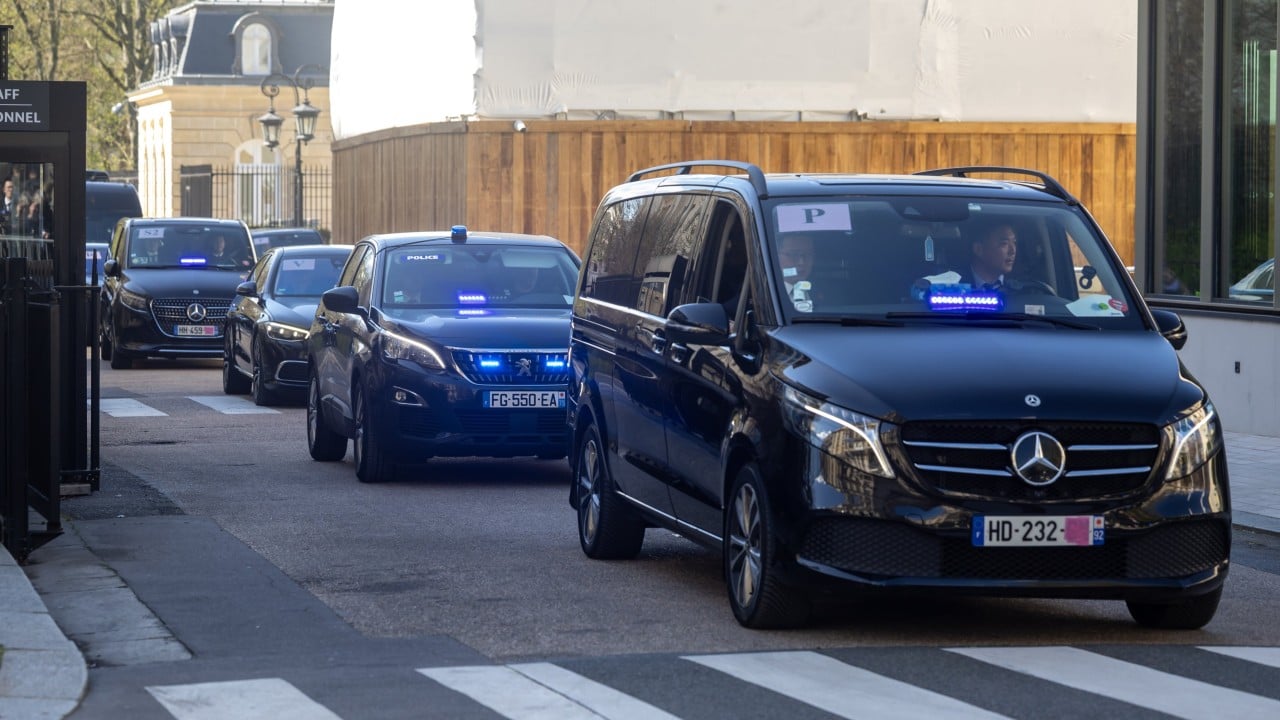
The financial press is currently obsessed with the "low-key" nature of the recent US-China trade talks in Paris. They see a lack of fireworks and interpret it as a cooling of tensions. They see a "professional" atmosphere and call it progress.
They are dead wrong.
In the world of high-stakes geopolitics, silence isn't golden. It is a vacuum being filled by the rapid decoupling of the world’s two largest economies. While analysts celebrate the absence of aggressive rhetoric, they are missing the structural shifts happening beneath the floorboards. We aren't seeing a return to the status quo; we are witnessing the formalization of a permanent economic divide.
The Myth of the Rational Reset
The common consensus suggests that both Washington and Beijing have "tariff fatigue." The narrative goes like this: inflation is sticky, supply chains are fragile, and both sides want to project stability to their domestic audiences. Therefore, a quiet meeting in a neutral European city must be the first step toward a grand bargain.
This is a fantasy built on 1990s neoliberal logic that no longer applies.
The reality? These talks aren't about finding common ground. They are about managing the fallout of an inevitable divorce. When I worked with cross-border manufacturing firms during the initial 2018 tariff volleys, the panic was palpable. Today, that panic has been replaced by something much more dangerous: indifference.
Companies aren't waiting for a "deal" anymore. They are moving. The silence in Paris reflects the fact that there is nothing left to negotiate. The US has signaled its intent with the CHIPS Act and restricted outbound investment; China has responded with export controls on critical minerals like gallium and germanium.
When two sides stop shouting, it usually means they’ve stopped listening. They’ve already decided on their respective paths.
Why Low-Key Means Low Stakes
The mainstream media loves to frame these meetings as "pivotal" (a word they use to describe everything from a trade summit to a new iPhone launch). But if a meeting is truly high-stakes, the room is charged with friction. Friction is a byproduct of engagement.
The "low-key" start in Paris is an admission that the core issues are now non-negotiable.
- National Security over GDP: The US is no longer trading for market access; it is trading for "de-risking." You cannot negotiate a middle ground on semiconductor lithography. You either have the tech, or you don't.
- Subsidies are the New Tariffs: China’s industrial policy isn't a bargaining chip; it is their entire economic identity. Expecting Beijing to dismantle its state-led EV or battery ecosystem is like asking the US to privatize the military-industrial complex. It won’t happen.
- The Third-Party Problem: Holding talks in Paris is a performance for the European audience. It’s an attempt to show the EU that "we are the reasonable ones." It’s optics, not economics.
If you are an investor waiting for a "thaw" to buy the dip in Chinese equities or US tech exporters, you are misreading the room. The lack of conflict in Paris isn't a green light; it’s a yellow light. It means the battle has moved from the negotiating table to the factory floor and the laboratory.
The Hidden Cost of "Stability"
There is a specific type of intellectual laziness that equates "no bad news" with "good news."
I have watched boards of directors sit on their hands because a headline said "talks were constructive." They delayed diversifying their supply chains because they hoped for a return to the 2% tariff days. Those companies are the ones currently getting hammered by the sudden realization that "constructive" is diplomatic code for "we agreed to keep talking while we continue to undermine each other."
Let’s look at the actual data the "quiet start" ignores. Foreign Direct Investment (FDI) into China recently turned negative for the first time in decades. This isn't because of a lack of meetings in Paris. It’s because the cost of doing business in a fractured world has finally outweighed the benefits of the "China Price."
The "low-key" approach actually accelerates this. Without the pressure of a deadline or the heat of a public spat, there is no urgency to fix the underlying rot. We are entering an era of "Zombie Diplomacy," where officials meet, eat croissants, and release boilerplate statements while the actual trade volume continues to shift toward "friend-shoring."
Stop Asking if the Talks Succeeded
The question "Did the talks go well?" is the wrong question. It assumes there is a binary outcome: Success (a deal) or Failure (a trade war).
The real question is: "How fast is the bifurcation accelerating?"
The "People Also Ask" sections of the internet are filled with queries like "When will US-China trade return to normal?"
The brutal answer? Never.
"Normal" was a historical anomaly fueled by a unique post-Cold War moment that has expired. The current "quiet" is the sound of the world’s two largest economies building walls.
- US Strategy: Using the quiet to shore up domestic capacity and solidify alliances with the G7.
- China Strategy: Using the quiet to find workarounds for Western sanctions and double down on self-reliance (Zizhu Chuangxin).
The Counter-Intuitive Play for Business Leaders
If you are running a company with exposure to this corridor, do not be lulled into a sense of security by the lack of headlines. Professionalism is the mask worn by people who have given up on friendship.
- Audit for "Hidden" China: It’s not just about where your tier-one supplier is. It’s about where their raw materials come from. The "low-key" era will be defined by sudden, targeted export bans that don't make the front page until your production line stops.
- Weaponize the Uncertainty: While your competitors are waiting for the "Paris Accord 2.0," you should be aggressively pricing in the cost of a two-supply-chain world.
- Ignore the "Constructive" Buzzword: Whenever you see an article using the word "constructive" or "professional" to describe trade talks, replace it with "deadlocked." It will give you a much clearer picture of the risk profile.
The Reality of the "Paris Peace"
Imagine a scenario where two neighbors are in a property dispute. They stop screaming at each other over the fence. The neighborhood thinks the feud is over. In reality, one neighbor is filing a lawsuit to seize the land, and the other is building a ten-foot wall. That is what happened in Paris.
The "low-key" start wasn't a beginning; it was an acknowledgment of the end. The era of the "Grand Bargain" is dead. We are now in the era of managed decline.
The risk isn't that the talks will fail. The risk is that you will believe they are succeeding.
When the titans of industry and the masters of diplomacy meet in secret and say nothing of substance, it’s because the substance is too grim for the public markets to handle. The trade war hasn't ended; it’s just gone professional.
Build your walls. The quiet won't last.