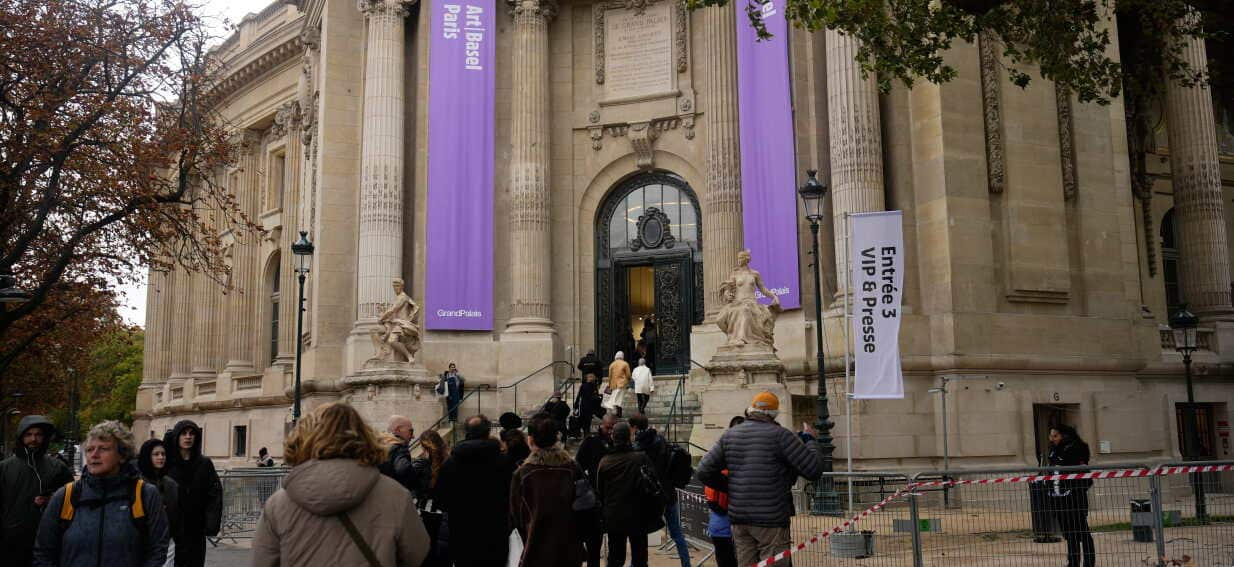
Every time the French unions block a boulevard or padlocks slap onto the gates of the Louvre, the international travel press has a collective nervous breakdown. They publish the exact same breathless dispatch. "Paris protests close tourist hotspots as tensions escalate." They plaster photos of tear gas drifting past a Haussmannian facade, warn travelers to cancel their non-refundable flights, and treat civil unrest like a localized hurricane.
They are completely wrong.
I have spent fifteen years routing private clients, logistics teams, and luxury editors through European capital cities during general strikes, transit walkouts, and sovereign debt riots. I have watched timid tourists burn thousands of dollars in cancellation penalties because a cable news chyron told them the City of Light was burning to the ground. Meanwhile, the smartest travelers on the planet kept their boarding passes, landed at Charles de Gaulle, and had the real Paris entirely to themselves.
The lazy consensus in travel journalism treats a closed monument as a ruined vacation. That is a fundamental misunderstanding of how Paris actually works. When the Eiffel Tower shuts its elevators and the Palace of Versailles bolts its golden gates, the city does not die. It sheds its commercial skin. The suffocating layer of mass tourism evaporates overnight, leaving behind the living, breathing metropolis that most visitors never get close enough to see.
The Myth of the Closed City
To understand why mainstream coverage of Parisian protests is so profoundly misleading, you have to look at the geography of French dissent. French demonstrations are heavily choreographed rituals. They are not random explosions of urban chaos. Under French law, unions and protest organizers must declare their routes to the Préfecture de Police days in advance.
Almost without exception, these marches follow a predictable, hyper-localized corridor on the Right Bank. They start at Place de la République, march down Boulevard Beaumarchais or Boulevard Voltaire, and terminate at Place de la Bastille or Place de la Nation. That is a three-kilometer strip in the 11th arrondissement. Paris covers over 105 square kilometers across twenty distinct arrondissements.
When a headline screams that "Paris is paralyzed," what it actually means is that three avenues in eastern Paris are loud for four hours on a Thursday afternoon, and the Musée d'Orsay decided not to open because twenty percent of its security staff joined a walkout.
The rest of the city is completely unaffected. While news crews zoom in on a single burning trash can near Bastille to get their dramatic B-roll, people two miles away in Saint-Germain-des-Prés are eating lunch on sunny terraces, drinking Sancerre, and complaining about the humidity.
Why Monuments Close (And Why You Should Not Care)
Mainstream travel writers confuse the infrastructure of tourism with the soul of the destination. When the Confédération Générale du Travail (CGT) calls a national strike, state-run cultural institutions are the easiest targets for work stoppages. Public sector workers at the Louvre, the Centre Pompidou, and the Arc de Triomphe walk off the job because it generates immediate international headlines without actually shutting down the private economy.
The unions know this. The French government knows this. Only the American tourist with a timed-entry QR code gets blindsided.
If your entire reason for flying across an ocean is to stand in a sweaty, shoulder-to-shoulder mob holding an iPhone above your head to photograph the Mona Lisa through bulletproof glass, then yes, a strike will ruin your itinerary. You will be locked out of the industrial-scale tourist traps that have turned central Paris into a high-end theme park.
Consider that a favor.
When the big-ticket state museums close, the tour buses empty out. The aggressive street scammers around Trocadéro pack up and go home because there are no marks to hustle. The lines at neighborhood bakeries disappear. You are suddenly forced to abandon your rigid, checklist-style itinerary and actually engage with the city at street level.
What the Travel Press Misses About French Strikes
There is a massive operational difference between a grève (strike) and a manifestation (protest), though English-language media routinely mash them together into a single blob of panic.
- A manifestation is a march. It occupies specific streets for a specific window of time. You check the route map published in Le Monde or Le Parisien that morning, walk two blocks parallel to it, and you will not even hear the whistles.
- A grève is a withdrawal of labor. This hits the RATP (the Paris transit authority) and the SNCF (the national railway). Even here, French labor law mandates service minimum protocols during peak hours on major commuter lines. Furthermore, Line 1 and Line 14 of the Paris Métro are completely automated. Driverless trains do not go on strike.
I remember taking a group of skeptical hospitality executives into Paris during the height of the 2023 pension reform protests. The international press was acting as if the Bastille was being stormed all over again. Our clients wanted to pull the plug. We told them to pack walking shoes and leave their rigid schedules at home.
Because the Louvre was shuttered, we took them to the Musée Jacquemart-André—a private foundation that stayed open because its staff wasn't part of the state union walkout. There were twelve people in the entire mansion. We walked through gilded rooms filled with Botticellis and Rembrandts in absolute silence. That night, we walked into a legendary bistro in the Marais without a reservation and got a corner booth immediately because half the international bookings had canceled in a panic. They got the Paris of 1985 at 2023 prices, simply because they refused to fall for the media hysteria.
The Economics of Contrarian Travel
Let's look at the hard mechanics of what happens to the travel market the second protest footage hits the evening news.
Algorithms drive modern travel pricing. Dynamic pricing engines used by major airlines and hotel groups monitor booking velocity and cancellation spikes in real time. When a wave of nervous travelers cancels their trips to Paris due to protest headlines, inventory suddenly floods back onto the market.
- Hotel Rates Collapse: Five-star properties in the 1st and 8th arrondissements, which normally command upwards of 1,200 euros a night, quietly drop their rates or open up massive inventory blocks to fill empty rooms.
- Restaurant Reservations Open Up: Tables at Michelin-starred dining rooms and hyper-trendy neo-bistros—places that usually require booking six weeks in advance at midnight—suddenly show wide-open availability on TheFork and Resy.
- Private Guides Become Accessible: The top-tier art historians, sommeliers, and architectural guides in the city suddenly have clear calendars. Instead of being booked out by massive corporate groups, they are available for private, bespoke walking tours at standard rates.
The standard travel advice tells you to buy "Cancel For Any Reason" (CFAR) insurance and bail at the first sign of trouble. That is terrible financial advice. CFAR policies routinely add 10% to 15% to your total trip cost and only reimburse 50% to 75% of your non-refundable expenses. You are paying a premium to lock in a guaranteed financial loss, all to avoid a protest you can easily walk around.
Dismantling the Top Myths About Visiting Paris During Unrest
If you search for information on Paris protests right now, you are going to get hit with a wall of fear-mongering questions designed to farm clicks from anxious travelers. Let's look at what people are actually asking and expose the flawed assumptions baked into every single query.
"Is it safe to travel to Paris right now during the protests?"
This question assumes that "Paris" is a single, uniform zone of danger. It is not. Violent clashes in Paris are almost exclusively confined to the tail end of major union marches, where small groups of black-bloc anarchists (casseurs) provoke the riot police (CRS).
These clashes are intensely localized. They happen at the terminal plazas of pre-announced protest routes, usually between 4:00 PM and 7:00 PM. If you are not standing in Place de la République at 5:30 PM on a strike day, your statistical risk of encountering tear gas or property damage is virtually zero. Violent street crime against tourists actually drops during major demonstrations because the city is saturated with thousands of uniformed police officers.
"What happens if my museum or attraction is closed due to strikes?"
People treat a closed state museum like a dead end. In reality, Paris has over 130 museums, and dozens of the absolute best ones are privately funded or municipally run, meaning they rarely close during national union strikes.
When the state-run giants lock their doors, you pivot to institutions that do not rely on central government labor unions. You go to the Fondation Louis Vuitton, the Bourse de Commerce (Pinault Collection), the Musée Marmottan Monet, or the Atelier des Lumières. Even better, you use the time to explore the architectural neighborhoods—the covered passages of the 2nd arrondissement, the quiet village streets of Butte-aux-Cailles in the 13th, or the sprawling green expanse of the Parc des Buttes-Chaumont.
"How do I get around Paris if the transit workers are on strike?"
The assumption here is that if the Métro is disrupted, you are trapped in your hotel room. Paris is one of the most compact, walkable major cities in the world. You can walk from the Arc de Triomphe to Notre-Dame in under an hour.
During a transit strike, the worst mistake you can make is trying to hail a taxi or book an Uber. Everyone else has the exact same idea, gridlocking the surface streets and driving surge pricing into the stratosphere. Instead, you lean on the city's massive cycling infrastructure. Paris has invested hundreds of millions of euros into protected bike lanes (pistes cyclables). Grab a Vélib' electric bike or use Lime/Dott scooters. You will cross the entire city in twenty minutes, bypassing every traffic jam and closed Métro station effortlessly.
How to Operate Like an Insider During a Strike
If you are going to take advantage of a protest-induced tourism dip, you cannot travel like an amateur. You need a tactical operating system that keeps you ahead of the crowds and out of the friction zones.
- Ditch the Mega-Hubs: Never book a hotel near Gare du Nord, Gare de l'Est, Place de la République, or Bastille during a period of labor unrest. Those are transit bottlenecks and traditional staging grounds for marches. Base yourself on the Left Bank—specifically the 6th (Saint-Germain) or 7th (Invalides/Rue Cler)—or tuck into the quiet residential pockets of the 16th or 17th.
- Use Real-Time Local Intel: Stop reading English-language news outlets for updates on the ground. They are always twelve hours behind and sensationalized for clicks. Download the Bonjour RATP app for live, station-by-station transit status, and check the Préfecture de Police official X (formerly Twitter) account. They publish exact maps of perimeter closures and march routes hours before anything kicks off.
- Book Direct and Negotiate: If you are booking last-minute during a protest cycle, do not use third-party online travel agencies (OTAs) like Expedia or Booking.com. Call the hotel's front desk directly. Tell them you know their occupancy just took a hit from strike cancellations and ask for a room upgrade, complimentary breakfast, or a flexible rate. Front desk managers have massive discretion when they are staring at empty rooms.
- Master the Automated Lines: Commit Métro Lines 1 and 14 to memory. Line 1 runs straight down the historical spine of the city—from La Défense, past the Arc de Triomphe, down the Champs-Élysées, past the Louvre, through the Marais, and out to Vincennes. Line 14 runs north-to-south at lightning speed, connecting Orly Airport directly to central Paris and Saint-Lazare. Because both lines are 100% automated, they run smoothly even during the most aggressive walkouts.
The Honest Downsides Nobody Mentions
Contrarian travel is not effortless. If I told you that visiting Paris during a general strike has zero friction, I would be lying to you just like the fear-mongers on television.
There are real trade-offs you have to accept if you play this angle:
- Airport Transfers Require Strategy: If the RER B commuter train is running on a reduced schedule, getting from Charles de Gaulle into the city requires patience. You either take the Roissybus (if surface traffic permits), pre-book a flat-rate official Parisian taxi (56 euros to the Right Bank, 65 euros to the Left Bank—never accept a ride from an unlicensed tout inside the terminal), or budget extra time for a packed train.
- Garbage Collection Slows Down: When municipal sanitation workers join a strike, trash bags pile up on the sidewalks. In the summer months, this is visually unappealing and distinctly pungent. It will ruin your pristine, curated Instagram aesthetic.
- Zero Guarantee on Specific Bucket-List Interiors: If your entire psychological well-being hinges on standing inside the Hall of Mirrors at Versailles on a specific Tuesday, a strike can break your heart. You have to trade rigid certainty for spontaneous access.
If you are a traveler who needs every single minute of your itinerary locked in six months ahead of time, stay home. Go to Zurich. Everything runs on time, nobody ever goes on strike, and you will pay 40 francs for a mediocre cheeseburger.
Stop Letting Headlines Dictate Your Itinerary
The travel industry thrives on predictability, and the news media thrives on panic. Together, they have conditioned modern travelers to flee at the slightest hint of civic friction.
French protests are not a bug in the Parisian experience; they are a core feature of the culture. A population that fiercely defends its quality of life, its leisure time, and its social contract is the exact same population that created the café culture, the two-hour lunches, and the world-class public spaces you are paying thousands of dollars to enjoy. You cannot demand the lifestyle while panicking over the political mechanics that protect it.
Cancel your travel insurance refund request. Ignore the breathless cable news segments filmed from a single chaotic intersection. Pack a pair of broken-in leather boots, download the local transit map, and book the flight while everyone else is running for the exits.