The air inside the boardroom at the edge of the Martian crater didn’t smell like the future. It smelled like recycled sweat and the metallic tang of an overtaxed filtration system. Marcus watched a bead of condensation crawl down the triple-paned glass, separating him from a landscape of rusted dust and lethal radiation. Behind him, the Leadership Team—the supposed pioneers of the Red Planet’s first sustainable colony—were arguing about quarterly caloric yields.
They were four hundred million kilometers from the nearest grocery store, and they were playing office politics.
This is the reality of the Leadership Team from Hell. On Earth, a toxic boss means a bad week or a resume update. On a hostile planet, a toxic leader is a slow-motion suicide pact. When we talk about space colonization, we fixate on the thrust of the engines or the durability of the carbon-fiber hulls. We obsess over the "how." We almost never talk about the "who," or the terrifying psychological friction that occurs when high-ego personalities are shoved into a pressurized tin can with no exit strategy.
The Architect of Friction
Consider Elias Thorne. He wasn't a villain in the mustache-twirling sense. He was a brilliant structural engineer with a resume that spanned three continents and two decades of flawless execution. But Elias had a flaw that didn't matter in a skyscraper in Dubai: he could not admit when he was wrong.
In a terrestrial office, a leader’s ego is buffered by space. You can walk away. You can go to a different floor. You can vent to your spouse over dinner. On a planet like Mars, there is no "away." Every sharp word, every dismissed concern, and every act of micromanagement echoes through the corridors of the habitat. It builds a psychological pressure that parallels the atmospheric pressure outside.
Marcus watched Elias dismiss a junior technician’s report on erratic pressure readings in the hydroponics bay. Elias didn't look at the data. He looked at the clock. He wanted to stay on schedule for the monthly report back to Earth. The data was an inconvenience. The human reporting it was a nuisance.
This is where the invisible stakes reside. Leadership in extreme environments isn't about vision; it's about the preservation of the collective psyche. When a leader prioritizes their status over the group’s shared reality, the reality begins to fracture.
The Mechanics of Isolation
In the early 1990s, the Biosphere 2 project in Arizona served as a harrowing precursor to what we now face in planetary expansion. Eight people were sealed inside a three-acre glass dome. They were meant to prove that a closed ecological system could support life. Within months, the group split into two warring factions. They stopped speaking. They hoarded food. One woman lost the tip of her finger in a thresher, and even that physical trauma couldn't bridge the social chasm.
The oxygen levels in Biosphere 2 began to drop mysteriously. The soil was consuming it faster than the plants could replace it. As the air grew thin, the inhabitants' cognitive functions declined. They became irritable, paranoid, and lethargic.
The Leadership Team on our hypothetical "Hell Planet" faces the same physiological trap. On Mars, you are living in a low-gravity, high-radiation, claustrophobic environment that actively degrades the human brain. Chronic stress elevates cortisol. High cortisol impairs the prefrontal cortex—the part of the brain responsible for impulse control and complex decision-making.
Essentially, the longer a leader stays on a hostile planet, the less equipped they are to lead.
Elias Thorne’s insistence on the caloric yields wasn't just stubbornness. It was a biological failure. He was losing the ability to process nuance. He saw the colony not as a living organism of human beings, but as a spreadsheet that needed to be balanced to satisfy the shareholders back on Earth. He was suffering from "Earth-Sight"—the fatal habit of managing for a world that no longer exists for you.
The Social Cost of a Bad Call
Every decision made by a dysfunctional leadership team carries a hidden tax. In the business world, we call it "turnover." In deep space, there is no turnover. There is only "wear."
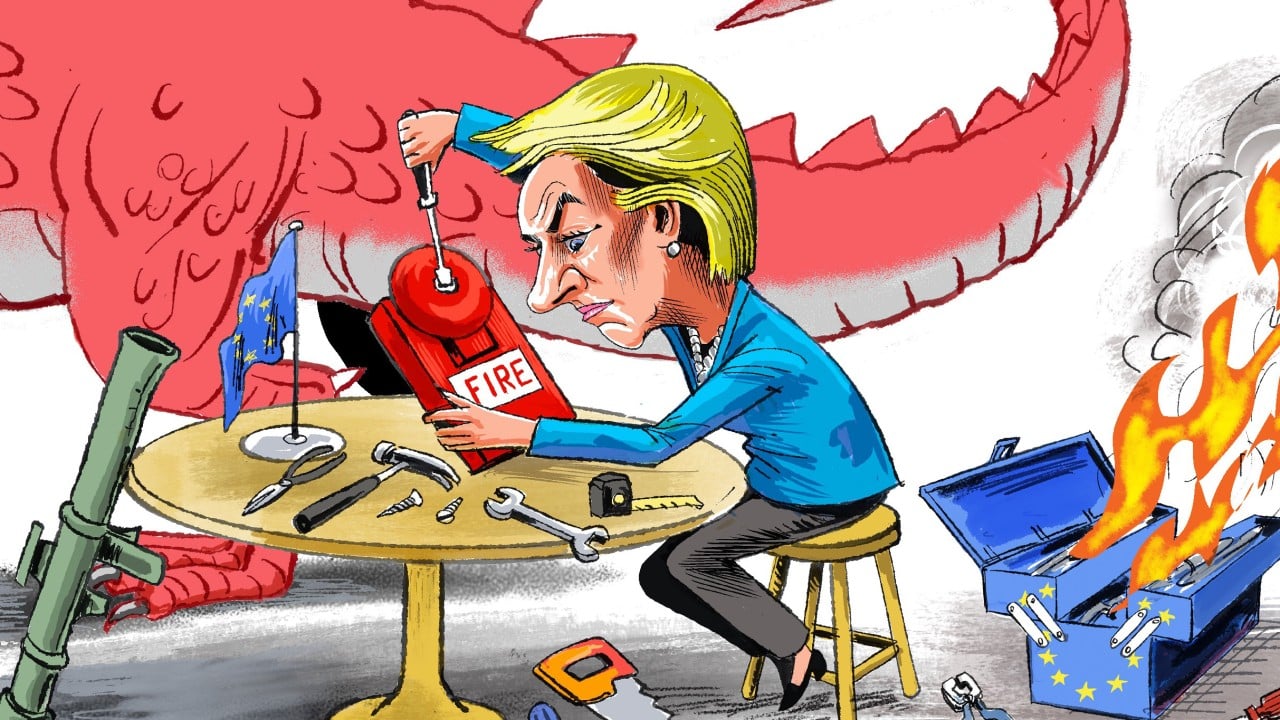
Imagine Sarah, the head of life support. She has noticed a subtle vibration in the CO2 scrubbers for three weeks. She brings it to the leadership meeting. Elias shuts her down because the repair would require a four-hour power cycle, and a power cycle would trigger an automated alert to Mission Control. He doesn't want the "red status" on his record.
Sarah retreats. She stops looking for the subtle vibrations. She does the bare minimum to keep the lights on because the emotional energy required to fight Elias is more than she has left.
This is the "Silent Sabotage." It isn't born of malice. It’s born of exhaustion. When the people at the top are perceived as incompetent or uncaring, the people at the bottom stop caring about the mission. They focus on survival. They stop communicating.
In a closed system, communication is as vital as water. If the flow of information is blocked by a leader’s ego, the system will eventually dehydrate and die. The mechanical failure that eventually kills the colony won't be an accident. It will be the logical conclusion of a conversation that never happened.
The Myth of the "Strong" Leader
We have been conditioned by decades of cinema to believe that in a crisis, we need a "strong" leader—someone who barks orders, ignores dissent, and pushes through by sheer force of will.
That model is a death sentence in the stars.
The most successful leaders in isolated environments—from Antarctic research stations to nuclear submarines—behave more like facilitators than commanders. They are hyper-aware of the emotional temperature of the room. They know that a disgruntled cook is a greater threat to the mission than a solar flare.
Elias Thorne thought he was being strong. He thought he was maintaining discipline. In reality, he was creating a vacuum. By refusing to show vulnerability, he made it impossible for anyone else to admit they were struggling. And everyone was struggling.
The cost of this "strength" is the loss of the group's collective intelligence. When only one person's voice matters, you only have the brainpower of one person. In a place as complex as Mars, one brain is never enough. You need the synthesis of every mind in the room to survive the variables you can't see coming.
The Breaking Point
The end doesn't come with a bang. It comes with a sigh.
One evening, the scrubbers finally stuttered. The vibration Sarah had warned about turned into a mechanical seizure. The air didn't vanish instantly; it just stopped being scrubbed. The CO2 levels began to climb—slowly, almost imperceptibly.
In the boardroom, Elias was still talking about the caloric yields for next quarter. He was pointing at a graph, showing a projected 5% increase.
Marcus looked around the table. He saw Sarah staring at her hands. He saw the communications officer looking at the floor. No one interrupted Elias. No one pointed out the red light blinking on the wall behind him. The leadership had successfully crushed the spirit of the team so thoroughly that no one felt like saving them.
They sat in the dimming light of a dying world, watching a man explain how successful they were going to be.
The tragedy of the Leadership Team from Hell isn't that they are incompetent at their jobs. Most of them are experts. The tragedy is that they forget that leadership is a biological contract. It is the promise that the person in charge will value the group’s survival over their own image.
When that contract is broken, the oxygen starts to run out long before the machines fail.
Marcus stood up and walked to the window. The sun was setting, a tiny blue dot in a vast, dusty sky. He thought about Earth—the green, the rain, the noise. He realized then that the most expensive thing in the universe isn't rocket fuel or radiation shielding.
It’s trust.
And they had spent every last drop of it.