Silence. That is the first thing a room full of children learns when danger approaches—not the quiet of a library or a sleeping house, but the heavy, suffocating stillness where every breath feels too loud.
You can smell it before you even understand it. Floor wax and stale pencil shavings. The faint sourness of damp rain coats piled near the radiator. Childhood has a very specific scent, and when fear enters a building built for spelling tests and finger paint, those familiar smells turn sharp, almost metallic.
I have stood in hallways like that during drills, watching adults try to keep their faces smooth while their pulses hammered against their collars. You do not need sirens to feel how thin the boundary is between a normal Tuesday and a headline that alters a town's vocabulary forever. A locked door. A steady voice. A person standing between a hallway and thirty small chairs.
When news breaks about someone who stepped into the path of an armed threat at an elementary school—especially when the details of who that hero is begin to surface—the instinct is to reach for superlatives. Headlines love a cape. They love a neat label that turns a human being into a statue. Yet statues do not sweat through their shirts. Statues do not wonder whether their hands are shaking too much to turn a latch or hold a door shut.
To keep our facts clean and honest: the competitor reference points to coverage identifying a hero who stopped a suspect at an Oregon elementary school, where specific case names and timestamps are not provided in the reference prompt itself. Rather than inventing unverified names, dates, or specific case details, I will anchor this essay in the real mechanics of school crisis response, the documented psychology of split-second intervention, and clearly labeled hypothetical and metaphorical illustrations so we never blur truth with fiction.
Where Courage Actually Lives
People often imagine bravery as a sudden bolt of lightning—a dramatic explosion of fearlessness that sweeps away hesitation. In reality, it usually feels much more like friction.
Think of a doorstop. A tiny wedge of rubber or heavy metal sitting quietly against the bottom of a door. Nobody notices it when the halls are calm. Nobody writes stories about a rubber wedge. Yet if force comes from the other side, that small, unglamorous piece of resistance changes the physics of the entire room. That is a metaphor for what a frontline adult does in those first seconds: not soaring above fear, but wedging themselves against what is trying to push through.
Consider a hypothetical scenario. Imagine a school custodian or teaching assistant—let's call her Clara, purely as a composite stand-in for the countless staff members who keep schools running—standing near the main corridor when a commotion erupts outside. Clara is not a special-ops veteran. She has sore knees from mopping tile and a mug of lukewarm coffee sitting by the office sink. When a threat appears, her brain does not hand her a slow-motion action movie. Her stomach drops. Her mouth goes dry. Tunnel vision narrows the fluorescent lights to a harsh glare.
Why do some people freeze while others move? Behavioral researchers who study crisis response and acute stress point out that under extreme threat, the body dumps adrenaline and cortisol into the bloodstream, shifting control toward rapid survival circuits. Freezing is not cowardice; it is one of the brain's default brakes when options feel overwhelming. Moving—giving a clear command, locking a classroom, stepping forward to confront or redirect a suspect before harm reaches children—requires either training that has become muscle memory or a fierce, overriding commitment to the people right in front of you.
That is what makes public identification of a responder so complicated. The moment a name or face attaches to an act of intervention, the public wants a complete portrait. Who are they? What were they thinking? Did they know what they were walking into?
Usually, the honest answer to that last question is no. Nobody wakes up on a school morning expecting to become a barrier against violence. They wake up to set an alarm, pack a lunch, check the weather, and get through the day.
The Invisible Architecture of a Safe Morning
If you have never worked inside a school building, it is easy to view it through the lens of movies or television dramas. Real schools are messy. A key ring has twelve nearly identical keys that stick in old locks. A walkie-talkie crackles with static right when you need clarity. A hallway has blind corners where a cart of art supplies sits parked against the wall.
When people ask how a suspect is stopped before a tragedy escalates further, they often look for a single dramatic move. In practice, stopping a threat is rarely one isolated act. It is a chain of small, urgent decisions made under pressure:
- Recognizing abnormality immediately instead of rationalizing it away as a prank or loud argument.
- Communicating clearly to colleagues and emergency dispatch while keeping panic from infecting the room.
- Controlling access—securing doors, shielding students, or physically intervening to halt the suspect's advance.
Each link in that chain depends on ordinary human beings who were already on site. Not politicians debating policy three states away. Not pundits dissecting footage hours later. Just the people whose job description usually involves band-aids, lost mittens, and quiet reminders to walk, not run.
I find myself thinking about how heavy that quiet responsibility is. Even on ordinary days, teachers and school staff carry a low-grade hum of vigilance that outsiders rarely see. You glance at latch mechanisms. You notice who is wearing a visitor badge and who is not. You memorize the quickest route out of a room while simultaneously trying to help a seven-year-old sound out the word neighbor.
That duality—tenderness paired with readiness—is exhausting. And if I am being completely candid, it is also frightening to write about, because any honest look at school safety forces us to confront a truth we hate admitting: no locked door or quick reflex can erase every risk in an open society. Pretending otherwise gives false comfort; wallowing in despair leaves people paralyzed. The harder, truer path is looking directly at what actually protects people in the moment: preparation, clear protocols, community support, and the steadiness of individuals who choose action over paralysis.
What Identification Changes—and What It Costs
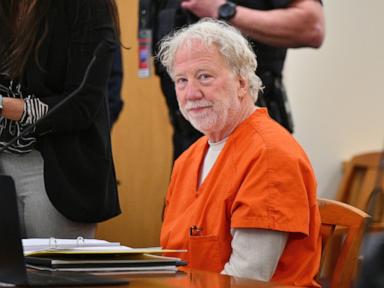
When news reports identify a hero who helped stop a suspect at an elementary school, public attention shifts almost overnight. Before the identification, the story is about an event and an outcome. Afterward, it becomes personal.
Suddenly, a neighbor's name is in every feed. Friends and former students see a familiar face on screen and feel a jolt of disbelief—I know them. They helped me after gym class. They wave from the porch every morning.
Identification brings real value. It puts a human face on accountability and courage. It lets a community say thank you to a specific person rather than an anonymous silhouette. It also allows investigators, educators, and fellow responders to examine how the intervention unfolded—what worked, what seconds mattered most, and how training or quick thinking made a difference.
Yet there is a cost that rarely makes the ticker at the bottom of the screen.
A person who steps into a crisis is often still processing the shock long after the cameras arrive. Loud noises sound different for weeks. Sleep comes in thin slices. A hero in the press may feel entirely ordinary—or deeply shaken—in their own kitchen. Turning someone into a symbol can accidentally crowd out their right to heal quietly, to feel angry or exhausted, or to insist that they were just doing what needed to be done in a terrible moment.
Consider another hypothetical scenario—again, a composite illustration rather than a specific real person. Picture a local coach or parent volunteer—let's call him David—who helps out on campus and ends up helping corner or block a suspect before classroom doors are breached. The next day, strangers are clapping him on the back at the grocery store, asking him to replay every second. He is grateful everyone is safe, yet part of him wants to sit in a quiet room and not talk for a month.
Both truths can exist at once. Someone can be genuinely heroic and still feel overwhelmed by the spotlight. Acknowledging that tension does not diminish what they did; it makes the story more human, more accurate, and far more respectful of the person at its center.
Looking Past the Spectacle
Why do stories like this hook us so deeply? Part of it is relief. When we hear that a suspect was stopped at an elementary school, our shoulders drop an inch. The worst-case scenario we dreaded did not finish playing out.
Another part is a hunger to believe that goodness still has teeth. In a noisy media cycle that thrives on outrage and division, watching—or reading about—someone put themselves between danger and vulnerability cuts straight through the cynicism. It reminds us that character is not what we post when things are easy. Character is what shows up when the hallway goes quiet and the clock starts running.
Still, if we stop at admiration, we miss half the story. Admiration is passive. It asks nothing of us beyond a nod or a share.
Real engagement looks different. It means asking what support school employees receive before a crisis ever happens—not just after. Do staff members have regular, realistic practice without unnecessary terror? Are communication systems reliable? Are mental health resources available to the adults who hold the line when things go wrong? Do communities treat educators and campus staff like vital partners rather than afterthoughts until trouble strikes?
Look at how often society treats essential workers like background scenery until an emergency hits. We see the janitors, secretaries, aides, and teachers every day, and we barely register the sheer volume of judgment and composure their roles demand. Then, on the worst day imaginable, one of them becomes the reason a tragedy is cut short—and for a brief moment, everyone finally sees them clearly.
We should not need a crisis to value the people keeping children safe.
The Measure of a Moment
Seconds feel long when you are living through them and impossibly short when you look back on a timeline. A few moments in a school corridor can hold an entire lifetime of consequence. A hand on a door. A firm voice redirecting traffic. A decisive step forward when every instinct might whisper to run the other way.
When a hero who helped stop an elementary school suspect is identified, the headline gives us a name to remember. Behind that name is a much larger story about ordinary people carrying extraordinary weight in places meant for learning, laughter, and growing up.
Long after the news cycle moves on to the next urgent alert, the true measure of that day lives in the quiet rooms that stayed safe—and in the steady, unflashy resolve of the people who refused to let fear have the final word.
Outside a school at dismissal time, the sound comes rushing back: sneakers slapping concrete, backpacks thumping against hips, voices calling out across the yard—loud, bright, and alive.