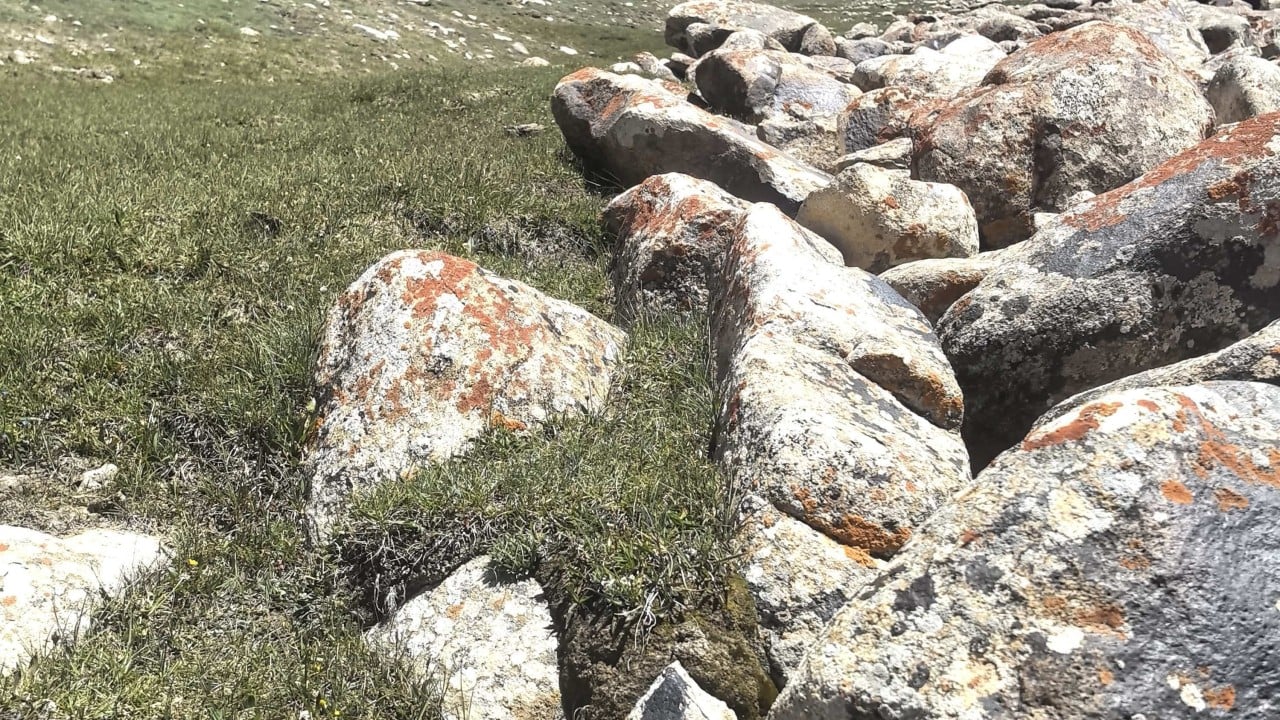
You walk past it every single day on granite boulders, old stone walls, and rugged tree bark. That bright, rust-orange crust clinging to the rock looks like a splash of neon paint. Most hikers ignore it. Geologists, though, pay attention.
Could that stubborn patch of orange lichen actually point toward a hidden deposit of rare earth elements right in your own backyard?
Let's clear up the hype right now. Lichen doesn't magically turn dirt into a bank vault full of neodymium or dysprosium. Nature doesn't work that way. But certain bio-indicators react strongly to trace metals in the soil and rock beneath them. If you know how to read the landscape, these tiny organisms offer a surprisingly clever roadmap to mineral wealth.
The Chemistry Behind the Crust
Lichens aren't actually single plants. They are a partnership between a fungus and an alga or cyanobacteria. This tag-team survival setup lets them live in places nothing else can touch. They grow on bare rock because they don't need soil to survive. Instead, they pull nutrients straight out of the air, rainwater, and dust.
They also secrete organic acids. These acids slowly dissolve the rock underneath them to extract essential minerals.
When rare earth elements or heavy metals exist in the local bedrock, those acids pull them up into the lichen tissue. Certain species of Caloplaca and other orange-pigmented crustose lichens love environments rich in specific metallic salts. They bioaccumulate these elements. Researchers have found that analyzing the chemical makeup of lichen tissue can reveal what is hiding underground without breaking a single shovel of earth.
Think of it as nature's geochemical sampling kit.
Spotting the Right Orange Lichen
Not all orange patches mean treasure. Bright orange crustose lichens belong to several families, most notably Teloschistaceae. They love high sun exposure and specific mineral substrates.
If you see Caloplaca elegans thriving on granite or gneiss formations, you are looking at an organism that handles heavy metal tolerance very well. These lichens concentrate metals like iron, copper, and sometimes lanthanides simply because they can process environments that poison other plant life.
However, amateur prospectors often make massive mistakes here. They see an orange rock face, assume rare earth elements are pouring out of the ground, and start filing mining claims. That is a quick way to lose money and waste time. Lichens react to common iron oxides just as easily as they react to high-value technology metals.
Why Rare Earth Elements Matter Right Now
Every smartphone, electric vehicle motor, and wind turbine relies on rare earth elements. Governments are scrambling to secure domestic supply chains. China currently dominates processing, which leaves western nations desperate for new deposits at home.
That desperation drives people to look for unconventional prospecting methods. Geobotanical prospecting isn't new. Miners have used indicator plants for centuries to find nickel, uranium, and gold. Using lichen to target heavy metals is just the modern, microscopic evolution of an old technique.
Geologists use lichen chemistry during initial reconnaissance phases. Instead of drilling blind across thousands of acres, they map vegetation anomalies. If an orange lichen crust shows an abnormal spike in yttrium or cerium during a lab assay, exploration teams know where to focus their core drills.
What You Can Actually Do in Your Yard
Let us be realistic. You are probably not sitting on a multi-million-dollar stash of critical minerals behind your garage.
If you live in an area with ancient shield rock, old volcanic formations, or weathered granite, you might find interesting mineral traces. But finding lichen that accumulates these elements requires specific lab equipment called mass spectrometry. You cannot look at a patch of orange fuzz on your garden wall and tell if it is storing neodymium.
Instead of chasing a get-rich-quick mining scheme, look at these organisms as a window into local geology. Take macro photos. Learn the difference between crustose, foliose, and fruticose growth forms. Understand how complex ecosystems interact with the mineral crust of the earth.
When you start noticing the tiny details on rocks and trees, the outdoors gets a lot more interesting. Leave the heavy metal extraction to the analytical chemists, but keep watching the rocks.