Most kids who watched Jaws in the nineteen-seventies walked away terrified of the ocean. Eight-year-old Emily Morrison was no exception. She stared at the screen, convinced a great white was about to crash through her living room floor, and told her father that sharks were pure monsters waiting to eat anyone who dared swim.
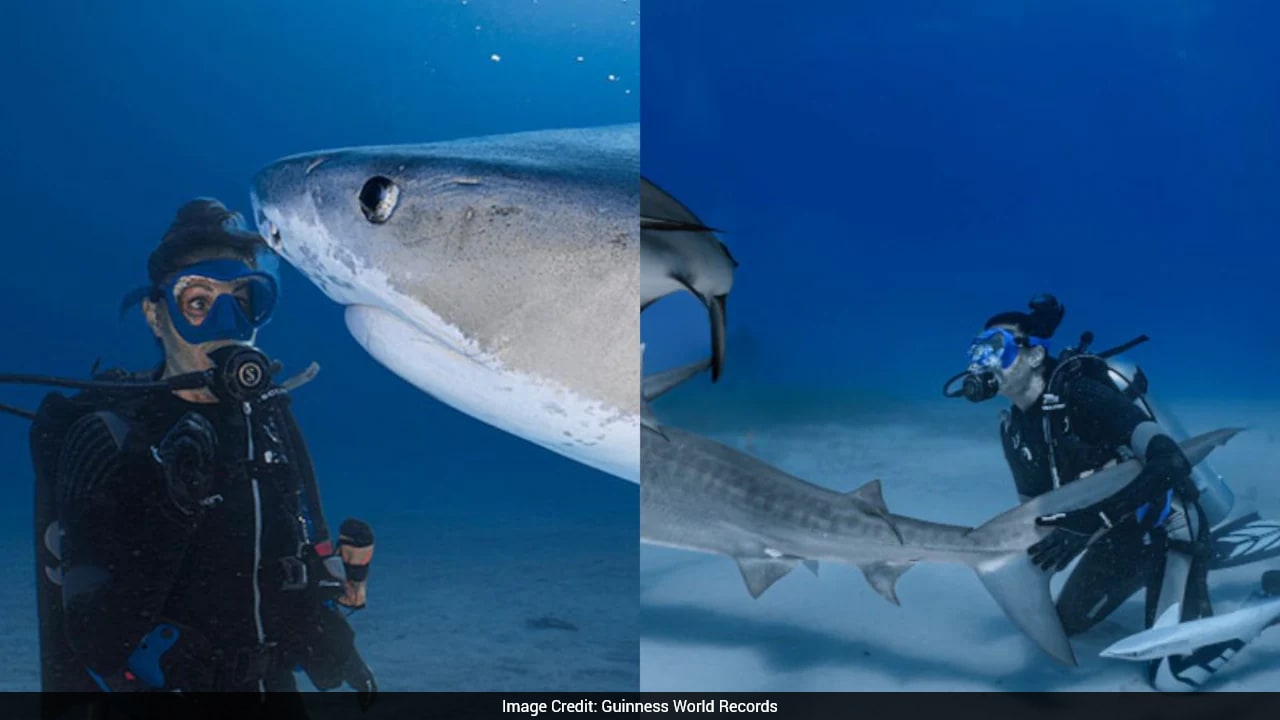
Instead of brushing her fear aside, her dad handed her a library card. He told her to find actual biological proof for why she should hate them. That trip down the research rabbit hole didn't spawn a lifelong phobia. It sparked an obsession that changed her entire existence. Decades later, that same girl grew up to become a professional shark biologist, running adventure tour companies, diving with apex predators, and officially claiming a Guinness World Record for having 106 shark tattoos blanketing her skin from foot to neck.
This isn't just a quirky story about body ink. It is a masterclass in how an irrational childhood terror can morph into deep, lifelong expertise when you refuse to let Hollywood dictate reality.
From Amity Island Nightmares to Real Marine Science
The cinematic image of a mindless, man-hunting eating machine has done catastrophic damage to marine ecosystems. People hate what they don't understand. Little Emily started reading every book and scientific paper she could find, rattling off mind-blowing facts to her baffled father: sharks have survived for roughly 450 million years, outlasting trees and dinosaurs, and individual species can cycle through tens of thousands of teeth in a lifetime.
The more she learned, the less she feared. The teeth-gnashing monster of the silver screen turned into a marvel of evolutionary biology. She realized that sharks aren't villains; they're vital architects of ocean health. If you remove the top predators from a marine habitat, the entire system collapses.
She didn't just stop at reading papers. She took her passion straight to the water. At nineteen years old, right as she began working with the animals professionally, she got her first tattoo. It was a great white inked on her lower back—a deliberate nod to the movie that started it all.
The Anatomy of a 106-Tattoo Record
Getting inked became her personal field journal. Every time she encountered a distinct species in the wild or stumbled upon a rare artifact during her fossil dive charters off the coast of Venice, Florida, she commemorated it on her body.
The numbers tell an incredible story of field experience:
- 106 total tattoos covering her from neck to ankles.
- 71 distinct species accurately represented across her skin.
- 13 fossilized shark teeth and fresh teeth permanently etched into her collection.
She didn't just walk into a local parlor and pick random flash art off the wall. Each piece corresponds to an actual animal she swam with, fed, or studied. Her collection features colorful tributes wrapping around her legs, showcasing everything from zebra sharks and frilled sharks to oceanic whitetips. She's currently eyeing her next milestone, aiming to get examples from all 58 recognized shark families.
What Most People Get Wrong About Shark Behavior
Pop culture tells you that sharks patrol the coasts just waiting for a surfer to snack on. Real marine biology tells a totally different story.
When you spend thousands of hours underwater with these animals, as Emily has across the Bahamas, Australia, and Mexico, you notice something striking. They are cautious, curious, and largely indifferent to humans. They aren't malicious. They operate on ancient, highly tuned instincts honed by millions of years of evolution.
When humans crowd their habitats, overfish their food sources, or destroy coastal mangroves, interactions turn messy. The real crisis isn't that sharks are hunting us down. It is that industrial fishing slaughters an estimated 100 million sharks every single year for fins and meat, pushing critical apex species toward the brink of extinction.
Turning Obsession Into an Actionable Career
Most people trap their passions inside a weekend hobby while grinding away at a soul-crushing nine-to-five job. Emily took a different route. She couldn't handle a corporate desk, so she built her entire life around the ocean.
She bought a shark adventure tour company, guiding people through fossil dive charters, teaching them how to safely observe marine life, and shattering the myths propagated by horror movies. Her work eventually landed her on major media platforms like Discovery Channel's Shark Week, proving that niche expertise pays off if you own it completely.
If you want to turn a strange obsession into a real life, stop waiting for permission. Dive deep into the data, master the subject until you know more than anyone else in the room, and wear your commitments proudly.