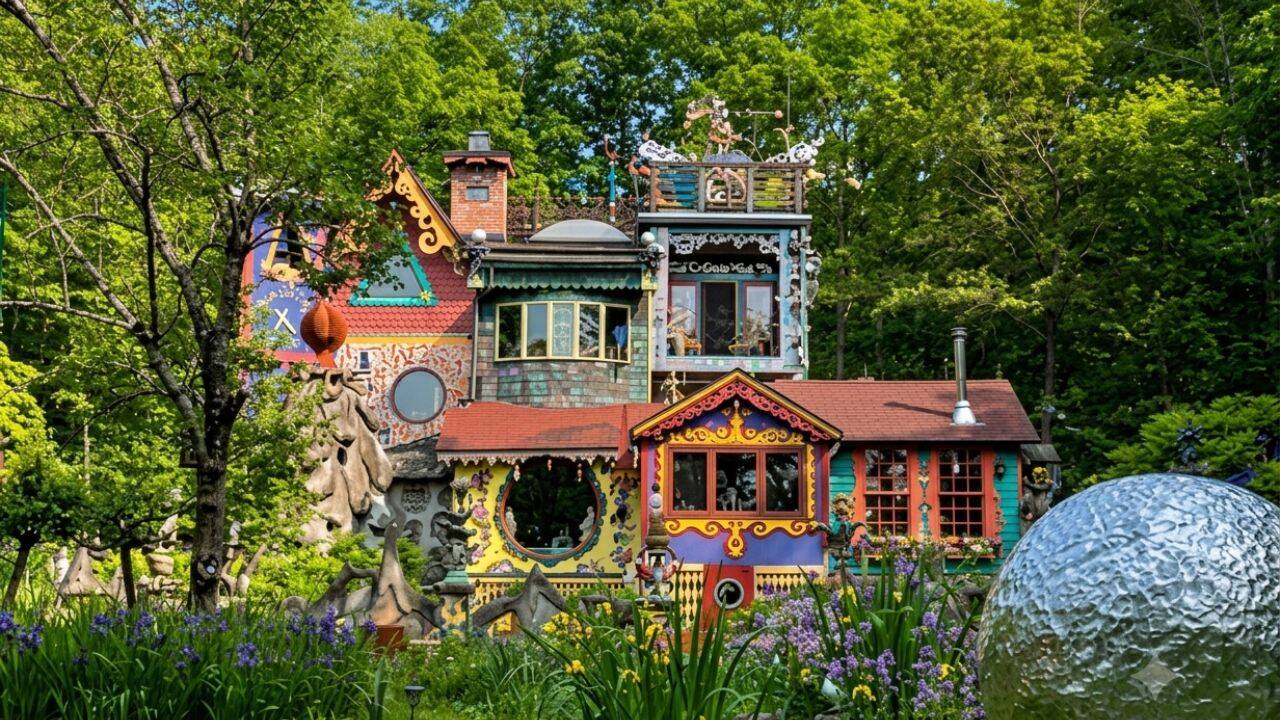
Economic crash. Jobless future. Total uncertainty. Sound familiar?
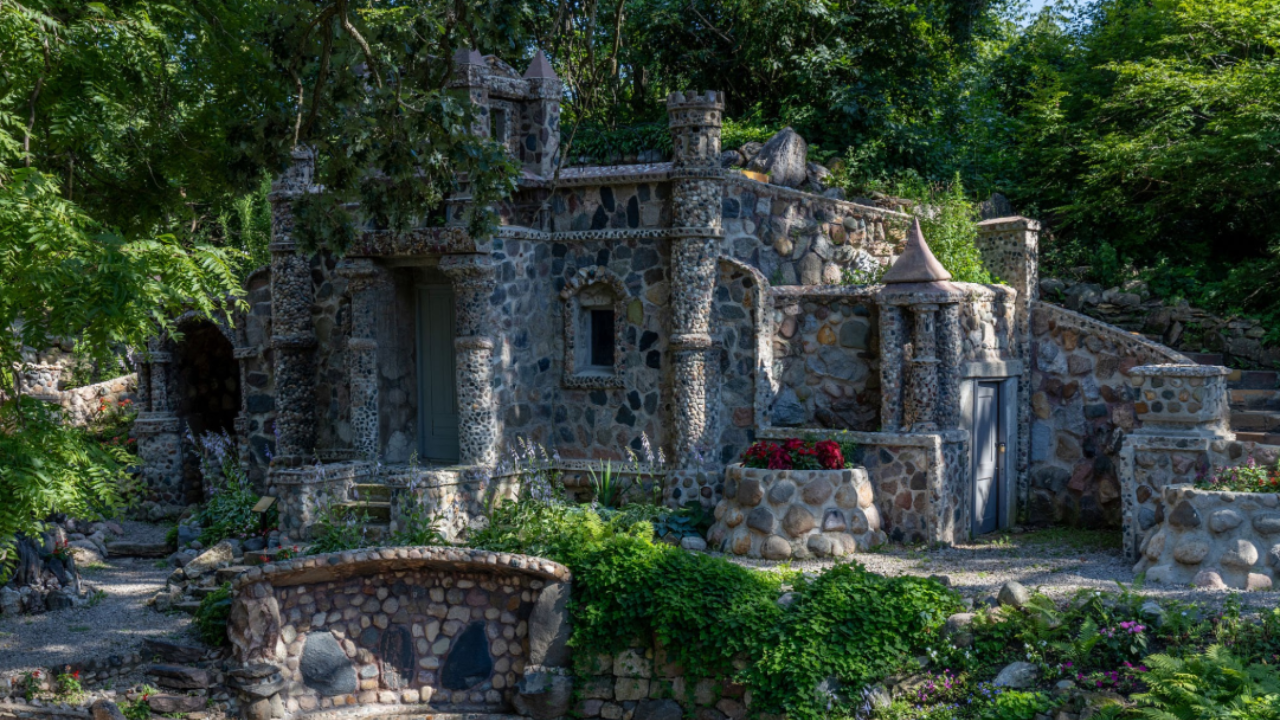
Back in 1932, a guy named W.A. Franke lost everything. The Great Depression tore through Ohio just like it tore through the rest of America. Instead of sitting around waiting for a handout, Franke grabbed a shovel, some mortar, and whatever rocks he could haul. He spent twelve straight years stacking stones in his yard. His wife worked right alongside him, mixing cement and hauling debris while the rest of the world panicked.
They didn't build a standard garden. They built a massive, intricate labyrinth of hand-stacked stone, grottos, hidden pathways, and cascading water features. It became an obsession. It became art.
Most people look at stories like this and think it is just a quirky historical anecdote about a guy with too much time on his hands. They miss the point entirely. Franke's rock garden proves that raw physical creation is the ultimate antidote to helplessness.
The harsh reality of 1932 Ohio
You cannot understand what Franke did without looking at the brutal economic backdrop. Factories shut down overnight. Soup lines wrapped around city blocks. People lost their homes, their dignity, and their sense of agency.
When you lose your job during a collapse, your brain panics. You send out resumes into a black hole. You watch your savings evaporate. Franke faced that exact nightmare.
Instead of letting despair swallow him, he redirected that nervous energy into physical labor. Rocks don't care about stock market crashes. Limestone doesn't file for bankruptcy. By working with his hands every single day, he regained control over a tiny square of the universe.
How they actually built it without money
People always wonder how an unemployed couple funded a massive landscaping project during the worst economic downturn in modern history.
The answer is simple. They used zero budget materials.
- Salvaged broken concrete from demolished sidewalks
- Gathered fieldstones from local farms and riverbeds
- Mixed mortar by hand using cheap, basic ingredients
- Reused old iron grates and discarded glass bottles for structural flair
They didn't hire contractors. They didn't buy expensive plants from specialized nurseries. They relied on sheer, grinding manual labor and stubborn creativity. Every arch, every wall, and every terraced flowerbed went up one heavy stone at a time.
It took twelve years. Twelve years of blistered hands, aching backs, and constant financial stress. But day by day, a masterpiece emerged from the dirt.
Why modern productivity advice misses the mark
Today, we have thousands of books and podcasts telling us how to pivot during tough times. We get endless advice on side hustles, passive income streams, and optimizing our routines.
Yet, we feel more burnt out and helpless than ever.
We stare at screens all day. We push pixels. Nothing we do feels tangible. When the servers go down or the algorithm changes, our work vanishes into thin air.
Franke had the right idea. There is deep psychological healing in physical construction. When you stack heavy stones, you see immediate results. You build something that will outlive you. You trade abstract anxiety for concrete reality.
If you are feeling stuck in your career or overwhelmed by modern life, you need to find your own rock garden. It does not have to be a literal stone wall in Ohio. It could be woodworking, restoring an old engine, learning how to cook complex meals from scratch, or physically renovating a room in your house.
Stop consuming content about fixing your life. Build something real.
The lasting legacy of ordinary obsession
Franke's creation eventually drew curious onlookers from all over the region. People wanted to see the crazy rock garden built by the unemployed factory worker. It transformed from a private coping mechanism into a local landmark.
His story survives because it touches a nerve. We respect people who refuse to quit when the odds are stacked against them. We admire those who turn their lowest moments into enduring monuments of grit.
The rocks are still there, weathered by decades of rain, snow, and changing seasons. They stand as a quiet reminder that you do not need permission, capital, or a booming economy to make your mark. You just need a pile of stones and the willingness to start lifting them.
Grab a shovel. Start stacking.