Saltwater does not knock gently. It slams.
On a stretch of the Pacific Coast Highway where the cliffs drop off like jagged teeth and the asphalt belongs as much to the tide as it does to the state of California, gravity decided to break the rules. A van, heavy with the quiet freight of an ordinary afternoon, found the edge. There are places along this coast where the margin between dry land and the abyss is measured in inches, where a momentary distraction, a patch of slick mist, or a failing brake can turn a machine of convenience into a plummeting stone.
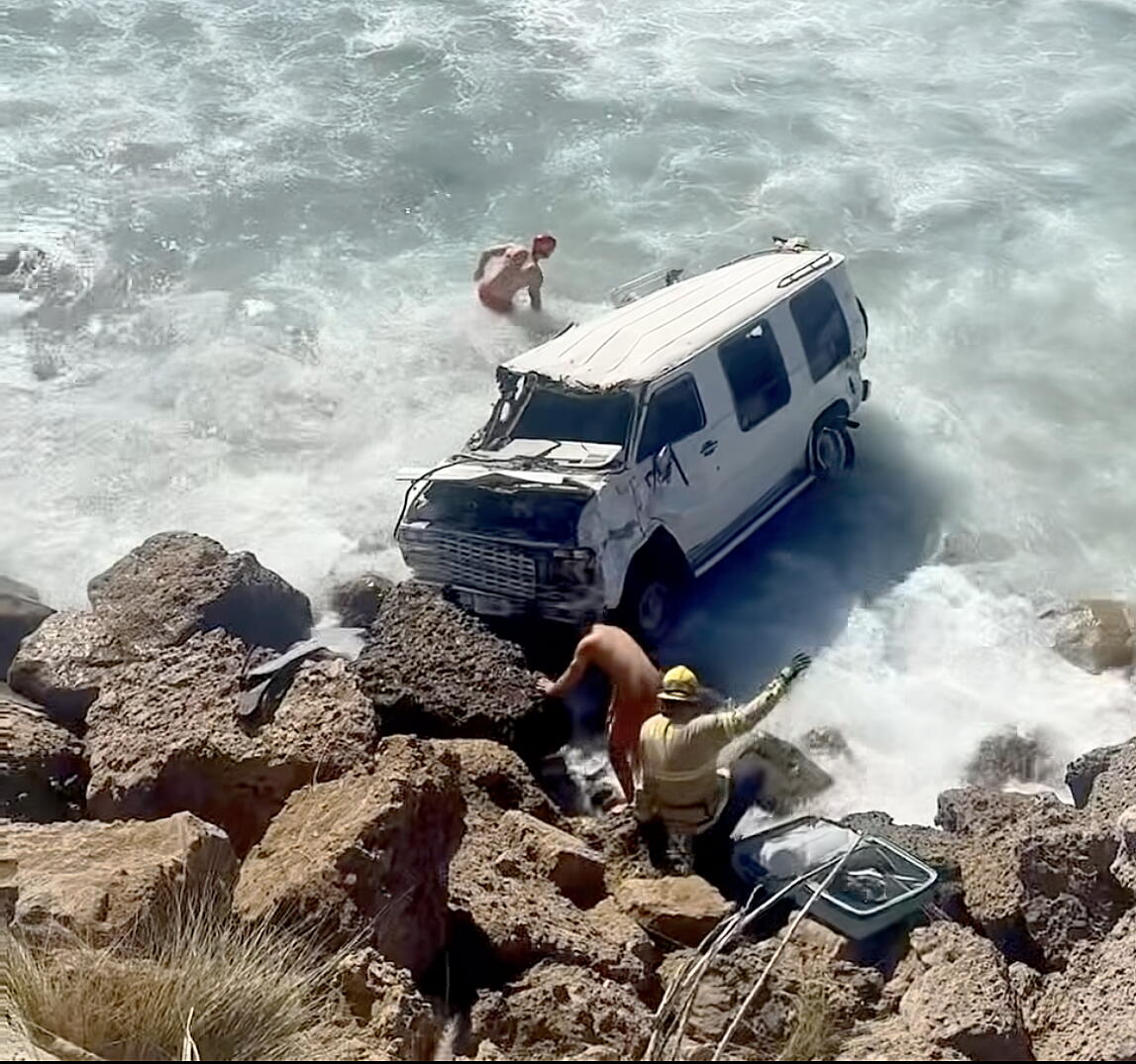
The vehicle went over. It plunged directly into the churning surf near Malibu, disappearing into the white froth and the cold, indifferent swell of the Pacific.
Beneath the crashing water, trapped inside a sinking capsule of air and escalating panic, were dogs.
We measure our lives by the things we protect. For many, that protection extends to the four-legged passengers who ride shotgun, nose pressed against the glass, anchoring us to our own humanity. When the van went down, the story stopped being about metal and insurance claims. It became a frantic race against the physics of drowning.
Consider the mechanics of a submerged vehicle. The moment water touches the engine block, the electrical systems die. The windows refuse to roll down. The doors lock fast against the crushing exterior pressure of the rising tide. Inside, the air shrinks into an ever-tightening pocket at the roof. For a human, survival requires a cold, violent clarity—waiting for the cabin to flood so the pressure equalizes, then kicking the glass.
For animals, there is no logic. There is only terror.
Rescue in the surf is rarely cinematic. It is cold, wet, and exhausting. First responders do not arrive to a background score; they arrive to the roar of breaking waves and the blinding glare of spray off white water. When word came that watch dogs had been pulled from the Pacific, the phrasing sounded clinical, almost detached.
The reality was anything but.
Water is heavy. A gallon weighs over eight pounds. A crashing wave packs the kinetic punch of a moving wall. To pull living creatures out of a wreckage submerged in an active surf line requires a rare breed of stubbornness. It means rescuers wading into water that wants to sweep them out to sea, reaching into shattered windows, hauling out bodies that are panicked, freezing, and heavy with water.
Hypothetically, imagine sitting in the driver’s seat as the vehicle tips forward. The sudden weightlessness. The sickening tilt. The cold shock as the ocean pours through the vents. Now imagine not having a voice to scream, only claws finding purchase on upholstery that is rapidly turning into an anchor.
That is what the dogs experienced.
The Pacific does not negotiate. It rolls in with the same rhythm it has kept for millions of years, indifferent to vans, humans, or cargo. When vehicles leave the Malibu highway and descend into the breakers, they leave behind a brief, chaotic flurry of flashing lights on the pavement above, while down below, a silent, desperate battle plays out against the undertow.
Miracles on this coast are usually forged by muscle and reflex. Bystanders turned lifesavers, firefighters who treat the freezing brine like dry ground, and animal handlers who understand that fear makes even the gentlest creature unpredictable. When the dogs were finally brought ashore, coughing up brine and shaking with a violence born of adrenaline and cold, the victory was quiet.
There were no speeches. Just the heavy panting of animals realizing, breath by ragged breath, that they were still here.
We pave our roads along the edges of giants. We drive heavy machines past drop-offs carved by millennia of erosion, trusting thin yellow lines to keep us safe. But every now and then, the edge gives way. The ocean reclaims what we try to borrow.
And when it does, what we save from the surf tells us everything about who we are when the dry ground runs out.