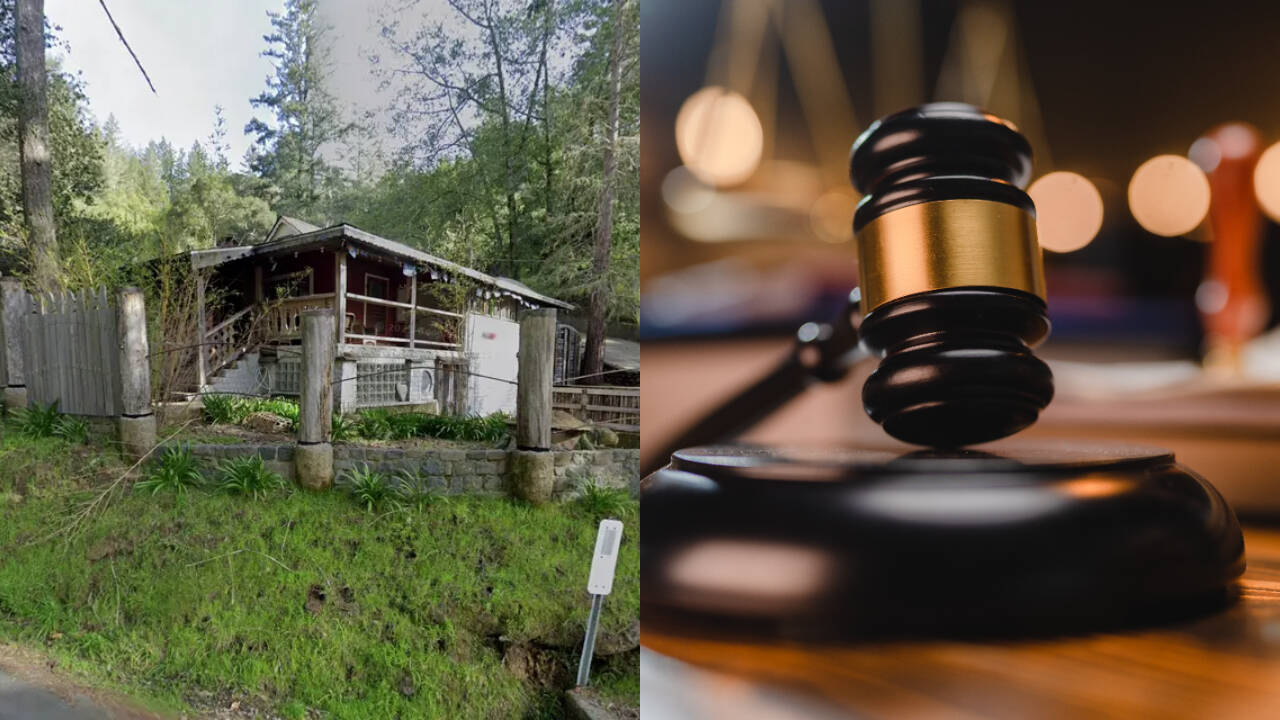
Sentimental journalism loves an eighty-two-year-old underdog. Headlines across California recently wailed over the eviction of a veteran tea importer forced out after fifty-three years inside a peculiar, eccentric compound. The narrative practically writes itself. Greedy landlords crush a fragile pillar of local history. Corporate muscle beats out neighborhood charm. A half-century of quiet devotion tossed onto the concrete pavement.
It makes for magnificent theater. It also completely misses the point of how modern commerce actually operates.
For decades, we have treated commercial longevity as an absolute moral virtue. If a business stays put long enough, society grants it squatter's rights of the soul. We romanticize the cluttered storefront, the dusty inventory, and the lease agreement signed back when gas cost a quarter. We view real estate evolution through the lens of betrayal rather than the ruthless, necessary churn of economic gravity.
I have spent two decades watching founders bleed out slowly while waiting for a landlord to reward their loyalty. I have seen family-owned institutions refuse to modernize their logistics, inventory systems, or capital structures because they believed fifty years of local goodwill functioned as a permanent shield against market reality. It does not. Sentimentality is not a balance sheet asset. When you anchor your survival to nostalgia instead of operational adaptability, eviction is not a tragedy. It is overdue math.
The Myth of the Sacred Space
Let us dissect the primary fallacy driving the outrage over this eviction. The public assumes that fifty-three years in a single, distinct compound creates an unassailable competitive moat. Proponents of this view argue that physical continuity equals brand equity.
That theory worked in nineteen seventy. Today, it is an anchor dragging a business to the ocean floor.
Operating out of an eccentric, idiosyncratic compound for half a century sounds romantic. In practice, it usually means your fulfillment bottlenecks are legendary, your square-foot efficiency is abysmal, and your overhead is tied to a historical distortion that evaporates the moment a property changes hands or zoning laws shift. If your entire operational model depends on keeping a landlords benevolence intact across five decades, you do not own a business. You are a tenant riding a wave of luck.
Commercial real estate is a finite, hyper-competitive resource. When a parcel sits tied to legacy operations that no longer maximize regional utility or economic output, the market corrects. Call it brutal. Call it cold. But do not call it unjust. Real estate turnover forces capital out of stagnant loops and redirects it toward highest-and-best use.
If a tea importer cannot generate enough margin after fifty-three years to secure a sustainable lease or relocate proactively, the failure did not happen on the day the sheriff served notice. The failure began the day the leadership team stopped treating their physical footprint as a variable asset and started treating it as a birthright.
The Nostalgia Tax on Modern Enterprise
Entrepreneurs love to talk about scale, yet they cling to physical footprints like barnacles on a pier. I have sat across the table from founders pulling in seven figures who refused to audit their physical overhead because their grandfather built the original warehouse shelves with his own hands.
That is not heritage. That is operational sentimentality tax, and it bankrupts companies quietly.
When you refuse to move, adapt, or restructure your physical presence, you subsidize your past at the expense of your future. Let us look at the financial mechanics of legacy tenancy:
| Legacy Tenant Traps | Modern Operational Reality |
|---|---|
| Below-market grandfathered leases that breed operational laziness | Market-rate occupancy forces aggressive margin optimization |
| Idiosyncratic, inefficient layouts accepted as character | Purpose-built, modular spaces designed for throughput |
| Geographic stubbornness rooted in community ego | Location strategy based on logistics, labor pools, and cost of capital |
| Total vulnerability to sudden ownership changes | Proactive asset diversification and mobile supply chains |
Notice the glaring disparity. The legacy tenant waits for the external shock—a buyout, an eminent domain claim, a landlord's death—to force their hand. The modern operator views the lease as a strategic lease-life cycle, scaling up, moving sideways, or decentralizing before the market forces a crisis.
When the California tea merchant was forced out, the outcry focused entirely on the loss of a local landmark. Nobody asked the harder question: Why was an enterprise with fifty-three years of operating history still so structurally fragile that a single real estate transition could threaten its existence?
If you build an empire of tea, your moat should be your sourcing relationships, your blending IP, your direct-to-consumer digital infrastructure, and your wholesale distribution network. If your moat is simply the fact that you have occupied a weird building since the Nixon administration, your business model is hollow.
The Brutal Truth About Longevity
Longevity is often just institutional scar tissue. Companies that survive for decades frequently do so by calcifying, not by innovating. They build moats out of habit. They rely on multi-generational customer loyalty that eventually ages out of the market entirely.
Consider the typical specialty importer. They secure rare product lines early. They establish a local cult following. Then, they spend the next thirty years refining their routine while the rest of the world shifts to agile, digitally native competitors who source cleaner, ship faster, and understand modern consumer psychology without needing a quaint physical museum to validate their authenticity.
When an eviction notice arrives, the media treats it as David versus Goliath. But look closer at the mechanics of these legacy setups. Often, the business has underperformed its potential for decades, surviving solely because cheap overhead masked strategic inertia. The moment the overhead normalizes to market rates, the business model implodes.
That is not predatory real estate development. That is the market performing its fundamental duty: clearing out the inefficient to make room for the capable.
What Founders Must Do Instead
If you are running an operation built on physical presence, historical goodwill, or long-term tenancy, you need to strip away the emotional armor immediately.
First, conduct a real estate stress test. If your landlord sold the building tomorrow morning, would your business survive the relocation? If the answer is no, you do not have a company; you have a hostage situation with a roof over it. Diversify your fulfillment. Decouple your brand identity from a specific zip code or an eccentric building.
Second, stop confusing community affection with product-market dominance. Your neighbors might love dropping by your quirky compound to smell dried oolong leaves, but if that foot traffic does not translate into high-margin, scalable revenue that can withstand a standard commercial rent hike, you are running a community center, not a sustainable enterprise. Adjust your pricing, upgrade your digital channels, or accept that your margins are living in the past.
Finally, embrace the mobility of modern commerce. The era of settling into a brick-and-mortar time capsule for half a century and expecting the world to protect your comfort zone is over. The most dangerous phrase in business is "we have always done it this way here."
The California tea merchant's eviction is a wake-up call wrapped in a sob story. Stop crying over the loss of a fifty-year lease. Start auditing your own operations to ensure you are never vulnerable to the whims of a landlord, the shift of a neighborhood, or the passage of time.
Build a business that can survive anywhere, or prepare to pack your boxes when the lease finally runs out.