We measure our lives in the unremarkable. A Tuesday afternoon. The hum of an air conditioner. The fluorescent lights of a shopping mall, buzzing softly above a sea of polished tiles, strollers, and the low roar of retail chatter. It is the architecture of the ordinary. We walk through these spaces with an inherited trust, our guards completely lowered, because the modern city has trained us to believe that thick glass, security guards, and steel frames are an invisible armor against chaos.
Then, a scream tears through the air.
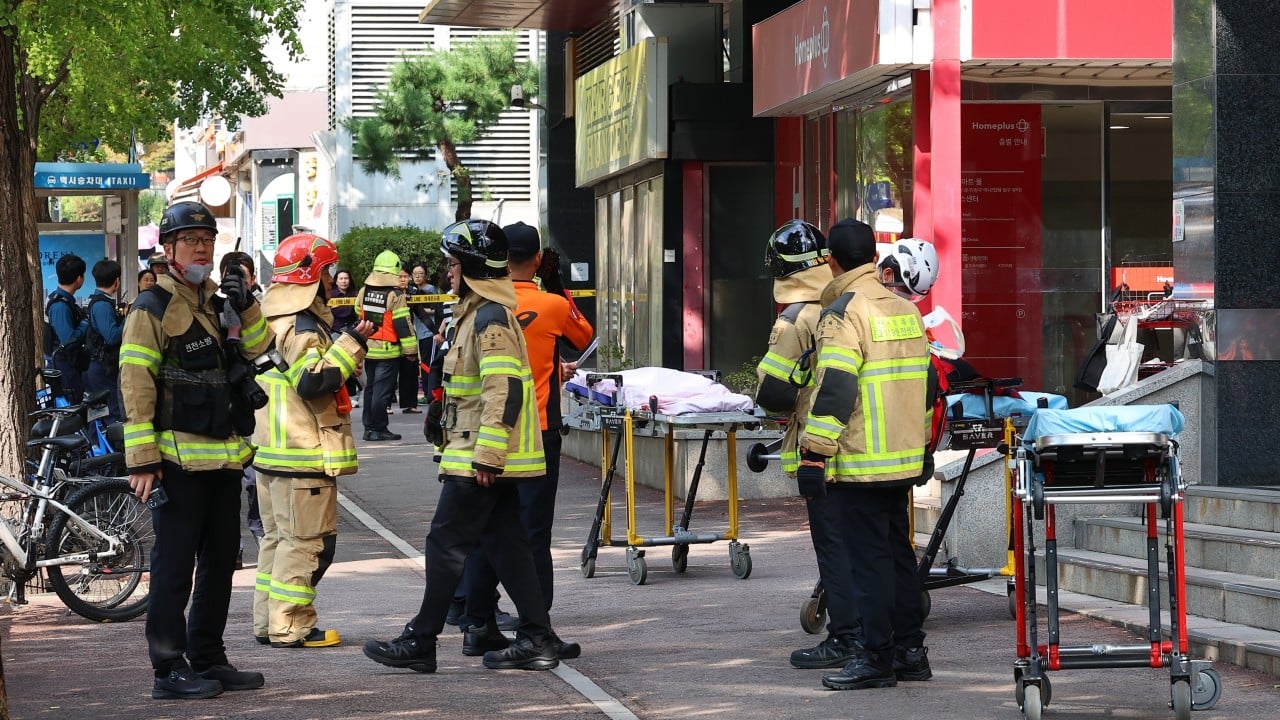
In August 2023, that exact routine shattered inside the AK Plaza department store in Seongnam, South Korea. A 22-year-old man, driving a small car onto a pedestrian walkway, plowed into innocent bystanders before bolting into the bustling commercial hub with a weapon. Within minutes, fourteen people—some struck by the vehicle, others slashed in the sudden frenzy—were fighting for their lives. Eight were left severely injured.
To read the police blotter is to read a cold ledger of coordinates and medical statuses. But statistics do not capture the weight of a moment when safety vanishes. They do not show the terror of a mother pulling her child behind a clothing rack, or the sickening realization of shoppers who thought a commotion was a flash mob or a falling display, only to find themselves running for an exit that suddenly felt a mile away.
Consider what happens to a society when the public square becomes a site of random violence.
South Korea has long prided itself on being one of the safest nations on earth. Walk down a street in Seoul at midnight, and you are statistically safer than in almost any other major metropolis. Parents let young children ride the subway alone. Valuables are left unattended on café tables while owners order coffee. This low-crime reality is not an accident; it is the result of rigorous social compacts, extensive surveillance, and a cultural baseline of communal order.
Yet, beneath the polished surface, structural fractures have begun to widen.
In the wake of the Seongnam attack, and a eerily similar stabbing near Sillim Station just weeks prior, the collective psyche of the nation experienced a tremor. These were not targeted assassinations or gangland disputes. They were acts of indiscriminate rage, carried out by individuals who later expressed a desire to hurt people because they felt marginalized, alienated, or angry at the world. They were expressions of modern isolation weaponized against the crowd.
We live in an era of hyper-connectivity that breeds hyper-isolation. Millions of people exist in digital echo chambers, feeding grievances until a minor frustration metastasizes into a nihilistic desire for notoriety or destruction. When a young man decides to drive a car into pedestrians and then slash strangers in a department store, he is acting out a script written in the dark corners of the internet—a script where personal invisibility is traded for a brief, horrific moment of infocratic power.
The immediate government response was predictable, frantic, and ultimately symptomatic of a deeper panic. Police forces announced special patrols. Armed officers materialized in subway stations with assault rifles—a jarring visual in a country unaccustomed to such overt paramilitary presence in everyday spaces. Online, anonymous copycat threats multiplied like a virus, forcing law enforcement into a game of digital whack-a-mole, arresting teenagers and troubled adults who thought terror was a prank.
More police officers with bigger guns can secure a perimeter, but they cannot heal a fractured sense of belonging.
Security theater offers a comforting illusion. We like to believe that if we install enough metal detectors, hire enough guards, and monitor enough text messages, we can engineer risk out of human existence. But chaos is unruly. It slips through the cracks of policy. When we respond to social alienation solely with a clenched fist, we risk building a fortress that feels less like a home and more like a prison.
The true challenge facing urban societies is not merely how to stop a man with a knife in a shopping mall. It is how to detect the slow, silent unraveling of a human being long before they ever step foot into that mall. It is about recognizing the symptoms of profound alienation—the school dropouts, the young adults trapped in chronic unemployment, the invisible millions who feel entirely disconnected from the social contract.
When a community stops seeing its neighbors as people and starts seeing them as obstacles, or worse, as enemies, the social fabric begins to fray at the seams.
We must ask ourselves uncomfortable questions about the kind of world we are building. We talk endlessly about economic growth, technological innovation, and smart cities, but we invest precious little in emotional infrastructure. We have perfected the art of connecting people across oceans while failing to notice the person drowning in silence right next door.
The injured at the Seongnam department store recovered. The broken glass was swept away. The polished tiles were scrubbed clean, and shoppers eventually returned, because human beings are remarkably resilient creatures who must eat, work, and buy groceries.
Yet the ghost of that afternoon remains. Every time we step into a crowded public space, a tiny part of our brain now scans the room, calculating exits, watching strangers, wondering if the ordinary world is about to split open again.
That vigilance is the hidden tax of modern life. We can pay it with guards and gates, or we can pay it by finally looking up from our screens, turning toward each other, and repairing the invisible bonds that hold us all together before they snap entirely.