The marble is what hits you first. It is blindingly white, polished to a mirror sheen, and entirely cold. When you walk up the steps of the United States Supreme Court, the noise of Washington, D.C., begins to fade. The traffic on Constitution Avenue grows faint. The shouting protestors at the gates sound like they are underwater. Inside, the silence is heavy. It smells of old paper, floor wax, and gravity.
Most people look at the building and see an institution. They see a monument. But if you sit in that courtroom long enough, you realize you are looking at a crucible.
Every single day, nine people in silk robes sit on a raised bench and make decisions that dictate how you live, how you work, and how you die. They decide what you can say online. They decide who owns your data. They decide whether the water flowing from your kitchen tap is safe to drink, and whether your employer has the right to fire you for something you whispered on a weekend. They hold the ultimate remote control over American life.
Yet, for the vast majority of us, the Court is a black box.
We see the headlines when a massive ruling drops in late June. We see the talking heads on cable news screaming at each other. But we rarely understand how the gears actually turn. We don't see the human hands on the levers.
The Weight of the Whispered Word
Consider a hypothetical woman named Sarah. She lives in Ohio. She is thirty-four, works in logistics, and spends her evenings managing a chaotic household of two toddlers and a golden retriever. Sarah does not read legal briefs. She does not know what certiorari means, and she certainly cannot name all nine justices.
But last Tuesday, Sarah’s life changed because of a case argued three years ago in that quiet, marble room.
A federal agency had passed a minor, technical regulation regarding workplace safety equipment. It seemed boring. It was buried on page 412 of a government register. A corporation sued, arguing the agency didn't have the authority to make that rule. The Supreme Court agreed, stripping the agency of its power to interpret ambiguous laws.
Now, the safety guard on Sarah’s warehouse floor is no longer legally required. She doesn't know it yet, but the air she breathes at work and the physical risks she takes every shift are being recalculated.
This is the real Supreme Court. It is not just about the explosive, culture-war issues that dominate the nightly news. It is about the quiet architecture of American reality. When the Court alters a doctrine, the ripples travel through federal agencies, down into state legislatures, across corporate boardrooms, and straight onto your factory floor or office cubicle.
The distance between that marble courtroom and Sarah’s living room feels infinite. It shouldn't.
Deciphering the High Court’s Secret Language
Legal journalism often fails because it treats the law like an algebra equation. It insists on using bloodless terms like stare decisis, originalism, and standing. It treats the Constitution like a dead text to be dissected by academics rather than a living blueprint that shapes our daily existence.
When I first began trying to understand the inner workings of the judiciary, I felt completely locked out. It felt like a secular priesthood. The justices issue opinions that run for eighty pages, choked with footnotes and cross-references to cases decided in 1874. It is easy to look at that mountain of paperwork and simply log off.
But the secrets aren't actually that complicated when you strip away the Latin.
The Supreme Court is fundamentally an argument about power. Who gets to have it? The President? Congress? The states? Or you, the individual?
Every case is a story of a collision. Two rights slam into each other at high speed. The right of a business to operate freely hits the right of a worker to be protected. The right of a religious person to practice their faith hits the right of a citizen to be free from discrimination. The justices are the referees of these collisions.
But here is the catch: the referees make their own rules. And lately, those rules are shifting faster than at any point in modern history.
Why the Current Moment Feels So Fractured
We are living through a legal transformation. For decades, the Court operated on a principle of slow, incremental change. It valued stability above almost everything else. The idea was that the American people needed to know what the law was from one day to the next. If the law changes too fast, the ground liquefies beneath our feet.
Right now, the ground is moving.
The current ideological makeup of the Court has shown a profound willingness to discard decades of precedent. Whether you think this is a long-overdue correction or a dangerous overreach depends entirely on your political worldview. But regardless of your jersey color, the velocity of the change is undeniable.
This velocity creates an environment of intense anxiety. Businesses cannot plan for the next five years because they don't know if the regulations governing their industry will exist in twenty-four months. Doctors are consulting criminal defense attorneys before performing standard medical procedures. Tech companies are rewriting their algorithms in anticipation of rulings that could fundamentally alter the nature of the internet.
It feels chaotic because it is chaotic.
The Court was designed to be the one branch of government insulated from the frantic news cycle. The justices have life tenure precisely so they do not have to care about the latest opinion polls or the screaming matches on social media. They are supposed to be the anchors in the storm.
But what happens when the anchor itself starts to move?
The Questions You Need to Ask
This brings us to the core of the problem. Because the Court is so insulated, and because its language is so dense, a massive gulf of misunderstanding has formed between the public and the judiciary.
People want answers, but they don't know who to trust. The internet is flooded with instant experts who offer hot takes based on thirty seconds of reading a headline. We are starved for actual, deep expertise that doesn't come with a partisan axe to grind.
We need to understand the mechanics. We need to know how a case gets selected out of the thousands that are filed every year. Why do the justices pick one specific dispute about a high school football coach while ignoring a massive case about voting rights? What happens behind the closed doors of their private conferences, where no clerks, no reporters, and no cameras are allowed?
We need to understand the human dynamics. These nine individuals spend decades together. They eat lunch together. They argue. They form alliances. They grow to deeply dislike each other's legal philosophies, yet they must maintain a veneer of collegiality. How do those personal relationships affect the law of the land?
If you could look past the velvet curtains, what would you ask?
Would you ask how they balance their personal moral convictions with their duty to the text of the law? Would you ask if they ever regret a vote once they see the real-world fallout of their decisions?
Your Access to the Black Box
We cannot pull back those velvet curtains ourselves. The Supreme Court remains the only branch of the federal government that refuses to allow live video broadcasts of its proceedings. We are left to listen to audio feeds and read transcripts, trying to decipher the tone of a justice's voice or the sharp edge of a question asked during oral arguments.
But we are not entirely helpless.
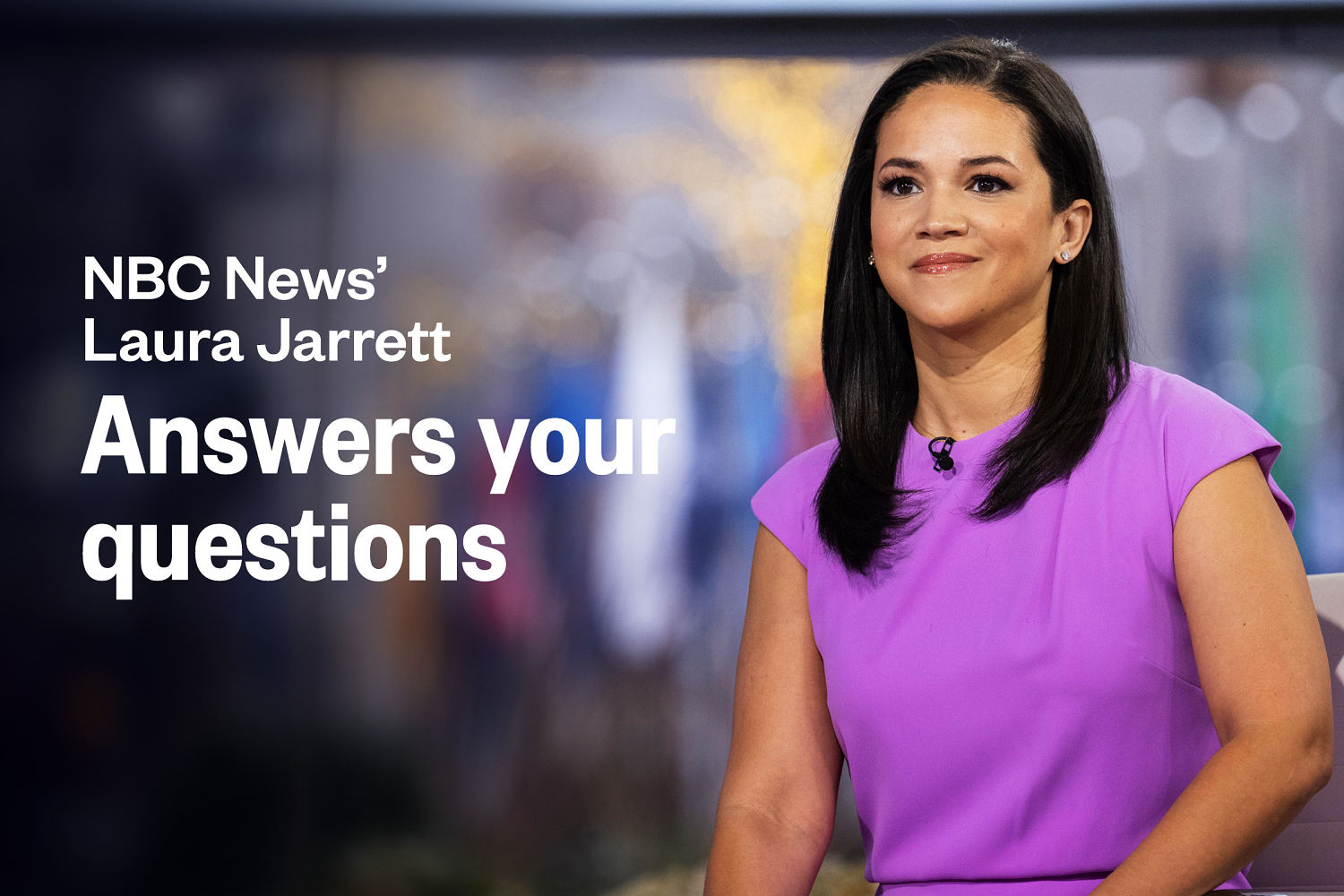
NBC News Senior Legal Correspondent Laura Jarrett spends her life inside that silence. She breathes that floor wax. She reads those eighty-page opinions in the frantic minutes after they are released, translating the dense legalese into human terms before the ink is even dry. She understands the invisible stakes because she watches the people whose lives are altered by every stroke of the pen.
This is where the distance between you and the marble steps disappears.
We are gathering the questions that actually matter. Not the academic theories, but the raw, real inquiries from people who want to know how the highest court in the land is rewriting the rules of their existence.
What is keeping you up at night? Is it the future of digital privacy? The fate of environmental protections? The boundaries of executive power? The mechanics of how a single judge in Texas can halt a nationwide policy with the click of a mouse?
The law belongs to you. The Constitution starts with "We the People," not "We the Justices." It is your right to demand clarity, to seek understanding, and to look directly at the most powerful institution in America and ask exactly what it is doing with your future.
Submit your questions. Let us break down the marble wall together.