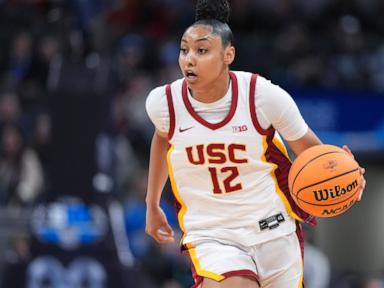
Every time Learfield drops another press release boasting about a triple-digit percentage spike in name, image, and likeness participation for female athletes, the sports industry collectively pats itself on the back. A 123% jump sounds like a revolution. It sounds like equity finally arriving at the collegiate sports complex.
It is also largely a mirage.
I have spent the better part of a decade watching brands throw marketing budgets at collegiate athletics like confetti, hoping something sticks to the wall. I have watched sports agencies scramble to build women's marketing divisions overnight because optics demanded it. When you start from a baseline of practically zero, a 123% increase just means you moved from nominal tokenism to slightly heavier tokenism.
Stop treating a rounding error on a corporate balance sheet like a civil rights victory.
The Baseline Fallacy That Everyone Ignores
Let us look at the mechanics of how these deals actually happen. When brands sign female collegiate athletes, what are they buying?
For the top tier—the Paige Bueckers or the Caitlin Clarks of the recent past—they are buying genuine superstardom. Those athletes transcend gender lines because they captured national television audiences, drew record-breaking ratings, and forced networks to put women's basketball on primary broadcast channels. They earned their valuations through eyeballs and market demand.
Now look at the other ninety-nine percent of that 123% surge.
Most of those contracts are low-four-figure social media posting agreements. They are localized activations funded by corporate sponsors trying to check a diversity box or hit internal environmental, social, and governance metrics. Brands allocate a fractional percentage of their total promotional budget to a handful of volleyball players, gymnasts, and softball stars.
Data from major collective groups shows that the vast majority of female collegiate earners pull in less than two thousand dollars a year. That is not an economic empowerment movement. That is a tax write-off disguised as progress.
When you measure success by the sheer number of participants rather than the median take-home pay, you create a statistical illusion. You make the executive suite look progressive while the economic reality underneath remains starkly uneven.
Why Visibility Does Not Equal Viability
The lazy consensus in sports marketing says that visibility breeds monetization. Put women on television more often, the theory goes, and the commercial floodgates open automatically.
That theory worked for men's sports because men's sports had a century-long head start funded by structural monopolies, institutional tradition, and dedicated television slots. Women's sports are trying to compress that century into five years while using the exact same playbook.
It fails because consumer attention does not flow simply from presence. It flows from narrative, stakes, and distribution.
Imagine a scenario where a mid-tier women's basketball program signs twenty players to standardized endorsement deals via an institutional collective. Every player posts a picture with a local car dealership logo on Instagram. Engagement is low. Conversion rates are invisible. Three months later, the car dealership quietly drops the program from its marketing calendar, claiming the ROI wasn't there.
Who lost in that scenario? The brand blames the athlete's marketability. The athletic department blames the local economy.
Both are wrong. The real culprit is lazy campaign design. Slapping an athlete's face next to a product with zero narrative connection does not work for men, and it does not work for women. Treating female athletes as a monolithic charity case rather than high-performance performance-marketing assets guarantees failure.
The Structural Flaw In Collegiate Collectives
Let us talk about the money machine driving all of this: the collective.
Collectives are poorly run non-profits or thinly veiled LLCs operating on booster fumes and corporate guilt. They are built for speed, not sustainability. When universities outsourced their fundraising and promotional arms to third-party collectives, they created an unregulated Wild West.
In the rush to show equal distribution between men's and women's sports—often driven by Title IX compliance fears or institutional anxiety—collectives began distributing flat-rate stipends. If the quarterback gets fifty grand, the star gymnast has to get fifty grand, regardless of whether gymnastics brings a single dime of ticket revenue or broadcast rights fees back to the ecosystem.
This creates a bubble.
Artificially inflating compensation based on equity mandates rather than market value distorts reality. It teaches athletes that financial returns have no correlation to audience generation. When the booster money dries up—and it is already drying up as universities transition to direct revenue sharing with players—these inflated paper valuations will evaporate overnight.
You cannot subsidize your way into a sustainable market.
What Actually Needs To Happen
If we want genuine economic sustainability for female athletes, we have to stop celebrating percentage jumps on minuscule bases and start demanding structural change.
1. Shift From Charity To Performance Marketing
Stop buying inventory just to look good in an annual report. Brands need to demand performance-based metrics from collegiate athlete partnerships. If an athlete cannot drive clicks, app downloads, or direct sales, the compensation model needs to reflect that. Treating women like fragile investments insults their competitive DNA. They are elite performers; treat them like high-end creators and business partners.
2. Monetize The Superfans, Not The Mass Market
Women's sports leagues and collegiate programs possess some of the most fiercely loyal fanbases in existence. Yet, digital infrastructure across most athletic departments is stuck in 2012. Direct-to-consumer monetization, specialized memberships, and digital collectables aimed at niche superfans generate higher margins than generic local sponsorship banners.
3. Build Independent Media Ecosystems
Relying on legacy sports networks to occasionally broadcast a game as a favor is a dead-end strategy. The future belongs to direct ownership of content. Athletes who understand how to build their own digital distribution channels—podcasts, YouTube hubs, community-driven newsletters—will capture the economic upside long after their playing days end. The ones waiting for a corporate sponsor to hand them a contract will be left holding an empty bag.
The next time you read a press release cheering a massive surge in participation numbers, look past the headline. Ask about the median income. Ask about the retention rate. Ask if the brand is still there six months after the photo op.
Until the answers to those questions match the hype, the revolution is just a press release.