The coffee in the chipped ceramic mug had gone cold hours ago. Outside, the Kyiv air carried that familiar, metallic scent of ozone and impending dread—the signature perfume of a midnight air raid. You do not sleep through it. Even after years of sirens weaving into the background hum of daily survival, your body remembers. Your muscles tighten. Your eyes snap open to the dark ceiling long before the phone alarm sounds.
Then came the percussion.
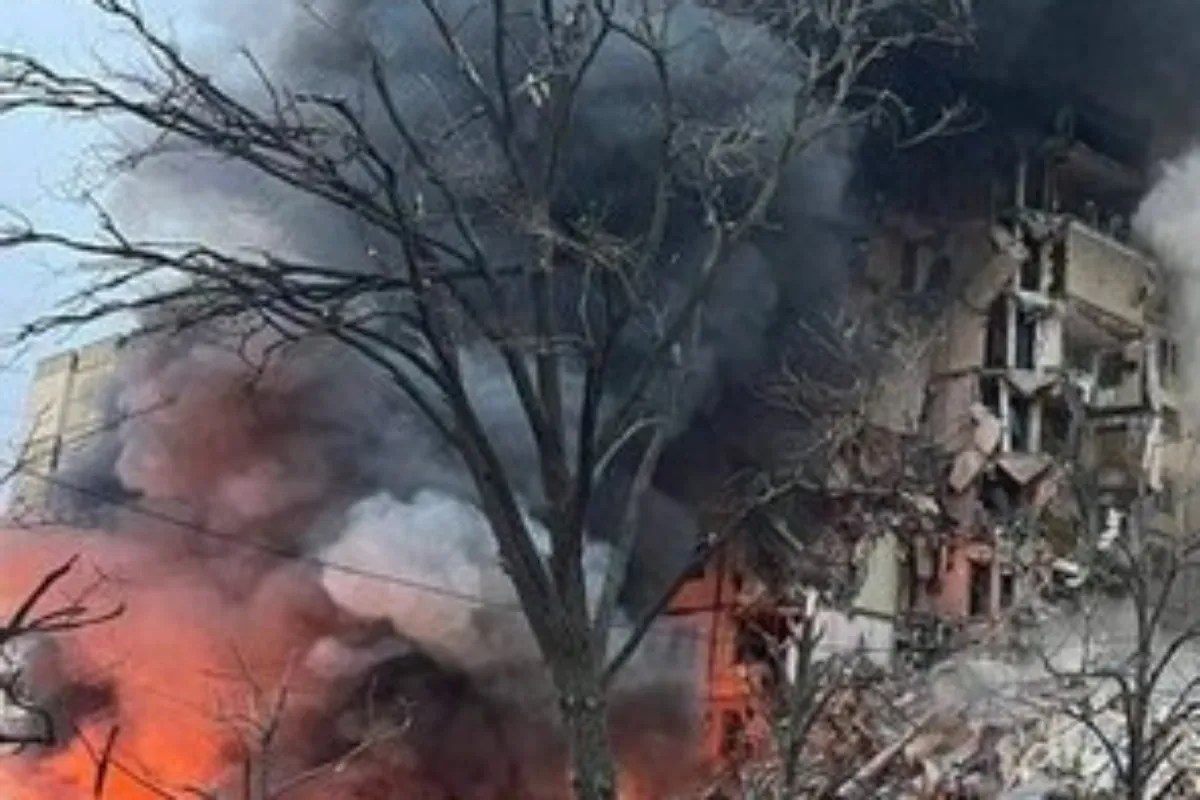
Not a distant rumble, but a heavy, concussive thud that rattled the windowpanes in their old wooden frames and sent the floorboards vibrating beneath bare feet. Eight lives, extinguished in a matter of seconds. Twenty-two others pulled from the smoke with burns, shrapnel wounds, and bandages that cannot possibly cover the invisible fractures left behind.
Numbers. Statistics pushed into a morning briefing. We read them on glowing screens while waiting for the subway or buttering toast, our brains numbing ourselves against the sheer weight of repetition. Eight dead. Twenty-two wounded.
Stop. Breathe.
Imagine walking into a kitchen where the kettle is still warm, but the wall is gone. Imagine a child’s backpack, pink and caked in grey drywall dust, resting beside a crater where a living room used to be. That is where the war actually lives. It does not exist in the abstract geopolitical chess matches analyzed by pundits thousands of miles away. It lives in the terrifying stillness that follows an explosion, when the dust hangs suspended in the beams of a flashlight and the world holds its breath, waiting to see who answers the roll call.
The Architecture of Escalation
Why now? Why this relentless return to the routine of terror?
To understand the mechanics of these recent strikes, you have to look past the smoke and examine the cold mathematics of attrition. Military analysts often talk about air defense saturation, missile trajectories, and strategic reserve depletion. But let us translate that into human terms.
Picture a game of cat and mouse played with millions of lives. Every time interceptor missiles rise to meet incoming threats, stockpiles shrink. Every time a barrage hits a residential district, a power station, or a quiet street corner, the aggressor is testing a hypothesis: How much endurance does a population have before the spirit fractures?
History tells us something vital about human resilience that algorithms fail to compute. We are stubborn creatures. When Russian missiles tore through neighborhoods in yet another coordinated nocturnal assault, the immediate response across the city was not panic. It was anger. It was the grim, quiet determination of neighbors hauling rubble with bare hands, passing chunks of concrete down a human chain while the all-clear siren was still wailing in the distance.
Yet, resilience has a cost. It extracts a toll from the nervous system. Every sleepless night spent in a freezing metro station chips away at the collective psyche. This is the invisible front line.
A City in the Dark
Let us walk down a street in the aftermath.
The streetlights are dead. Only the sweeping beams of emergency vehicles cut through the pitch black. Step carefully. Glass crunches underfoot like autumn leaves, except it is shards of shattered storefronts and blown-out double-glazed windows.
In a makeshift triage area set up behind a brick archway, a medic named Oleh wipes soot from his forehead. His hands are shaking—not from fear, but from the sheer exhaustion of a forty-eight-hour shift. He has bandaged tourniquets onto limbs that will never be the same. He has delivered news no parent should ever have to hear.
"They call it strategic targeting," Oleh says, his voice barely above a whisper, his eyes reflecting the flashing red lights of an ambulance. "I call it murder in the dark. There is no military base here. Just an old apartment block, a bakery, and a playground where my daughter used to swing."
This is the reality behind the headline. When infrastructure is targeted, it is not just concrete that crumbles. It is the social fabric. Water pumps fail. Heating grids collapse as winter closes its icy fist around Eastern Europe. Hospitals rely on generators that stutter and cough in the basement.
We forget how fragile our modern lives are until the lights go out. We imagine civilization as an indestructible fortress, built of steel, law, and order. In reality, it is a thin veneer stretched over chaos. It takes only one supersonic missile, screaming out of the stratosphere at Mach speeds, to remind us how easily that veneer can be punctured.
The Calculus of Endurance
What happens when the world looks away?
Fatigue is a weapon. The international news cycle feeds on novelty, and after years of conflict, war fatigue sets in. Headlines shift. Commentators move on to the next crisis. Algorithms bury the daily casualty counts beneath entertainment and sports.
That is the true danger. Not just the physical devastation of falling ordnance, but the emotional erosion of indifference. When eight deaths become just another Tuesday statistic, something fundamental breaks in our global conscience.
We must resist this numbness.
Consider the twenty-two injured. They are not numbers on a spreadsheet. They are musicians, teachers, mechanics, students, and grandparents. Some will learn to walk with prosthetics. Others will spend months in sterile hospital rooms staring at ceilings, wondering why they were lucky enough to survive while the person sitting next to them was not.
Survivor’s guilt is a heavy anchor. It sinks deep into the soul and refuses to let go.
The Unbroken Line
Morning returns to Kyiv.
It does not arrive with cinematic grandeur, but with the pale, stubborn light of a November dawn filtering through a smoke-stained sky.
Already, the brooms are out. Shopkeepers sweep up the glass from their shattered display windows. Municipal workers shovel debris into the backs of rusted trucks. A stray cat picks its way cautiously across a pile of bricks, pausing to clean its paw as if nothing had happened at all.
This is the paradox of human survival. We rebuild while the ruins are still smoking. We plant tulips in bomb craters. We pour fresh concrete over the scars of yesterday, knowing full well that tomorrow might bring another siren, another flash of light, another night in the cold concrete belly of the metro station.
The sirens will sound again. The analysts will debate the geopolitics. The news tickers will update their tallies.
But beneath the smoke, beneath the strategy, and beneath the cold statistics, the pulse of human dignity continues to beat—stubborn, defiant, and impossible to extinguish.