The coffee in the plastic cup was already cold, but Alireza held it just for the warmth of the styrofoam against his palms. It was 1:45 AM in Erbil. Outside the window of his small apartment, the night was the color of bruised plums, quiet except for the distant, rhythmic thrum of a diesel generator. He was thinking about his daughter’s upcoming math test. He was thinking about the rent.
Then came the sound. Don't miss our previous article on this related article.
It was not a bang. A bang is brief. This was a tearing sound, like a giant canvas sail being ripped top to bottom by a gale-force wind, followed by a concussive thump that vibrated through the soles of his feet before it reached his ears. The glass in his window shivered. A mile away, the sky turned a violent, unnatural orange.
We often read about geopolitics as if it were a game of chess played on a pristine board. We talk about "strategic assets," "proportional responses," and "deterrence architecture." But on the ground, when the metal meets the earth, chess terms evaporate. There is only the smell of ozone, the sudden wail of car alarms, and the terrifying realization that your life is being bargained with by people thousands of miles away. If you want more about the history here, NBC News offers an excellent summary.
The recent exchange of missile strikes between the United States and Iran is packaged in the evening news as a series of tactical updates, complete with grainy video feeds and maps dotted with red icons. To truly understand what happened, we have to look past the smoke trails and look at the trembling hands of the people underneath them.
The Anatomy of an Echo
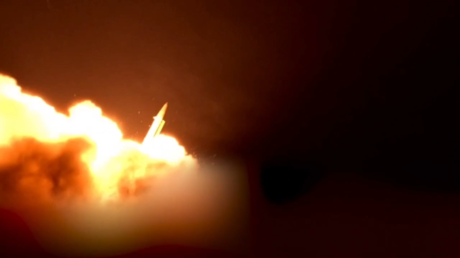
Every missile launched in the Middle East carries a heavy weight of history. It is a conversation carried out in high explosives. When Iranian ballistic missiles arced across the border into Iraq, targeting what Tehran claimed were Israeli espionage hubs, it was an act of public theater as much as military action. The videos circulated online showed bright streaks cutting through the dark, filmed by terrified citizens on their smartphones.
To understand the Iranian perspective, one must look at a nation that feels perpetually cornered, reacting to the assassination of its commanders and the tightening of economic handcuffs. To them, the missiles are a declaration: We can reach you.
But actions in this region never exist in a vacuum. They provoke an immediate, mathematically calculated echo.
Consider the American response. Within hours, the machinery of the world's most powerful military roared to life. Air strikes targeted Iran-backed militias across Syria and Iraq. In Washington, the language was clinical. They spoke of degrading capabilities and protecting American personnel.
For a hypothetical family living on the outskirts of Deir ez-Zor, Syria, the terminology mattered little. What mattered was the sudden, deafening roar of jet engines—a sound that has defined a generation of childhoods in that corner of the world. The house shakes. The plaster dust falls like snow into the crib. The parents lie awake, holding their breath, waiting to see if the next roar is the one that claims their roof.
The Illusion of Control
The dangerous flaw in the doctrine of deterrence is the belief that violence can be precisely calibrated. Planners on both sides operate under the assumption that they can hit a target just hard enough to send a message, but not hard enough to trigger a total war.
It is a high-stakes gamble with human lives as the currency. What happens when a guidance system fails? What happens when a fragment of an intercepted rocket falls on a crowded market instead of an empty field?
During this latest escalation, the world held its breath because we all instinctively know how fragile the mechanism is. The margins of error are razor-thin. A single miscalculation, a nervous radar operator, a mistranslated command—any of these could turn a localized exchange of fire into a conflagration that consumes the entire region.
The statistics are easy to find, yet they tell us so little. We know the ranges of the Fateh-110 missiles. We know the payload capacity of an American MQ-9 Reaper drone. We can analyze the radar cross-sections and the interception rates of Patriot batteries. This data provides a comforting illusion of control, suggesting that war is merely an engineering problem waiting to be solved.
But data cannot measure the psychological toll. It cannot quantify the weight of a mother in Erbil deciding whether to keep her children in their beds or drag them down to a cold, damp basement every time a plane flies overhead. It cannot measure the despair of an entire generation of young Iranians, Iraqis, and Syrians who realize that their futures are permanently shackled to a cycle of violence they did nothing to create.
The Invisible Strings
There is a profound disconnect between the language of statecraft and the reality of human survival. When a government spokesperson stands behind a podium and talks about "sending a clear signal," they are using a metaphor to obscure a bloody reality.
Imagine a web of invisible strings stretching across the globe. One string is pulled in a command bunker in Tehran. Another is pulled in the Pentagon. The strings cross over borders, over oil fields, over ancient cities. And at the center of the web, caught in the tension, are millions of ordinary people who just want to go to work, buy groceries, and see their children grow up in peace.
The tragedy of the US-Iran conflict is that both sides are trapped in narratives of their own making. For the United States, it is the narrative of the global policeman, duty-bound to counter aggression and maintain an order that is rapidly slipping away. For Iran, it is the narrative of the resistant underdog, standing up to Western imperialism at any cost.
Both narratives are self-sustaining. Each strike justifies the counter-strike. Each funeral feeds the demand for revenge.
What the Videos Don't Show
The videos that flooded social media during the strikes were mesmerizing in a horrific way. They showed the symmetry of modern warfare: the perfect arcs of the missiles, the sudden flashes of light on the horizon, the anti-aircraft fire painting the night sky with tracer rounds. It looked like a movie. It looked clean.
The cameras, however, always cut away before the real story begins.
They don't show the morning after. They don't show the shopkeeper sweeping the shattered glass of his storefront into a pile on the sidewalk, his livelihood ruined by a conflict he has no part in. They don't show the hospital wards where doctors, exhausted after a twelve-hour shift, try to patch together bodies with dwindling medical supplies because sanctions have choked the economy.
I remember talking to an elderly man in the region a few years ago during a previous bout of tension. He looked at the sky and told me that when he was young, the sound of thunder used to bring joy because it meant rain for the crops. Now, he said, his grandchildren cry when it thunders because they think the sky is falling.
That is the true cost of the missile exchange. It is the theft of peace, the systematic destruction of predictability. When the sky itself becomes a source of terror, the psychological foundation of human life crumbles.
The Long Shadow
The smoke eventually clears, the political leaders issue their press releases claiming victory, and the news cycle moves on to the next crisis. But the shadow of that night remains long.
The cycle of violence leaves behind a residue of bitterness that hardens into history. The children who watched the sky burn in Erbil, in Damascus, or in Isfahan are learning a lesson. They are learning that power comes from the tip of a rocket, that security is a myth, and that the other side cannot be reasoned with.
We look at the maps and argue about who won the day, who hit the more valuable target, and who backed down first. We miss the point entirely. In this game of escalation, there are no winners. There are only those who pull the triggers from the safety of fortified rooms, and those who are left to gather the pieces of their broken lives from the dust.
The diesel generator outside Alireza’s window kept thrumming into the morning, a steady, mechanical heartbeat against the silence of a city waiting for the next echo.