The air in Kyiv doesn't just get cold in the winter; it turns sharp, a crystalline weight that settles into the lungs and stays there. On this particular night, there was supposed to be a reprieve. A unilateral ceasefire had been declared—a word that usually carries the weight of a prayer, a momentary pause in the machinery of destruction to allow for the basic dignity of a breath.
But the silence never came.
Instead, the sky began to hum. It starts as a low, mechanical throb, the kind of sound a lawnmower makes when it’s struggling against thick grass. Then it grows. It becomes a swarm. These are the Shahed drones, the "mopeds" as the locals call them, buzzing through the freezing mist with a singular, unblinking purpose. While the diplomats and the headlines debated the merits of a temporary truce, the people on the ground were already counting the seconds between the sirens and the impact.
Peace, in this context, wasn't an agreement. It was a target.
The Anatomy of a Broken Promise
Imagine a father named Andriy. He is not a soldier, though he wears the fatigue of one. He spent the evening checking the seals on his windows, taped in giant Xs to prevent the glass from becoming shrapnel. When he heard news of the ceasefire, he didn't exhale. He didn't pour a glass of wine or sleep in his bed instead of the hallway.
He knew better.
Andriy represents the collective intuition of a nation that has learned that words are often used as camouflage. To the outside observer, a snubbed ceasefire is a diplomatic failure. To Andriy, it is a swarm of thirty-five drones launched under the cover of a lie. The facts are brutal: dozens of Iranian-made loitering munitions were unleashed across the country, targeting the very infrastructure that keeps the lights on and the water running.
The logic of the strike was as cold as the weather. If you can't break the line, you break the spirit. You wait for the moment the world thinks the fighting has paused, and then you strike harder. It is a psychological serration, designed to ensure that even when there is quiet, there is no peace.
The Sound of the Swarm
There is a specific terror to the drone. Missiles are swift, a sudden thunderclap that ends before you can register the fear. Drones are different. They are slow. They are deliberate. They circle, searching for the crack in the armor, the unshielded power station, or the apartment block that happens to be in the way.
On this night, the Ukrainian air defense teams were not resting. They were perched on rooftops and tucked into hidden clearings, squinting through thermal optics. They are the human barrier against the mechanical swarm. When a drone is intercepted, it doesn't just vanish. It erupts into a ball of orange fire, casting long, dancing shadows against the snow before the debris rains down on the streets below.
Thirty drones were downed. Five made it through.
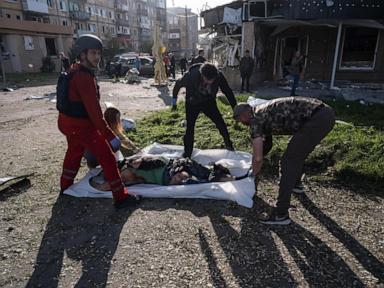
Those five impacts represent more than just damaged concrete. They represent families huddled in subway stations, children who have forgotten what a full night’s sleep feels like, and the systematic dismantling of a power grid that millions rely on to survive the sub-zero temperatures. The "snub" reported in the news wasn't a verbal rejection; it was a kinetic one. It was the sound of metal tearing through the hopes of a quiet night.
The Invisible Stakes of a Frozen Conflict
We often talk about war in terms of territory gained or lost, of meters and kilometers marked on a digital map. But the real territory being fought over is the human psyche.
When a ceasefire is offered and then immediately violated by the party that ignored it, the goal isn't just tactical advantage. It is the destruction of the very concept of trust. If a promise of peace is merely a setup for a barrage, then the possibility of future negotiations becomes a ghost. You cannot shake a hand that is busy pressing a launch button.
This is the hidden cost of the drones. They don't just destroy transformers; they incinerate the bridge to any diplomatic exit.
Consider the logistical reality: launching dozens of drones requires a coordinated effort. It requires fueling, programming, and positioning. It is not an impulsive reaction to a rejected offer. It is a pre-planned operation. The drones were likely already in the air or on their launchers while the words of the "ceasefire" were still hanging in the air.
The Resilience of the Unlit Window
Walking through a city under drone attack is an exercise in forced normalcy. You see people walking dogs in the intervals between sirens. You see coffee shops running on loud, gasoline-smelling generators, the baristas pulling espresso shots while the horizon glows with the remnants of an interception.
This is not bravery in the cinematic sense. It is a weary, stubborn refusal to be paralyzed.
The strategy of the drone swarm relies on the idea that if you make life miserable enough, people will demand an end at any cost. But the opposite seems to be happening. Every drone that hits a civilian target, every night spent in a cold cellar because the heating plant was struck, seems to weld the national resolve into something harder and more brittle.
The drones are cheap. They are made of fiberglass and simple engines. They are designed to be expendable. But the people they target are not.
As the sun began to rise over Kyiv after that long, noisy night, the smoke from the impacts drifted into a sky that was painfully blue. The ceasefire was a memory of a headline that never stood a chance. The city began to stir, not because the danger had passed, but because there was work to be done. There were wires to be spliced, glass to be swept, and lives to be resumed in the shadows of the next swarm.
In the end, the most powerful thing in the city wasn't the air defense systems or the sophisticated radar. It was the sound of a broom hitting the pavement at seven in the morning. A simple, rhythmic scratch-scratch-scratch. It was the sound of someone refusing to let the debris stay where it fell.
The drones had come, and the drones had gone. The silence remained elusive, but the people were still there, standing in the cold, waiting for a dawn that didn't require a ceasefire to be beautiful.