Rain in the canopy does not fall gently. It crashes through tiers of green, heavy and violent, turning the midnight forest into a dripping, chaotic drumset. You sit on a slick, moss-covered log, water soaking through your canvas jacket, shining a red-filtered headlamp into the pitch. The air smells of rich decay, wet earth, and raw life.
Then comes the sound.
It is a chorus of guttural barks, frantic chirps, and sudden, splashing commotion just a few feet away in a temporary puddle left by a tropical downpour. You lean closer, shielding your lens from the deluge, and witness something that defies every tidy, textbook definition of romance you were ever taught.
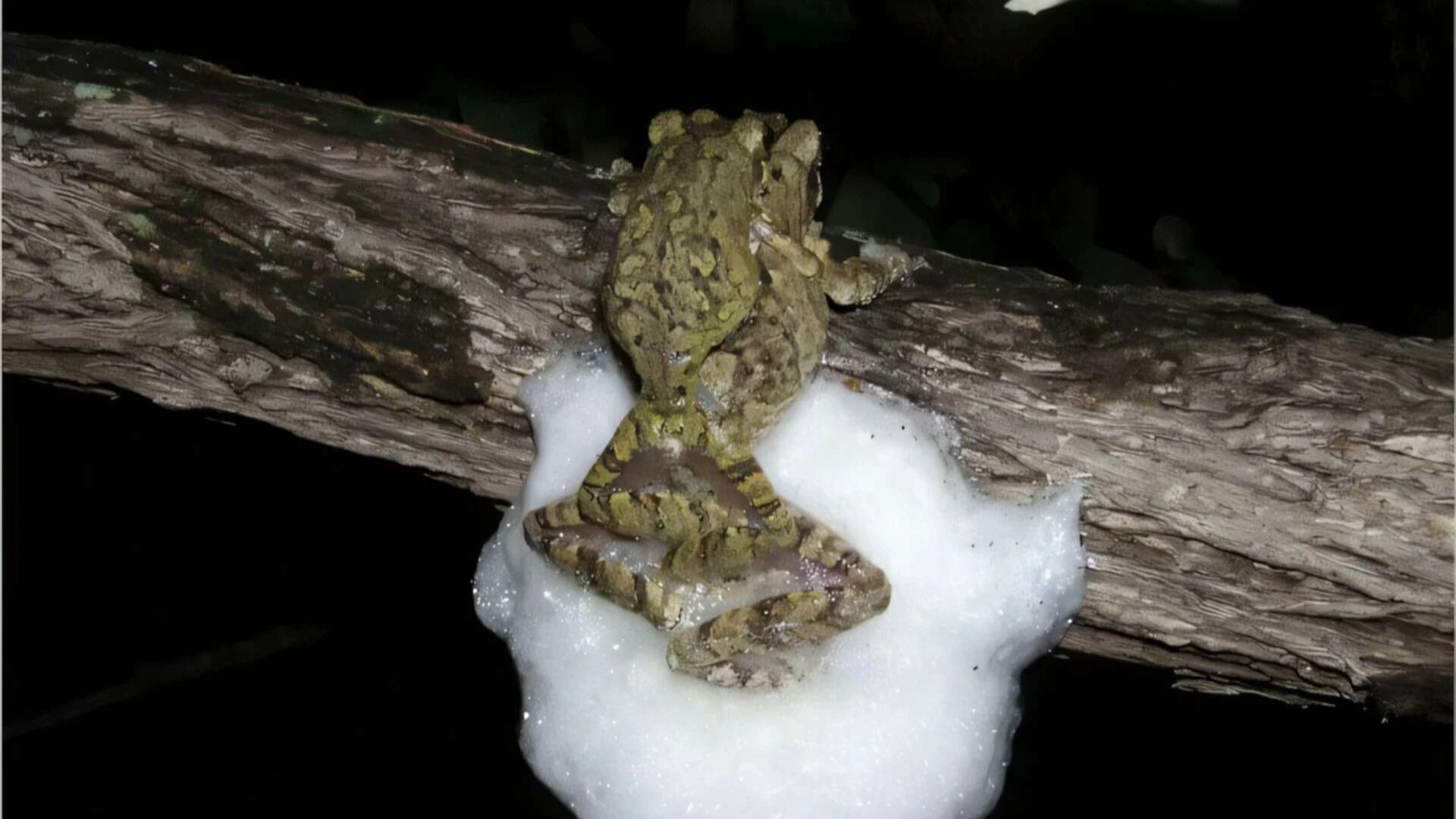
Three males crowd a single female. They are small, vibrant creatures, their skin glistening under the beam of your light like wet jade. But they are not fighting. There are no duels to the death, no solitary victors standing triumphantly over a defeated rival. Instead, their thighs twitch in synchronized rhythm. Their small, damp hands work with frantic, desperate energy.
Together, they beat the water.
They kick, churn, and whip the shallow pool into a thick, frothy meringue. It looks less like a mating ritual and more like a midnight bakery gone entirely mad. Within minutes, a pale, spongy foam tower rises above the surface of the water, cradling hundreds of fragile eggs away from the hungry mouths of aquatic predators lurking below.
Consider what happens next: the rain washes away, the jungle quiets down, and that strange, foamy nursery is left baking under the rising equatorial sun. But inside that protective meringue, life is quietly, fiercely organizing itself.
To understand why this happens, we have to strip away human notions of jealousy, ownership, and singular devotion. Nature rarely operates according to our polite suburban scripts. In the chaotic theater of the African savanna and rainforest edges, polyandry is not an anomaly; it is a masterclass in risk management.
Imagine a village facing a harsh winter, where the elders decide that no single farmer will store the grain. Instead, every family contributes to a massive, shared silo, ensuring that even if one crop fails, the community endures. Female African treefrogs apply a similar logic to the chaotic lottery of survival. By spawning with multiple partners simultaneously, the female ensures maximum genetic diversity within a single clutch.
More practically, multiple males mean multiple sets of legs churning the water. One male alone lacks the sheer physical stamina to whip enough air into the secretion to create a stable, moisture-trapping nest. It takes a collaborative crew to beat the proteins and water into a stiff, protective peak. Evolution, cold and calculating, rewards teamwork over solitary pride.
The science here is as fascinating as it is brutal. As the foam hardens on the outside into a tough crust while remaining gelatinous and humid within, it acts as a fortress. It shields the developing tadpoles from dehydration when the dry season bares its teeth prematurely. When the next heavy downpour finally arrives, the outer shell dissolves just enough, sliding the wriggling larvae straight down into the safety of the newly replenished pools.
We look at animals through a cracked mirror, desperate to see reflections of our own social codes. We want villains and heroes, winners and losers, faithful partners and scandalous outlaws. Yet the treefrog teaches us a different lesson entirely.
Survival does not care about your romance novels.
It cares about innovation in the face of impossible odds. It cares about shared burdens. It cares about turning a violent storm into a canvas for creation.
The headlamp flickers, the battery dimming against the relentless humidity. The frogs pay you no mind. They have work to do, a storm to beat, and a future to whip into existence from the mud up.