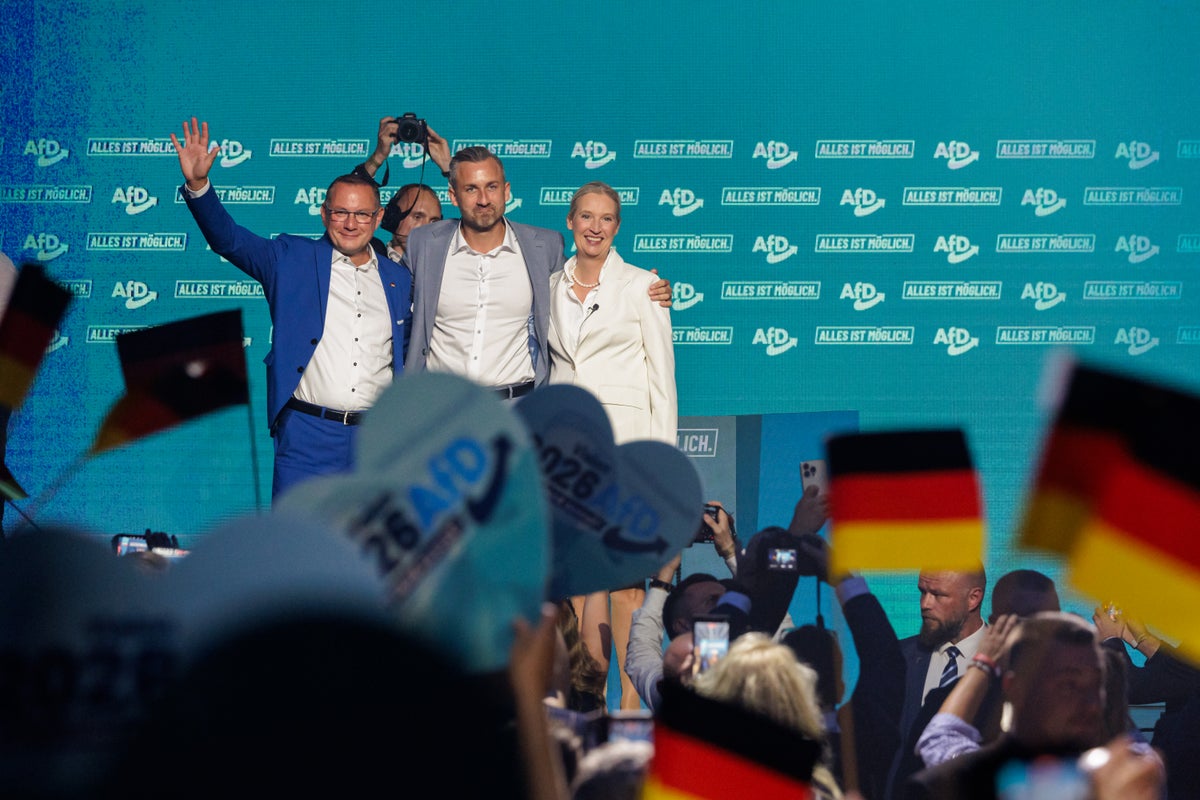
The coffee in the glass pitcher on the sideboard had gone cold hours ago, forming a film of stagnant oil across the surface that caught the harsh glare of the studio lights. Outside, the Berlin autumn was settling in with a grey, wet finality, stripping the lindens along the Tiergarten bare to black wire. Inside the television studios, the air tasted of stale dust, damp wool, and the peculiar, sharp iron scent of sustained adrenaline.
Friedrich Merz sat at the edge of the leather-upholstered chair, his shoulders squared with the rigid geometry of a man who had spent forty years believing that institutions were unbreakable. He looked at the monitor. Then he looked at the numbers glowing in amber against the dark backdrop.
Shock.
It was the only word the pundits kept reaching for, rolling it around their mouths like a bitter lozenge. Friedrich Merz was shocked. The grand old party of the center-right was shocked. The chattering rooms along the Spree were shocked.
Nobody on the ground should have been.
Consider what happens when a town loses its only post office, its bank branch, its bakery, and finally, its patience. Imagine walking down the main street of a municipality in eastern Saxony, where the cobblestones are clean enough to eat off, but the houses are boarded up behind lace curtains because the young people packed their bags for Frankfurt years ago. You can paint the trim on the town hall as often as you like. You can deliver speeches about fiscal prudence until your collar wilts. But when the quiet becomes permanent, people stop listening to the grammar of politics. They start screaming in punctuation.
That punctuation arrived with a name: the Alternative for Germany. The AfD.
When the local election returns flickered onto the screens from the eastern states, the conventional political machinery of the Federal Republic did not merely stumble; it hit a wall of obsidian. For decades, the unwritten social contract of postwar Germany was simple, almost monastic in its demands. Work hard, pay your taxes, keep your head down, and the state will preserve your dignity. The memories of the twentieth century served as a high, thick dam holding back the dark waters of ethno-nationalism and radical anger.
Dams do not fail all at once. First comes the hairline fracture. Then the slow, weeping seep of moisture through the concrete. Then the sudden, roaring fracture that takes the valley in a single afternoon.
Merz knew the math. Everyone in his party headquarters knew the math. The firewall—that sacred political barrier where the Christian Democrats and the Social Democrats swore an oath never to touch, negotiate with, or legitimize the far right—was supposed to hold. It was the last structural timber in a house built by Adenauer and Brandt.
Yet, out there in the provinces, voters were no longer asking if the house was structurally sound. They were standing in the basement knee-deep in water, wondering why the architects were still talking about interior design.
Let us step away from the podiums and the press conferences for a moment. Let us look at what this actually means for a human being trying to buy groceries on a Tuesday morning in a small town outside of Cottbus.
Maria is sixty-two. She spent thirty-eight years working the night shift at a textile plant that no longer exists, replaced by a row of empty steel sheds and a sign offering federal retraining grants that require an internet connection her village only receives on alternating Thursdays. When Maria votes for the AfD, she is not reading their economic white papers. She is not debating their stance on European integration or institutional oversight. She is holding a match to the curtains because she wants someone, anyone, in Berlin to turn around and look at her face.
The political class calls this an electoral protest. That is a comforting lie. Protest implies a temporary grievance, a passing thunderstorm that clears the air. This is something older, heavier, and far more stubborn. It is a fundamental secession of the heart.
When Friedrich Merz stepped up to the microphone to address the press, his voice was tight, clipped, disciplined. He spoke of democratic responsibility. He spoke of redoubling efforts to listen to the concerns of citizens regarding migration, inflation, and public safety. Every word was carefully measured by aides who had focus-grouped the public reaction before the cameras even rolled.
The screen flickered. The totals remained.
The shock value of the moment relies entirely on a profound historical amnesia. For years, the major parties treated the eastern half of the country as a laboratory for social experiments, a place where wages could lag behind the west by twenty percent while rents climbed, where infrastructure could be streamlined out of existence in the name of efficiency, and where local identities could be patronized away by officials who flew in from Düsseldorf or Hamburg for the weekend.
When you treat a population like a demographic category long enough, they will eventually find a way to remind you that they have teeth.
The AfD understood this before anyone else. They did not win because they offered better policy proposals. They won because they mastered the art of grievance choreography. They sat in the gasthofs where the beer was cheap and the future was shorter, and they listened. They did not lecture. They named the enemy, whether that enemy was the bureaucrat in Brussels, the green transition official taxing home heating oil, or the migrant arriving at the railway station with a plastic bag of belongings.
It is a terrible thing when simplicity defeats complexity. Complexity requires patience, compromise, and an acceptance of half-measures. Simplicity offers a hammer. And when your world is falling apart, everything looks like a nail.
Merz now faces the most difficult arithmetic of his career. To keep the firewall intact, he must forge awkward, unnatural coalitions with parties whose ideologies he spent a lifetime opposing. To govern without them, he must somehow convince millions of people who despise him that the system they have abandoned is still worth saving.
He stands at a crossroads where every path leads uphill through deep snow.
Back in the television studio, the analysis winds down. The studio lights hum, warm and indifferent. The commentators shuffle their papers, sliding them into leather briefcases before stepping out into the damp Berlin night to catch their U-Bahn trains home.
In a kitchen in Saxony, Maria turns off the television. The room goes dark, save for the pale amber glow of the refrigerator motor clicking on in the corner. The coffee on the sideboard is pitch black now, cold enough to freeze, waiting for a morning that no longer looks anything like the map they drew in the capital.