The teacup did not just spill. It leapt.
When a 7.8 magnitude earthquake strikes, there is no polite warning rumble. There is no cinematic buildup. There is only the sudden, violent realization that the one thing you have trusted your entire life—the solid earth beneath your feet—has completely betrayed you.
Imagine waking up at 2:00 AM in the southern Philippines. The air is thick, humid, and heavy with the scent of saltwater and ripening mangoes. It is the kind of stillness that usually promises a deep, uninterrupted sleep. Then, the world violently shifts gears.
For the people of Mindanao, this was not a drill. It was a terrifying reminder that they live on the Ring of Fire, a massive, horseshoe-shaped ring in the Pacific Ocean where tectonic plates constantly jostle for space like angry commuters on a crowded train. When those plates slip, the energy released is equivalent to millions of tons of explosives detonating simultaneously deep within the crust.
But statistics do not capture the sheer terror of a midnight evacuation. They do not tell the story of a mother grabbing her sleeping toddler in the pitch black, the floor rolling like the deck of a ship in a storm, while the walls groan and snap around her.
The Sound of Shifting Earth
People who have never experienced a massive tremor always ask about the shaking. They want to know how hard it hits, how long it lasts, how much things sway. But they rarely ask about the noise.
An earthquake of this scale is deafening. It begins with a low, guttural roar that seems to come from the very center of the universe—a sound so deep you feel it in your teeth before you hear it with your ears. It is the sound of ancient bedrock snapping under unimaginable pressure.
Consider a hypothetical resident named Elena, a schoolteacher in a coastal village near the epicenter. Her experience mirrors thousands of others who woke up to the sound of shattering glass and the terrifying shriek of twisting metal.
Elena did not think about fault lines or tectonic plates. She thought about her roof.
In a fraction of a second, your priorities violently contract. The career goals, the financial worries, the minor arguments of the previous afternoon—all of it vanishes. Your entire existence shrinks down to a single, desperate question: How do I get outside?
Navigating a house during a 7.8 magnitude quake is nearly impossible. The ground moves in multiple directions at once, combining vertical jolts with horizontal shearing. Doors jam into their frames as walls warp, trapping people inside their own homes. The power grid fails instantly, plunging entire provinces into absolute darkness. You are blind, off-balance, and trapped inside a shaking box.
The Ocean's Empty Threat
For coastal communities in the southern Philippines, surviving the initial shaking is only the first battle. The moment the ground stops moving, a new, quieter terror begins.
The sea.
When a massive earthquake occurs underwater or near a coastline, it can displace billions of gallons of water in an instant. This creates a tsunami wave that travels across the ocean at the speed of a jet airliner. In the dark of the night, you cannot see the wave approaching. You can only listen.
After the shaking stopped, the sirens began to wail across the coastal towns of Mindanao. The order was immediate and absolute: move to high ground.
Thousands of families poured into the muddy streets, carrying nothing but flashlight beams and their children. They walked, ran, and rode overloaded motorbikes up winding hillsides, looking back anxiously at the dark ocean. In these moments, rumors spread faster than the tremor itself. Is the water receding? Did someone see a wave?
The vulnerability of this moment is agonizing. You are standing on a muddy hill in the middle of the night, shivering despite the tropical heat, wondering if everything you own has just been washed away.
Thankfully, this particular event did not trigger a catastrophic, movie-style wall of water across the region. But the psychological damage was already done. The threat alone is enough to tear open old wounds in a country that has seen more than its fair share of natural disasters.
The Architecture of Survival
Why do some cities crumble while others stand? The answer lies hidden inside the concrete.
In the aftermath of a major quake, the difference between life and death often comes down to building codes and local materials. In many rural areas of the Philippines, homes are built from lightweight materials like bamboo, wood, and thatch. Ironically, these traditional structures often fare better in an earthquake than poorly constructed concrete buildings. They are flexible. They bend and sway with the earth rather than snapping.
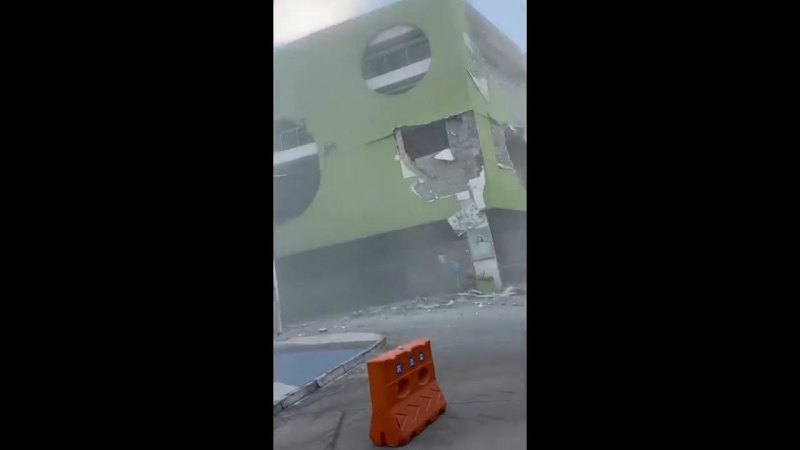
The real danger lies in informal concrete structures—buildings thrown up quickly without proper steel reinforcement. When the ground shears, these buildings experience what engineers call a pancake collapse. The support pillars fail, and each floor drops directly onto the one below it.
The science behind this is relatively simple. Think of a building as a tree. A tree with a rigid, brittle trunk will snap in a hurricane. A tree that can bend will survive. Modern engineering tries to replicate this flexibility in concrete, using intricate webs of steel rebar and specialized foundations that allow buildings to slide smoothly while the earth violently jerks beneath them.
But implementing these engineering marvels costs money. It requires strict enforcement, regular inspections, and resources that are not always available in developing rural regions. The true cost of an earthquake is often measured not in the strength of the fault line, but in the economic disparity of the people living above it.
The Morning After the World Broke
When the sun finally rose over the southern Philippines, it revealed a landscape changed not by grand devastation, but by a thousand small, heartbreaking fractures.
Roads were split open with deep, jagged fissures that looked like lightning bolts carved into the asphalt. Concrete walls had toppled onto parked cars. Inside homes, the contents of entire lives—dishes, books, family photos, televisions—lay smashed into a chaotic slurry on the floor.
But the most striking image was the people.
Neighbors who had barely spoken to one another for years were suddenly sitting together on plastic chairs in the middle of the street, sharing a single pot of coffee cooked over an open fire. In the wake of absolute chaos, human nature tends to strip away the trivial and focus on the essential. Community is not an abstract concept when your house is unlivable; it is your only safety net.
The true impact of a disaster like this lasts long after the news cameras pack up and the headlines fade. It lives on in the anxious glance a child gives the ceiling every time a heavy truck rumbles past the house. It lives on in the financial ruin of a shopkeeper whose entire inventory was smashed in less than sixty seconds.
The earth eventually quieted down, returning to its silent, slow-motion crawl. But for the millions who felt the ground beneath them turn to liquid, the world will never feel quite as solid as it did before.