You can't secure a country by locking down the capital if the capital itself is a sitting duck.
Early Thursday morning, gunmen pulled up to Diori Hamani International Airport in Niamey, Niger, in two white vehicles. What followed was a two-hour nightmare of explosions and sustained gunfire that tore through the complex, leaving 11 security personnel and two civilians dead. While the Nigerien military claims it foiled the assault by killing 22 attackers and arresting 20 suspects, the reality is much uglier.
This wasn't a random hit. The Al-Qaeda-linked group Jama'at Nusrat al-Islam wal Muslimin (JNIM) quickly claimed responsibility. By striking the heart of Niger's capital, they sent a loud message to the ruling military junta: you aren't safe anywhere.
If you are trying to understand why West Africa's Sahel region is spinning out of control, this specific assault tells you everything you need to know.
The Illusion of Capital City Security
When General Abdourahamane Tiani took power in a 2023 military coup, the promise was simple. The junta claimed they would handle the jihadi insurgency better than the democratically elected government they overthrew. They kicked out French troops, demanded the withdrawal of US forces, and brought in Russian mercenaries from the Africa Corps.
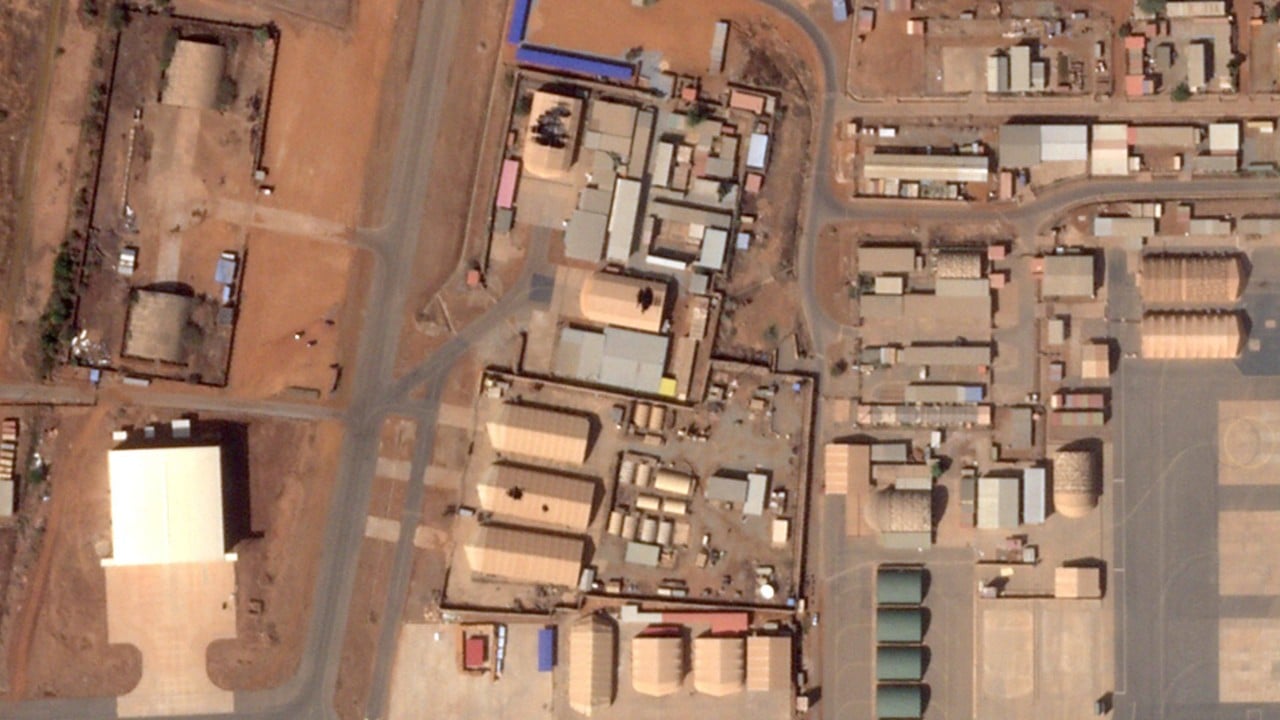
But look at the map. Diori Hamani International Airport isn't just a place where commercial flights land. The civilian terminal sits directly opposite Air Base 101, a massive strategic hub. It serves as the nerve center for Niger's counterinsurgency drone operations and, crucially, functions as the headquarters for the Alliance of Sahel States (AES)—the pact between the military juntas of Niger, Mali, and Burkina Faso.
This is the second time the airport has been hit this year. Back in January, the Islamic State launched a massive raid on the exact same complex, destroying at least five military aircraft and temporarily occupying parts of the facility. The military promised they had beefed up security after that disaster. They hadn't.
On Thursday, militants managed to infiltrate a customs building right near the airport. Think about that for a second. In a highly militarized capital city run by a security-focused junta, an armed assault team still managed to drive up in broad daylight, take up positions in a government building, and kill over a dozen people at the country's most critical infrastructure hub.
A Multi-Front Collapse
The Niamey airport strike didn't happen in a vacuum. Security sources confirm that just a day earlier, militants launched massive, coordinated attacks on the Banibangou and Inates military bases in the Tillaberi region. The assault on Banibangou left at least 10 soldiers dead and 40 injured. At Inates, the military completely abandoned its base.
This is a classic insurgent strategy. By staging heavy distractions out in the provinces, the militants forced the military to scramble its focus, allowing the JNIM hit squad to slip into Niamey.
The juntas of Mali, Burkina Faso, and Niger repeatedly claim they are winning the war since cutting ties with Western allies. The data says otherwise. JNIM and Islamic State affiliates have spending power, sophisticated drone defenses, and the ability to strike deep inside supposedly secure zones.
What This Means for Travel and Stability
If you are looking at the regional security situation, the immediate fallout is clear. Following the January airport breach, the United States slapped a Level 4 "Do Not Travel" advisory on Niger. This latest hit cements the country's status as an active war zone.
While Niger's civil aviation agency rushed to state that normal operations resumed hours after the gunbattle, no commercial airline is going to look at Niamey as a safe destination. The threat to aviation insulation and infrastructure is critical.
The junta's standard playbook is to blame outside forces. After the January attack, General Tiani accused France, Benin, and the Ivory Coast of sponsoring the terrorists—without offering a shred of proof. Expect more of the same deflection now. Blaming foreign conspiracies might work for domestic propaganda, but it doesn't stop mortars or secure a runway.
The Reality Check
If you want to track where the Sahel is heading, watch how the junta responds to this latest security failure. Doubling down on political crackdowns inside the capital won't solve the structural failure of their intelligence apparatus.
For international observers and regional analysts, the next steps require a hard look at border vulnerability and the actual effectiveness of Russian state-backed security partnerships, which clearly failed to protect the AES alliance's own headquarters. Watch the official state television channels for upcoming military appointments, as a shakeup in the Niamey regional command is almost guaranteed over the coming days.
To better understand the geopolitical shift behind these security failures, check out this deep dive into the region's changing dynamics on France 24 English, which details who is fighting for control of Niamey's strategic airbases and what the presence of foreign forces means for Niger's stability.


