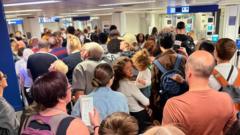
Imagine arriving at the airport three hours early, breezing through security, and then watching your plane take off from the terminal window while you're still trapped in a passport queue. That’s not a travel horror story; it’s the reality for 122 EasyJet passengers who were recently abandoned at Milan Linate. Only 34 people made it onto that flight to Manchester. The rest? They were left staring at biometric scanners that simply couldn't keep up with the new EU Entry/Exit System (EES).
The dream of "frictionless" travel is officially dead for now. If you're a UK traveler heading to the Schengen area, the rules of the game just changed, and the stakes are your seat on the plane. The EES isn't just a minor update—it's a massive digital overhaul that’s turning European borders into bottlenecks.
The Biometric Bottleneck Is Real
For decades, a quick stamp in your passport was the gold standard. Those days are gone. As of April 2026, the EU has fully flipped the switch on the EES. This means every time you enter or leave the Schengen zone, you’re not just showing a document; you’re providing a facial scan and fingerprints.
The theory is great. The system tracks your 90-day limit automatically and flags overstayers without a human needing to squint at blurry ink marks. But in practice? It’s a mess. At Milan Linate, passengers reported that only two officers were manning a handful of biometric machines while dozens of automated kiosks sat idle. When every single traveler has to stop, scan, and press their fingers into a glass plate, the minutes add up. One family from Leeds missed their flight despite being at the airport nearly three hours before takeoff.
Airlines like EasyJet are caught in the middle. They don't want to leave you behind, but they have strict "slots" to hit. If a pilot waits too long for passengers stuck in a border queue, the crew might hit their legal flying hour limits, and then the whole flight gets cancelled. It's a brutal numbers game where the passenger usually loses.
What You Need to Know About the EES Rollout
The EES is now active across 29 European countries, including heavy hitters like Spain, France, Italy, and Greece. If you're holding a British passport, you're a "third-country national" now. That means you’re in the same bucket as travelers from the US or Australia.
Here’s the ground truth on how this works:
- The First Time Is the Worst: Your first entry under the new system requires a full registration. That’s where the fingerprints and photos happen. This data stays in the system for three years.
- The Three-Year Window: Once you're in the database, subsequent trips should be faster. The machines will just check your face or a single finger to verify it’s you.
- The 90/180 Rule Is Enforced by Code: The system is designed to catch anyone who spends more than 90 days in the Schengen area within a rolling 180-day period. No more "I forgot when I arrived" excuses.
Airports in popular spots like Palma de Mallorca and Alicante are already seeing wait times regularly hitting the two or three-hour mark during peak periods. Aviation groups like ACI Europe are begging the EU for more "flexibility," which is basically code for "let us stop using the system when the lines get too long." So far, the European Commission is holding firm, insisting the system is working "largely without issues." If you've been stuck in a 200-meter queue in Milan, you might disagree.
The High Cost of Missing Your Slot
When those 122 passengers were left behind in Italy, the fallout was expensive. EasyJet offered free transfers to the next available flights, but there’s a catch: the "next available" flight isn't always the next day. One family was told the next EasyJet service wasn't for five days. They ended up dropping £1,600 on alternative flights through Luxembourg just to get home.
Don't expect your travel insurance to automatically pick up the tab either. Many policies require you to "check in" on time. If you’re stuck at a border control point after check-in but before the gate, you’re in a legal gray area. Airlines will claim it’s "extraordinary circumstances" outside their control, which means you might not be eligible for standard compensation (UK261/EU261) for the delay.
How to Survive the New EU Border Reality
You can't change the law, but you can change how you travel. If you're flying EasyJet, Ryanair, or Jet2 this summer, you have to be aggressive about your timeline.
- The Three-Hour Rule Is the New Minimum: Forget what the airline email says about two hours. If you're flying from a major hub or a popular holiday island, give yourself four.
- Go Straight to the Border: Don't linger in the Duty-Free shop or grab a slow coffee. In airports like Milan or Paris, the bottleneck is the passport check, not security. Get through security and head immediately to the exit border control.
- Have Your Documents Ready: It sounds basic, but don't be the person fumbling for their boarding pass at the scanner. Have your accommodation address and return flight details printed or easily accessible on your phone. Officers are asking more questions now that the system tracks your stay digitally.
- Check for the "Brits Only" Lanes: Some Spanish airports have started trialing dedicated lanes for UK arrivals to try and move the biometric process faster. Keep your eyes peeled for signage; it might save you an hour.
The transition to ETIAS (the €7 travel authorization) is coming later in 2026, which will add another layer of bureaucracy. For now, the biometric EES is the dragon you have to slay. The reality is that European travel isn't as simple as it used to be. Pack some extra patience, a portable phone charger for the long queues, and maybe a backup budget in case your plane leaves without you.