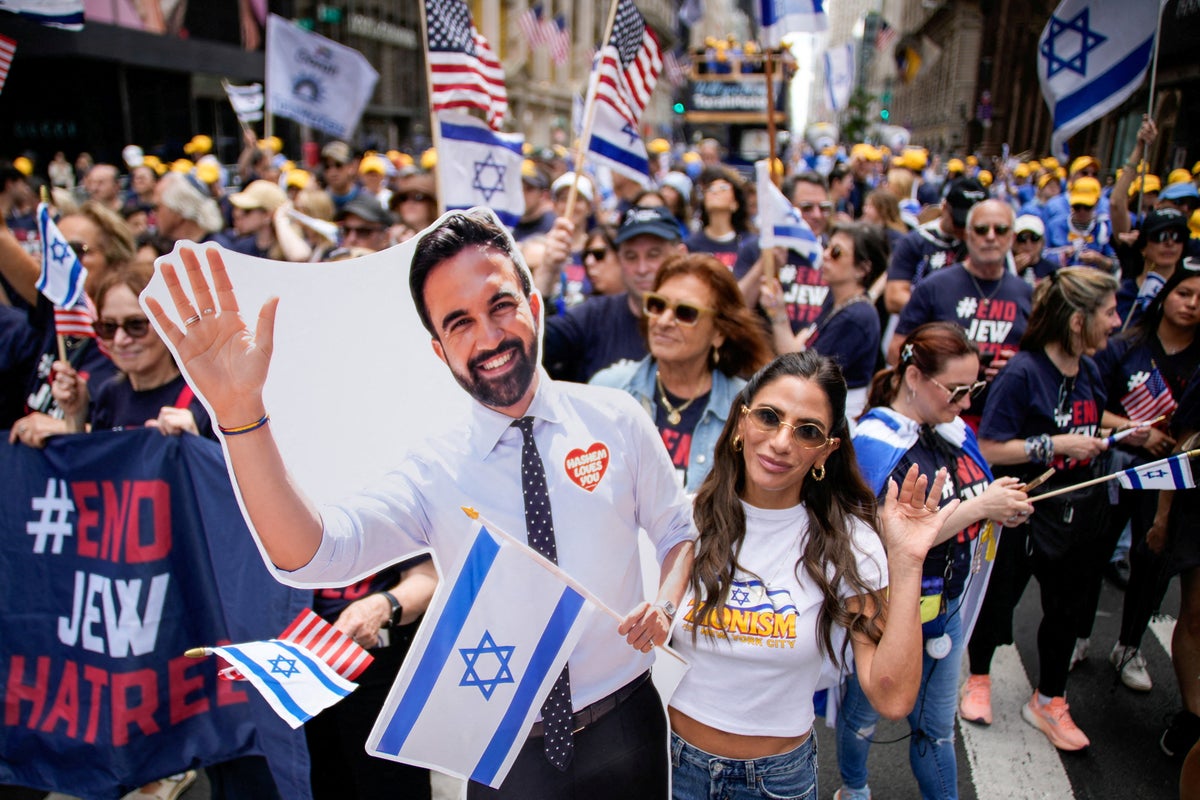
Politics in New York is rarely subtle. When Mayor Zohran Mamdani announced he would skip the annual Israel Day Parade, he knew exactly what kind of firestorm he was igniting. He did it anyway. By intentionally boycotting the event, Mamdani broke a six-decade streak of mayoral attendance, alienating a massive chunk of his constituency in the process.
Let's look at the numbers. More than 50,000 marchers flooded Fifth Avenue for the "Israel Day on 5th" event. The theme was "Proud Americans, Proud Zionists." The crowd was massive, energetic, and visibly embattled. For decades, New York mayors treated this parade as a mandatory pit stop. It wasn't just about foreign policy. It was a de facto celebration of the largest Jewish diaspora community in the world.
Mamdani tried to frame his absence as a principled stance for Palestinian rights. He claimed he was just fulfilling a campaign promise. But to a community feeling the weight of surging antisemitism, the move felt like a calculated snub.
The Politics of the Empty Streets
You can't understand the fury without looking at the history. Every single mayor since 1964 has marched down Fifth Avenue. Democrats, Republicans, liberals, and billionaires have all waved the blue-and-white flag. They did it because Jewish New York is a foundation of the city's identity.
Mamdani didn't just stay home. He active campaigned on his anti-Zionist positions. His office even released a video marking Nakba Day just weeks prior, which irritated local Jewish organizations. Eric Goldstein, the CEO of the UJA-Federation of New York, didn't mince words. In an open letter, he called the boycott a fundamental rejection of Israel's right to exist as a Jewish state.
"Your refusal to attend the parade is simply the latest in a pattern of demonizing anti-Israel rhetoric and actions that continue to place the Jewish community of New York at greater risk." — Eric Goldstein, UJA-Federation CEO
Rabbi Marc Schneier labeled the decision a "slap in the face." The anger wasn't about a specific policy or the current right-wing government in Jerusalem. It was about validation. When a city leader skips the community’s biggest public gathering, the message is loud and clear.
The Progressive Gamble
Mamdani is a socialist. He relies heavily on a young, progressive base that views Israel through a specific ideological lens. For him, marching would mean alienating the very activists who pushed him into City Hall. He chose his base over the broader city tapestry.
But governing isn't campaigning.
While Mamdani stayed away, the rest of New York’s Democratic establishment showed up in force. Governor Kathy Hochul, Senator Chuck Schumer, and Attorney General Letitia James all linked arms at the front of the line. City Council Speaker Julie Menin and City Comptroller Mark Levine were there too. They saw the political danger of Mamdani's stance and ran hard in the opposite direction.
The optics were stark. The mayor was isolated. Even his own Police Commissioner, Jessica Tisch, broke ranks publicly. During a joint security briefing, Tisch made her position crystal clear. "It's the mayor's decision not to march," she said, "and it is my decision to march proudly."
Security, Cardboard, and Cultural Reality
To his credit, Mamdani didn't weaponize the city apparatus to stop the event. He promised record security, and the NYPD delivered. Barricades lined the route. Officers screened attendees for large bags and coolers. There were no major disruptions, and anti-Zionist protesters were kept far from the marchers.
But the crowd didn't forget the snub. Activists with the group EndJewHatred carried life-size cardboard cutouts of Mamdani and his wife holding Israeli flags, mocking his absence. Former Israeli Prime Minister Naftali Bennett called the move "cowardly," stating that leadership means showing up for all New Yorkers.
What Mamdani missed is that the parade functions as a cultural shield. Right now, Jewish New Yorkers are targeted by hate crimes more than all other groups combined in the city. When the community feels besieged, a symbolic presence from the mayor matters. Showing up signals protection. Staying home signals indifference.
The strategy backfired because it unified the Jewish community against him while demonstrating that the city's political machinery can function perfectly well without its mayor. The parade happened anyway. It was loud, it was massive, and it was peaceful.
If you are trying to navigate the fallout of this shifting political alignment in local government, pay close attention to the upcoming City Council budgets and community board appointments. The real pushback won't happen on Fifth Avenue. It will happen in the backrooms of City Hall, where local leaders remember who showed up when the community felt vulnerable. Watch the local district leaders and how they align themselves for the next primary cycle. That's where the receipt for this boycott will be collected.