When top U.S. diplomats head abroad and insist a massive energy deal carries zero proliferation risk, you can usually bet the opposite conversation is happening behind closed doors.
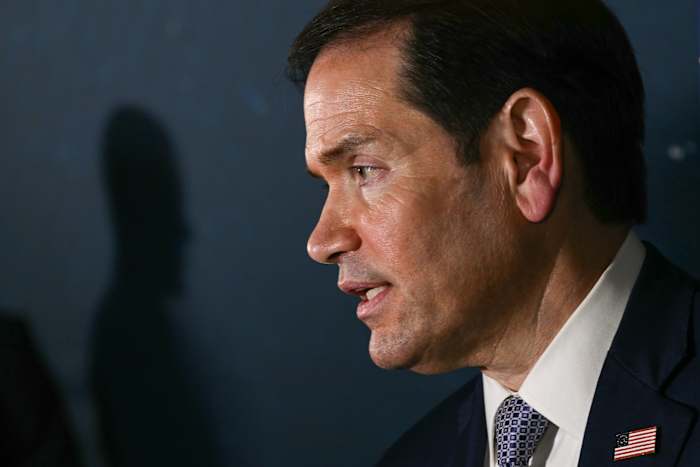
Secretary of State Marco Rubio told reporters in the Philippines that Washington won't sign any agreement threatening to spread nuclear weapons. But as the Trump administration prepares a landmark civil nuclear pact with Saudi Arabia, arms control experts and congressional lawmakers are calling out a massive shift in American foreign policy.
The centerpiece of the friction is uranium enrichment. For decades, standard U.S. nonproliferation strategy was simple: if a non-nuclear state wanted American help building atomic reactors, it had to forego domestic fuel enrichment. That benchmark, long praised as the gold standard, kept dangerous fuel-making capabilities out of volatile regions.
This new arrangement throws that rulebook out the window.
Breaking the Gold Standard on Fuel Enrichment
Under traditional "123 agreements"—named after Section 123 of the Atomic Energy Act—the U.S. lets foreign nations access commercial reactor technology provided they sign strict safeguards. When the United Arab Emirates built its Barakah nuclear plant with Western help, it explicitly surrendered the right to enrich uranium or reprocess spent fuel domestically. Experts labeled that pledge the gold standard of nonproliferation.
Riyadh refused those terms. Saudi Crown Prince Mohammed bin Salman has insisted for years that any civil nuclear deal must preserve the kingdom's right to process its own uranium.
The emerging U.S.-Saudi pact sets up a joint two-year study on building a uranium enrichment plant directly on Saudi soil. Administration officials point out that American firms would own and operate the facility using controlled tech, meaning Riyadh wouldn't get its hands on the actual blueprints.
In theory, that keeps a wall between power generation and bomb-making. In practice, having physical centrifuges spinning inside Saudi borders changes everything.
Traditional 123 Agreement (UAE Model)
[US Reactor Tech] ---> [Foreign Country] ---> (No Enrichment Allowed)

Proposed U.S.-Saudi Pact
[US Reactor Tech] ---> [Joint 2-Yr Study] ---> [US-Operated Facility on Saudi Soil]
Why Spinning Centrifuges Change the Geopolitical Math
Enriched uranium sits at the center of dual-use nuclear technology. Low-enriched uranium, boosted to around 3% to 5% concentration of U-235, powers standard civilian electricity reactors. Weapons-grade uranium requires enriching that same element past 90%.
Once a country hosts operating centrifuges and masters fuel conversion, pushing enrichment levels higher is primarily a technical and political decision rather than an engineering leap.
Uranium Enrichment Spectrum
[0.7% Natural] =======> [3-5% Low Enriched (Power)] ============> [90%+ Highly Enriched (Weapons)]
Crown Prince Mohammed bin Salman hasn't been subtle about his intentions. In public interviews, he stated that if Iran acquires a nuclear weapon, Saudi Arabia will follow suit as quickly as possible.
With the U.S. and Israel engaged in military actions targeting Iran's enrichment sites, Washington is offering Riyadh a domestic enrichment pathway just as regional tensions peak. Critics argue that establishing fuel production capacity in Saudi Arabia gives the kingdom a permanent hedge. If regional alliances ever break down, those plants provide a massive head start toward a deterrent.
Skipping the IAEA Additional Protocol
The missing inspection clause makes nonproliferation experts even more uneasy.
Standard international oversight relies on the International Atomic Energy Agency (IAEA) and its Additional Protocol, which grants inspectors unannounced access to suspected undeclared facilities. Reports indicate this new agreement sidesteps the Additional Protocol, substituting it with a custom bilateral safeguards framework to accommodate Saudi sovereignty concerns.
Without the IAEA's most aggressive inspection tools, verifying that technology isn't leaking into shadow programs becomes far harder.
Supporters of the deal argue that if Washington walks away, Riyadh will simply buy nuclear reactors from Beijing or Moscow without any U.S. eyes on the ground. They view American-operated facilities as a practical compromise. Opponents counter that softening verification standards sets a precedent that other aspiring nuclear states will exploit.
Senate Debates and Foreign Policy Shifts
The diplomatic twist here involves Marco Rubio's own legislative record.
During his time in the U.S. Senate, Rubio co-sponsored bipartisan legislation demanding strict congressional approval for any Saudi nuclear deal lacking gold standard protections. Back then, he argued that transferring sensitive capabilities to Riyadh without ironclad guarantees created unacceptable risks.
Now leading the State Department, Rubio is defending a strategy that grants a pathway to domestic fuel production without requiring the IAEA's Additional Protocol.
Past Senate Position vs. Current State Dept Policy

Senator Rubio (2018):
- Demanded "Gold Standard" safeguards [1.2.5]
- Supported mandatory Congressional approval [1.1.2, 1.2.2]
- Warned against domestic enrichment risks [1.2.2, 1.2.5]

Secretary Rubio (Present):
- Defends U.S.-operated enrichment compromise [1.1.2, 1.2.2]
- Waives "Gold Standard" requirement [1.1.2, 1.1.3]
- Assures Congress the pact carries zero proliferation risk [1.1.2]
Under standard procedure, a 123 agreement submitted to Congress automatically becomes law after 90 days of continuous session unless both houses pass a veto-proof joint resolution of disapproval. Key lawmakers are already preparing to challenge the submission.
Because this deal promises lucrative multi-billion-dollar contracts for American energy firms building AP1000 reactors, economic lobbying will push hard against national security pushback.
How to Track the Coming Congressional Fight
If you want to monitor how this agreement develops and whether arms control standards hold up, watch these specific policy markers over the next few months:
- Check the 123 Agreement Text: Look at the formal text submitted to the Senate Foreign Relations Committee. Determine whether domestic enrichment relies on a hard time limit or a permanent U.S. veto.
- Track IAEA Safeguard Requirements: Watch whether the State Department forces Saudi Arabia to sign the IAEA Additional Protocol before construction begins on any reactor.
- Monitor Congressional Disapproval Resolutions: Follow bipartisan motions in the Senate. A simple majority vote against the deal will signal deep domestic opposition, even if it lacks the votes to override a presidential veto.
- Watch Regional Precedents: Pay attention to responses from neighboring states like Turkey or Egypt. If Saudi Arabia secures domestic fuel enrichment, other regional powers will demand identical terms in their own commercial energy negotiations.


