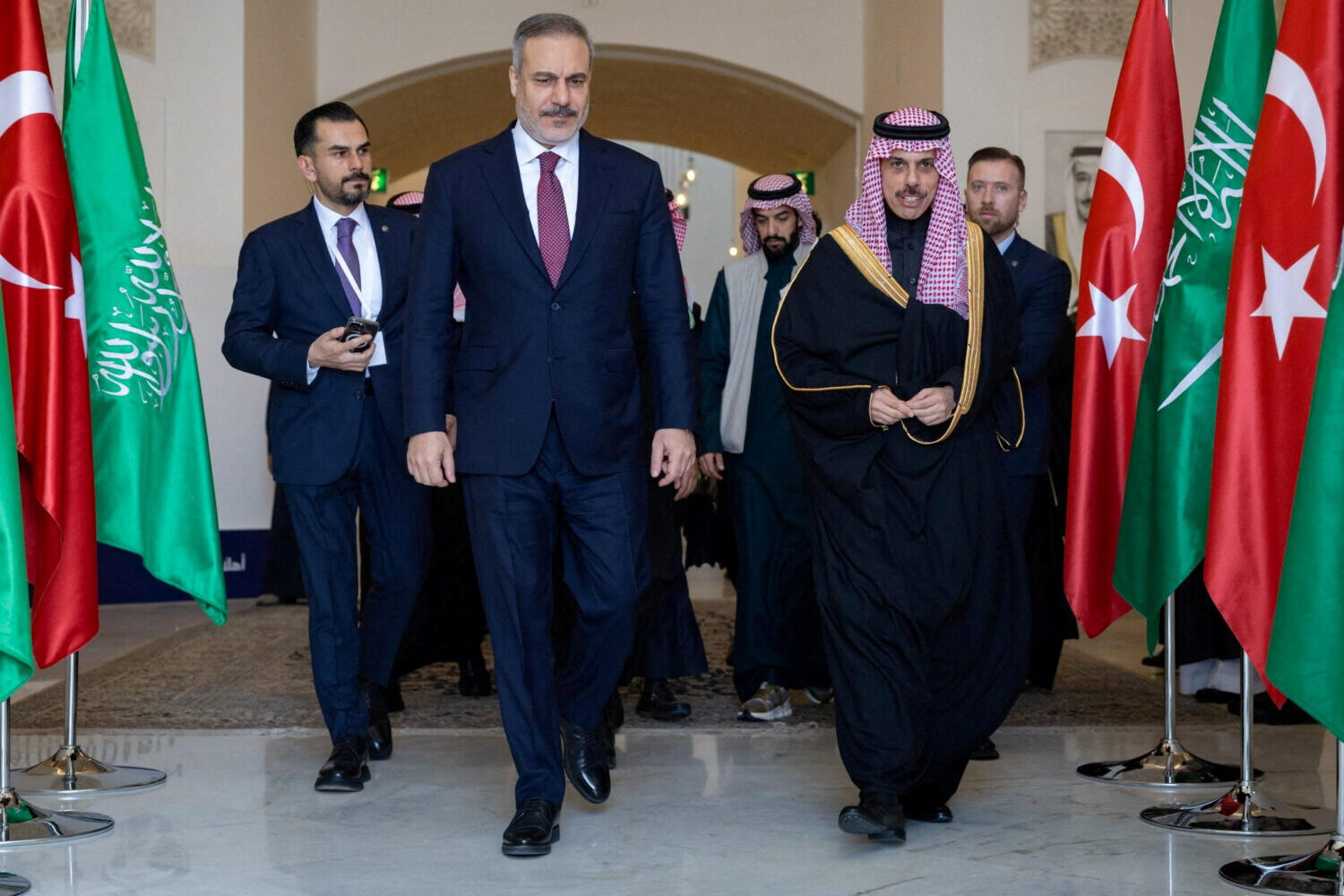
Everyone is hyperventilating over the new security arrangement between Riyadh, Ankara, and Islamabad. Headlines scream about a monumental strategic realignment, a brand-new Islamic NATO, or a devastating shift in regional hegemony.
Save the breath.
I have watched pundits fawn over ambitious bilateral and trilateral pacts for two decades. I have seen billions of dollars in military hardware announcements treated like ironclad mutual destruction guarantees, only to watch the alliances wither the moment an actual crisis flares up.
The lazy consensus is that combining Saudi capital, Turkish drone manufacturing, and Pakistan's nuclear deterrent creates an unstoppable security triad. It is a neat narrative for television studios and defense bloggers looking for clicks. It is also fundamentally detached from geopolitical reality.
This alliance is not a cohesive military powerhouse. It is an awkward marriage of convenience born out of deep mutual distrust of traditional security umbrellas, profound economic desperation in two out of three capitals, and desperate political theater.
Let us dismantle the illusion piece by piece.
The Myth Of Complementary Strengths
The primary argument for the pact rests on the idea of a clean division of labor. Saudi Arabia brings the wallet. Turkey brings the high-tech defense industrial base and combat-tested drone technology. Pakistan brings the manpower and the bomb.
It sounds tidy on paper. In practice, it is an operational nightmare.
Command and control structures do not merge because three leaders shake hands in front of flashing cameras. Interoperability takes decades of joint exercises, shared intelligence protocols, and standardized logistics. NATO took generations to achieve a messy, imperfect version of this coordination.
Turkey operates within a completely different tactical ecosystem than Pakistan. Riyadh buys Western off-the-shelf platforms that require American contractors just to change the oil. Islamabad relies heavily on indigenous modifications, Chinese hardware, and legacy Western systems.
Imagine a scenario where a regional proxy war escalates, and these three militaries try to establish a joint rapid-reaction force. Ankara wants to push aggressive, asymmetric drone campaigns. Islamabad is paralyzed by domestic economic collapse and wary of overextending its borders. Riyadh wants a quick, sanitized air campaign that requires zero body bags coming home.
They do not share a strategic horizon. They share a public relations problem.
Follow The Money And The Desperation
Let us look at the economic fundamentals driving each player, because foreign policy is ultimately just domestic survival by other means.
Pakistan is locked in an eternal cycle of International Monetary Fund bailouts. Its military establishment is powerful, but the state treasury is hollowed out. The notion that Islamabad can project hard power halfway across the continent to defend Saudi borders without massive financial subsidies from Riyadh is laughable. Pakistan is not joining this pact as a peer partner; it is joining as a mercenary state looking for cash injections, oil subsidies, and debt relief.
Turkey under Recep Tayyip Erdogan has played a brilliant hand of aggressive regional balancing, but its economy is battered by chronic inflation and currency devaluation. Erdogan needs defense export contracts to keep his domestic industrial complex running and to project strength ahead of domestic political cycles. Selling Bayraktar drones to Gulf monarchies is good business. Calling it a binding defense pact is good theater. But business and theater do not substitute for a shared strategic doctrine.
Saudi Arabia is undergoing a massive national transformation under Vision 2030, trying to pivot away from oil dependency. Crown Prince Mohammed bin Salman has spent years realizing that traditional security guarantees from Western partners are conditional and fickle. Riyadh wants strategic diversification. It wants options. Hedging your bets by signing a loose security memorandum with regional heavyweights is standard diplomatic practice. It is not an alliance forged in blood; it is an insurance policy written in ink.
The Historical Precedent Of Paper Pacts
We have seen this movie before. The Middle East and South Asia are littered with the rotting corpses of grand security pacts that sounded revolutionary until they were tested.
Look at the Central Treaty Organization, originally known as the Baghdad Pact. Backed by the UK and the US, it brought together Turkey, Iran, Pakistan, and Iraq to contain Soviet influence. It was heralded as an impenetrable wall of regional defense. When real geopolitical tremors hit, like the 1958 revolution in Iraq or the various India-Pakistan wars, the pact proved completely useless. It dissolved quietly in 1979 because artificial alliances built on elite aspirations rather than organic security integration always collapse under pressure.
Geopolitics is governed by cold, hard friction. States act in their narrow, immediate self-interest.
When push comes to shove, Ankara’s primary concerns will always be the Eastern Mediterranean, Syria, and its borders. Islamabad’s primary obsession will always be India and domestic regime stability. Riyadh’s primary nightmare will always be internal security, Yemen, and deterring Iran without getting dragged into a full-scale conflagration that turns its desalination plants into smoking ruins.
None of these priorities overlap neatly.
The Real Danger Of The Hype
The danger here is not that the pact will trigger a major war. The danger is that regional leaders will start believing their own press releases.
When politicians pretend a loose political framework is a mutual defense guarantee, miscalculation skyrockets. A smaller regional actor might provoke a crisis assuming that Turkish drones or Pakistani forces will automatically rush to bail them out, only to find out too late that the fine print contains endless escape clauses and diplomatic hedging.
Real deterrence is built on capability, resolve, and unified command. This arrangement has plenty of ambition, varying degrees of capability, and zero structural cohesion.
Stop buying the hype. This is not an Islamic NATO. It is a high-stakes photo op designed to send a signal to Washington that regional players have other dance partners.
The music will stop playing long before the alliance ever fires a shot in anger.