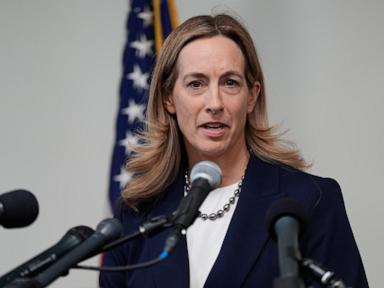
New Jersey just made a massive gamble with your business budget, and if you operate a company with a sizeable workforce, you should be paying attention. Governor Mikie Sherrill officially signed off on a first-of-its-kind penalty targeting businesses whose workers rely on state health benefits. It is an aggressive attempt to make corporate America foot the bill for public healthcare, but the execution leaves a lot to be desired.
If you think this is only a local issue, think again. The state wants to extract $145 million from this setup this year alone, and heavy hitters like California, Connecticut, and Oregon are already drawing up their own versions of the bill. For a different look, check out: this related article.
The concept sounds noble on paper. Why should taxpayers fully subsidize health coverage for employees working at massive, profitable corporations? But when you peel back the layers of this law, the unintended consequences look incredibly messy for both companies and the vulnerable low-wage workers the bill claims to protect.
The Math Behind the New Fine
Let's break down exactly what this means for your bottom line. The structure relies entirely on a sliding scale based on how many of your employees—and crucially, their family members—are enrolled in Medicaid. If you cross the 50-beneficiary threshold, you start paying. Related coverage on this matter has been shared by The Motley Fool.
For companies with 50 to 249 covered individuals, the state will bill you $325 annually per head. Mid-sized operations with 250 to 499 beneficiaries will see that number jump to $525 per person. If your organization has 500 or more people tied to the public health system, you will owe the top rate of $725 per person every single year.
Do not miss that word "dependents". If an employee has three kids on Medicaid, you aren't just paying for the worker. You are paying for all four of them.
State data reveals who will take the hardest hits. Amazon leads the pack with thousands of workers and over 10,000 dependents on the public system. Walmart and major regional staffing agencies like Century II Staffing are right behind them. The law does carve out exemptions for workers with developmental or physical disabilities, and seasonal or part-time staff will be exempt starting next year. But for everyone else, the meter is running.
The Flawed Logic of Employee Choice
The biggest issue with this penalty is a total misunderstanding of how workers choose health insurance.
Business advocates are furious because a company can offer a stellar, affordable health insurance plan and still get hit with these fines. If a low-wage worker qualifies for Medicaid, it often makes zero financial sense for them to sign up for a company plan. Medicaid frequently features no premiums, no deductibles, and no co-pays. Even the most generous employer-sponsored plan usually requires some cash out of a paycheck.
You can't force an employee to choose your plan over a free public one. Yet, under this law, New Jersey is punishing you for their choice. It assumes every worker on Medicaid is there because their employer is a greedy corporate actor refusing to offer benefits. The reality is far more complex.
Why Low Income Workers Might Pay the Price
Progressive policy groups and business networks rarely agree on anything, but they are both raising red flags here.
Think about how this alters hiring incentives. If a job applicant is a single parent with three kids, an employer knows that hiring them could carry an extra thousands of dollars in potential state fees if those kids are on Medicaid. The law explicitly bans companies from making hiring decisions based on Medicaid status, but proving that kind of discrimination in the real world is incredibly difficult.
Instead of forcing companies to offer better wages, this penalty could quietly discourage corporations from hiring low-income applicants, larger families, or people living in economically disadvantaged areas.
The Copycat Effect Is Already Beginning
If you don't have operations in New Jersey, don't breathe a sigh of relief just yet. This strategy is spreading fast.
California legislators just pushed through a bill directing their state administration to map out an identical employer fee framework for next year. Democratic gubernatorial candidate Xavier Becerra has already integrated the concept directly into his campaign platform. In Connecticut, Governor Ned Lamont is pushing to fold a similar employer assessment directly into their multi-year budget plans. Colorado and Oregon both saw similar bills pass through single legislative chambers this session.
The pressure isn't just local; it is driven by federal shifts. Federal policy changes are expected to squeeze state budgets and force states to absorb a higher percentage of public health costs. Blue-state governors see corporate fees as the easiest way to plug those fiscal holes without raising broad income or sales taxes on the general public.
What Multi State Employers Must Do Right Now
Sitting back and waiting for the tax bill to arrive is a recipe for disaster. You need an active strategy to audit and manage your risk.
First, track your data immediately. You need to know exactly how many of your workers are enrolled in public programs. Work closely with your HR and benefits administration teams to analyze plan waiver data. Find out why employees are turning down your coverage.
Second, re-evaluate your entry-level benefits tier. If the cost difference between your employer plan and Medicaid is massive, see if you can adjust employer premium contributions for lower-wage tiers. Sometimes shifting your subsidy structure slightly is cheaper than paying thousands in state penalties.
Finally, brace your budget for compliance. If you have a footprint in the Northeast or the West Coast, treat these fees as an impending operational cost. Keep your legal teams close to the evolving regulatory language in California and Connecticut so you aren't caught off guard when the next domino falls.