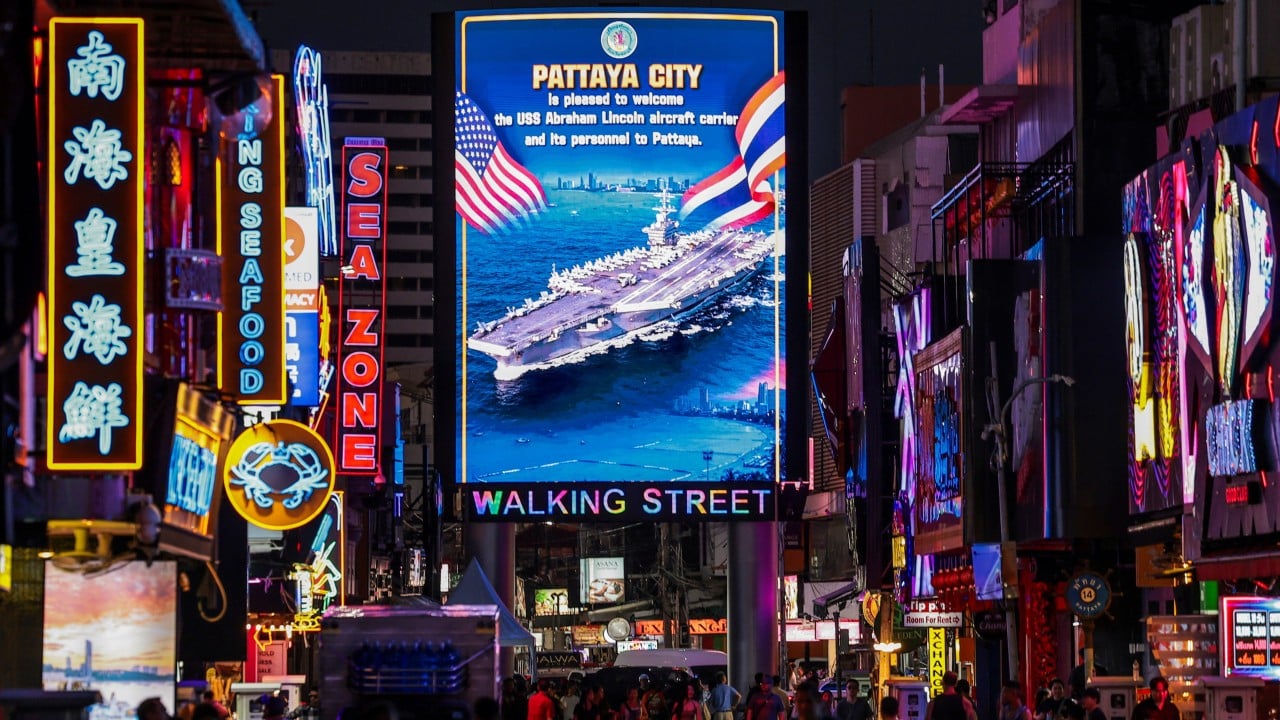
The humidity in Pattaya clings to your skin like a wet wool blanket, thick with the scent of diesel exhaust, charcoal-grilled squid, and salt spray. For months, the horizon has been nothing but an endless, dizzying geometry of gray. Gray water meeting gray sky. The metal hum of the aircraft carrier beneath your boots, vibrating through your spine twenty-four hours a day until you stop hearing it and start feeling it only when it ceases.
Then the liberty boats hit the pier.
When you have spent eighty days staring at watertight doors and sleeping three tiers high in a rack where your nose nearly touches the mattress above you, land feels less like a geographic destination and more like a hallucination. The neon signs bleed into the damp night air. The music pulses from open-air bars, rhythmic and loud enough to rattle your teeth. It is an invitation to forget. To trade the iron-clad rigidity of the military machine for a few hours of absolute, unmitigated anonymity.
Except anonymity is a myth when you wear the invisible uniform of your habits.
Consider what happens next: two sailors, their names ultimately destined for an incident report that will circulate through naval channels like a cold draft, stepped off that pier. They were looking for decompression. What they found instead was the oldest trap in the book.
Noise. Crowds. Alcohol acting as a solvent for good judgment.
(Note: The following narrative reconstruction of the altercation is based on standard behavioral patterns documented in shore patrol logs and command investigations, utilizing a hypothetical sequence of events to ground the dry facts in human reality.)
Imagine Petty Officer Second Class Miller, a jet engine mechanic whose hands have spent the week caked in JP-5 jet fuel and hydraulic fluid. For ninety-six hours, he hasn't thought about turbine blades or compressor stalls. He has thought only about cold glass and dry land. Beside him is Fireman Rodriguez, nineteen years old, his first deployment, high on the sheer velocity of being a thousand miles away from home for the very first time.
At first, it is just laughter. It is the boisterous, loud noise of young men who have been holding their breath for months and finally exhaled. They trade stories over local Chang beers that taste thin and sweet. The hours blur. The neon transitions from red to purple as the night deepens, and the initial festive release curdles into something sharper. Fatigue, alcohol, and the simmering friction of cramped shipboard life—where you know every twitch and tick of the fifty guys in your berthing compartment—do not vanish just because you stepped onto a Thailand beach. They come ashore with you. They sit at the bar.
A sharp word over a spilled drink. A shove that was supposed to be a joke but lands with the weight of an insult. Pride flares, fragile and dangerous, fueled by too much alcohol and too little sleep.
Within minutes, the flashing lights of local security cut through the humid dark. The shouting matches echo off the concrete. The brief, chaotic scuffle ends not with a dramatic cinematic fade-out, but with handcuffs, cold metal, and a sickening drop in the stomach as the adrenaline evaporates, leaving behind a terrifying, hollow clarity.
The morning after a liberty incident does not smell like neon and grilled squid. It smells like stale coffee and bleach.
The transition from a Thai holding room to the pristine, sterile corridors of the USS Abraham Lincoln is a journey through a nightmare of administrative gravity. The carrier rests at anchor or sits hull-down over the horizon, a floating city of five thousand souls where every action has a ripple effect.
When those two sailors climbed back aboard the Abraham Lincoln, they did not walk into a vacuum. They walked back into a community that relies on absolute, unbroken trust.
Trust is not an abstract virtue on a warship. It is the physical margin of error between life and death. When you strap a multi-million-dollar F-35 into a catapult, or when you stand watch in the combat information center tracking surface contacts, you are banking entirely on the person standing next to you. If Miller cannot clear an engine because his head is pounding from a cell-block hangover, the mission stumbles. If Rodriguez is distracted by impending mast and the threat of a dishonorable discharge, his focus on the engineering line wavers.
The command didn't yell. That is the worst part of modern naval discipline. The old days of keelhauling or summary floggings are gone, replaced by something much heavier: the cold, unblinking machinery of the Uniform Code of Military Justice.
Captain’s mast. Reduction in rank. Forfeiture of half a month's pay. The crushing weight of knowing that your liberty card—the golden ticket you dreamed about while chipping rust in the middle of the South China Sea—is gone for the rest of the deployment. More than that, you have become the object lesson. You are the cautionary tale whispered in the mess decks by the chief petty officers.
Don't be like them.
We look at headlines about sailors sent back to their ship after a drunken street fight and we chuckle, shaking our heads at youthful indiscretion. We see a minor blip in the international news cycle. A local disturbance. A brief administrative headache for a public affairs officer drafting a three-sentence press release.
The real story is quieter, heavier, and entirely internal.
It is the sound of a heavy steel watertight door sealing shut behind you, the locking dogs turning with a metallic clack that echoes down the passageway. It is the realization that the neon lights of Pattaya are a million miles away, replaced once again by the endless, gray expanse of the ocean, and the long, unforgiving stare of the men and women who trusted you to watch their backs, and whom you let down in the span of a single, stupid, drunken hour.
The wake churns white against the dark water, pulling the massive grey hull forward into the night, leaving the shore far behind, but carrying every consequence right along with it.