Saltwater does not care about diplomacy. It laps against the steel hull of a supertanker with the same indifferent rhythm it has kept for ten thousand years, oblivious to the radar screens glowing green in darkened command centers miles away.
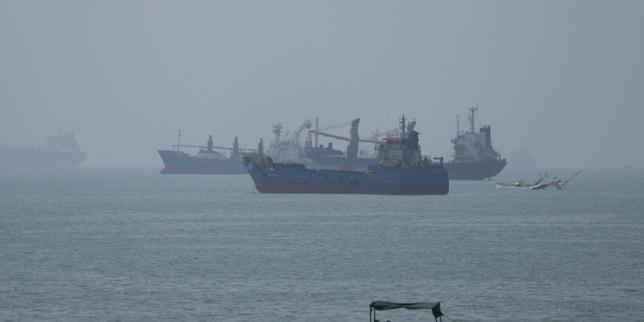
To look at a map of the Strait of Hormuz is to look at a bottleneck of human fragility. At its narrowest point, the shipping lanes are just two miles wide, squeezed between the jagged coastline of Oman and the towering ridges of Iran. Through this tiny throat passes a staggering fifth of the world's petroleum supply. Every drop of crude carried on those massive vessels represents electricity in Tokyo, manufacturing in Munich, and morning commutes in Chicago.
And on a humid, salt-heavy night, the silence of that water shattered.
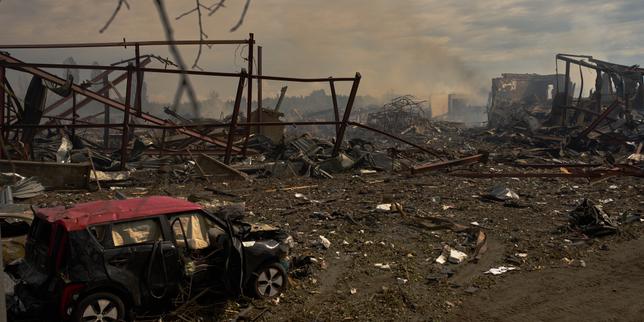
United States military forces launched targeted strikes against Iranian rocket launchers positioned near these vital waters. The official briefings came wrapped in the cold, sanitized lexicon of modern defense: kinetic action, defensive posture, degraded capabilities, targeted assets. Those words are designed to distance us from the reality. They are meant to make violence sound like an administrative update.
Step away from the briefing room. Imagine standing on the open bridge of a commercial container ship creeping through the dark at twelve knots, your crew operating in a state of quiet, unrelenting dread.
Captain Sarah Chen—a hypothetical master mariner with twenty years at sea, built of sun-weathered skin and nerves like piano wire—knows every shadow on that coastline. She has navigated these waters during peacetime negotiations, during tense standoffs, and now, during this sudden eruption of metal and fire. When the distant horizon lights up with the sudden, violent orange flash of U.S. missiles finding their mark, she doesn't check a press release. She listens to the low-frequency thrum of her engines and calculates whether the shockwave will disrupt her rudder.
The rocket launchers targeted by American forces were not sitting idle. Intelligence reports confirmed they were active, manned, and positioned with a clear line of sight over the inbound and outbound traffic lanes. They were loaded with systems capable of turning a floating cathedral of commerce into a burning environmental disaster within seconds.
This is the invisible architecture of our daily lives. We wake up, turn on the lights, drive to work, and rarely consider that our entire economic reality hangs by a very thin, very taut cable strung across a hostile desert coast.
The Strait of Hormuz has always been a place where a single miscalculation can trigger a cascade. History is littered with the wreckage of narrow escapes. In the late 1980s, the Tanker War turned these same waters into a gauntlet of drifting mines and anti-ship missiles. Sailors who lived through those years remember the distinct smell of burning bunker fuel mixed with fear, the constant hum of patrol aircraft overhead, and the agonizing slowness of a convoy crawling past hostile shores.
When American strike aircraft deployed to neutralize the recent rocket threat, they weren't just protecting a geopolitical interest. They were stepping into a historical echo chamber. They were performing a high-stakes calculus where doing nothing invites aggression, and doing something risks escalation.
Consider what happens next.
When a missile destroys a rocket launcher on a rocky promontory, the smoke clears within minutes, but the political fallout settles like toxic dust. The adversary recalibrates. Supply chains twitch. Insurance rates for vessels daring to enter the Gulf spike overnight, instantly translating into higher prices at gas pumps thousands of miles away. The ripple effect is instantaneous, yet most consumers remain entirely blind to the storm center.
We live in an era that pretends distance equals safety. We believe that because our screens are smooth and our supermarkets are stocked, the turbulent edges of the earth cannot touch us. But the world is smaller and more dangerously interconnected than we care to admit. Every gallon of fuel burned on a highway in Ohio is tied directly to the trajectory of a precision-guided munition fired over the Persian Gulf.
The pilots who climbed into their cockpits for that strike did not do so in a vacuum of ideology. They flew through freezing high-altitude air, managed complex sensor suites, and released ordnance with terrifying accuracy because the alternative was unthinkable. To leave those launchers operational was to gamble with the global economy and the lives of thousands of civilian merchant mariners who carry the lifeblood of nations.
Yet, military suppression is a temporary bandage on a chronic wound. It clears the immediate horizon, but it does not alter the underlying geography. The mountains of Iran will remain. The narrow shipping lanes will still narrow. The tankers will keep coming, their hulls heavy with black gold, cutting through the dark water.
As dawn broke over the Strait of Hormuz following the strikes, the smoke from the targeted positions drifted lazily out to sea, dissolving into the hazy morning fog. Out in the shipping lanes, Captain Chen adjusted her course by half a degree, watching the horizon with eyes that had seen too much to ever truly relax. The water was calm again. For now. But beneath the surface, the tension remained, humming quietly in the deep.
:max_bytes(150000):strip_icc():focal(999x0:1001x2)/dax-shepard-kristen-bell-emmy-awards-101725-84c11999ef38483e8535a5e109735a38.jpg)