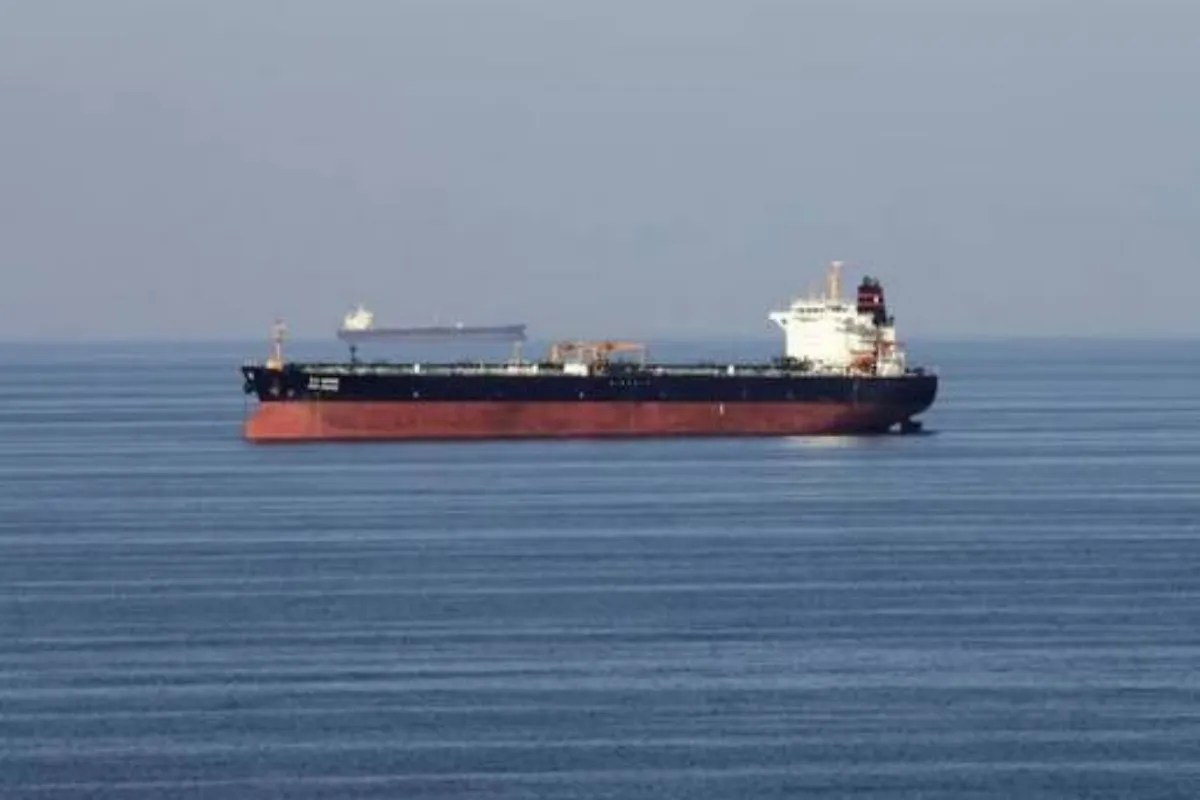
Every morning at dawn, a tanker the size of a skyscraper points its bow toward a sliver of blue water no wider than a stretch of highway.
To the untrained eye on a satellite map, it looks like nothing. Just a pinch point between the jagged brown mountains of Oman and the scorched coast of Iran. But stand on the deck of that vessel as the salt spray hits your teeth and the engine room hums a deep, vibrating bass through the floorboards, and you feel the claustrophobia. You feel the weight of what is passing through these 21 miles of sea.
A fifth of all the petroleum consumed on planet Earth squeezes through this exact corridor every single day.
Right now, the people steering these multi-million-ton floating cities are checking their radios more often than usual. They are looking at the horizon not for weather, but for gray hulls and low-flying silhouettes. Because Tehran has drawn a hard line in the sand, or rather, across the waves. The warning is unambiguous: the Strait of Hormuz, the jugular vein of global energy supply, is being watched. And illegal pathways—those unauthorized lanes where captains try to shave off hours or dodge local surveillance—are about to be slammed shut. Permanently.
Consider what happens next when a single choke point catches a cold.
The Geography of Vulnerability
Picture a funnel. At the wide end sits the entire Persian Gulf, where nations pump billions of dollars of liquid carbon out of the desert sand. At the narrow spout lies the Strait of Hormuz. There is no detour. There is no alternative highway that can handle supertankers laden with crude. If you block this channel, you do not just inconvenience shipping companies; you starve refineries from Rotterdam to Tokyo.
For decades, this delicate balance held because it had to. The economic survival of the oil producers depended on the flow, and the military might of the West ensured the gates stayed open. It was an uneasy, teeth-gritting peace maintained by gray warships and mutual deterrence.
(Note: When I speak of the "gates" being locked, I am using a strategic metaphor for naval control, choke-point restrictions, and the electronic and physical policing of maritime corridors.)
Yet, geopolitics does not stay frozen in amber.
When Iranian officials issue warnings regarding unauthorized routes, they are not merely talking about bureaucratic paperwork or customs violations. They are asserting sovereignty over waters where every movement is scrutinized. They are drawing a boundary line around maritime traffic, signaling that the rules of engagement in this high-stakes corridor are shifting.
What the Maps Do Not Tell You
Let us step away from the grand strategy rooms for a moment and look at the human cost.
Imagine Captain Tariq, a third-generation mariner standing on the bridge of a laden VLCC—a Very Large Crude Carrier. He has spent thirty years navigating these dangerous waters. He knows the scent of the heavy crude, the peculiar greenish hue of the Gulf water near the Iranian shelf, and the sudden, blinding dust storms that sweep down from the mainland, reducing visibility to zero.
Tariq does not care about political press conferences or diplomatic posturing. He cares about his crew of twenty-four souls, the integrity of his hull, and the insurance premiums that have just spiked through the ceiling.
When a nation like Iran declares that illegal shipping lanes will be closed, Tariq feels it in the pit of his stomach. It means the margin for error shrinks to zero. A stray degree off course, a misinterpreted radio transmission, or a delayed response from a coastal radar station can transform a routine transit into an international incident.
His crew is quiet tonight. The mess hall is subdued. In the galley, the coffee pot drips rhythmically, but nobody is laughing. They all know that the narrowest part of their journey is approaching, and the rules have just changed.
The Ripple Effect Across Borders
Energy markets are hypersensitive nervous systems. You twitch a muscle in the Strait of Hormuz, and a housewife in Berlin or a factory owner in Seoul feels the jolt on their utility bill two weeks later.
Crude oil is the lifeblood of industrial civilization. When supply lines face renewed friction, the price per barrel reacts instantly. It is an unyielding mathematical law of supply, fear, and demand. For years, analysts have warned about the systemic fragility of global supply chains. We built a world that relies on absolute, frictionless movement of goods across oceans. We optimized every warehouse, every shipping schedule, and every refinery to run on just-in-time delivery.
Then reality intervenes.
When maritime authorities or regional powers tighten the screws on strategic waterways, the illusion of seamless global trade shatters. Shipping companies are forced to recalculate routes, absorb staggering insurance hikes, or simply pause operations until the diplomatic fog clears. Each hesitation adds pennies to a gallon of gasoline, dollars to a barrel of heating oil, and inflationary pressure to an already strained global economy.
The Invisible Stakes
It is easy to view these events as distant theater—blips on a news ticker, arguments between diplomats in tailored suits, or abstract lines drawn across naval maps.
That is the great deception.
The stakes are deeply personal. They are tied to the cost of fertilizer used to grow wheat. They are tied to the diesel that powers the trucks delivering milk to your local supermarket. They are tied to the stability of currencies and the peace of mind of millions of workers whose livelihoods depend on stable energy prices.
When Iran warns that unauthorized maritime paths will be shut down, it is a reminder that the globalized world is held together by fragile threads. We sit atop an intricate, high-speed network of commerce, forgetting that underneath it all lies physical geography—rocks, water, narrow channels, and the political will of nations that control them.
The tanker moves forward into the darkness. The phosphorescent wake churns white against the black water. On the radar screen, green lines sweep in a continuous, hypnotic circle, charting a path through waters that grow more complicated by the hour.
There are no easy answers here. There is only the watch, the horizon, and the waiting world.