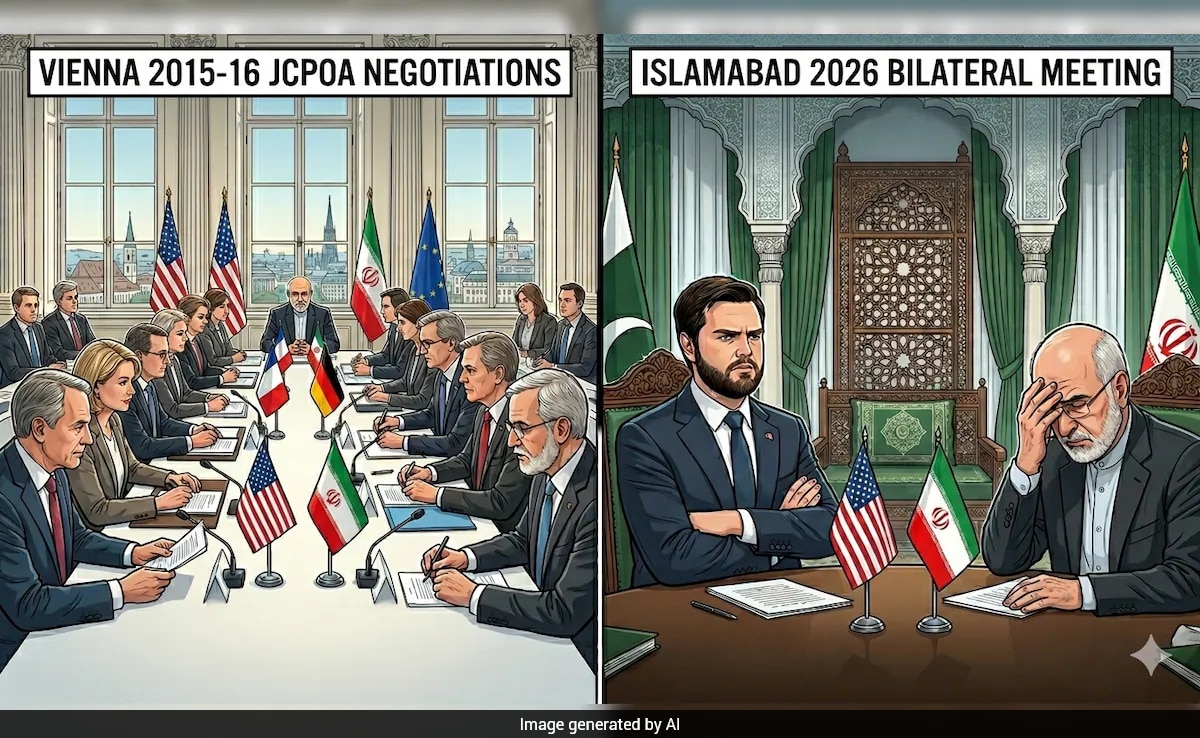
The mainstream media is choking on its own narrative again. Every headline about the recent collapse of Pakistan’s peace talks and Iran’s supposed "jabs" at the Trump administration treats diplomacy like a high school debate where the person with the last word wins. It is a shallow, intellectually lazy interpretation of a high-stakes geopolitical chess match.
The consensus is that these "failures" represent a breakdown of order. That is wrong. These are not failures. They are calculated maneuvers in a world where "stability" is a commodity used by mid-level bureaucrats to justify their budgets. If you think the "ghost of the Obama nuke deal" is a haunting presence, you are missing the fact that for Tehran, it is a convenient skeleton to rattle whenever they need to squeeze more concessions out of a panicked West.
The Pakistan Peace Talks Were Never Meant to Succeed
Journalists love the word "flop." It implies a beginning, a middle, and an unfortunate end. In the context of Islamabad’s negotiations with domestic militants and regional actors, "flop" is the wrong descriptor. The talks were a performance.
Pakistan’s internal security apparatus relies on a state of perpetual "managed instability." To truly "solve" the militant problem would be to dissolve the very leverage the Pakistani military uses to extract aid from the United States and strategic depth against India. I have watched this cycle for two decades: a flare-up of violence, a series of high-profile "peace talks" that go nowhere, and then a return to the status quo.
The talks didn't fail. They served their purpose. They bought time. They allowed the military to re-center itself as the only institution capable of holding the country together while simultaneously proving to the international community that the "other side" is too radical to negotiate with. It is a brilliant, if cynical, cycle of self-preservation.
Iran Does Not Fear a Second Trump Term
The prevailing wisdom suggests Iran is terrified of Donald Trump’s "Maximum Pressure" campaign returning. The pundits point to Tehran’s verbal swipes at Trump as evidence of anxiety.
This is a total misread. Tehran loves the predictability of a hardliner.
When the U.S. acts as a coherent, aggressive antagonist, it simplifies Iran’s domestic politics. It allows the hardliners in the Islamic Revolutionary Guard Corps (IRGC) to silence moderate voices by pointing to Washington and saying, "See? They will never honor a deal." Trump’s withdrawal from the JCPOA (Joint Comprehensive Plan of Action) was the best gift the Iranian right wing ever received. It validated their worldview and gave them a free hand to accelerate their nuclear program while blaming American "unreliability."
The "Ghost of the Obama Deal" isn't a specter for Iran; it’s a shield. By constantly referencing the 2015 agreement, Iran positions itself as the aggrieved party that followed the rules, while the U.S. is the rogue state that breaks them. This isn't about physics or centrifuges. It’s about the moral high ground in the Global South, where the narrative of "Western betrayal" sells much better than "nuclear non-proliferation."
The Ghost of Obama is a Strategic Hallucination
The obsession with reviving the JCPOA—the "Ghost of Obama"—is a classic case of fighting the last war. The world of 2026 is not the world of 2015. The geopolitical architecture has shifted. Iran has deepened its ties with Russia and China through the BRICS expansion and the Shanghai Cooperation Organisation.
The U.S. foreign policy establishment is still trying to use a 20th-century toolkit (sanctions and treaties) on a 21st-century problem. Sanctions don't work when the target has a "no-limits" partnership with the world's second-largest economy.
The Fallacy of the "Strongman" Negotiator
There is a segment of the American electorate that believes a "tough" leader can simply walk into a room, stare down a mullah or a general, and walk out with a win. This is the "Art of the Deal" fallacy applied to blood and soil.
International relations are governed by structural realities, not personality types. Iran’s nuclear ambitions are driven by a survival instinct forged during the Iran-Iraq War, where they realized that without a strategic deterrent, they are expendable. No amount of "jabbing" or "Maximum Pressure" changes that math.
In fact, the more "unpredictable" the U.S. becomes, the more the IRGC perceives a nuclear weapon as the only guarantee against regime change. If you want to stop a nuclear Iran, you stop threatening to topple the government every four years. But no one in Washington has the stomach for that kind of realism.
The Actionable Truth: Embrace the Stalemate
If you are looking for a "solution" to the Middle East or the Pakistan-Afghanistan border, you are asking the wrong question. These are not problems to be solved; they are conditions to be managed.
The "peace talks" and "nuke deals" are just the upholstery of the global order. The real work happens in the shadows—in the intelligence sharing that prevents the next big attack and the back-channel communications that ensure a tactical error doesn't escalate into a regional war.
- Stop waiting for a "Grand Bargain." It’s a myth sold by think-tankers to secure funding.
- Acknowledge that Iran is a regional power. You don't have to like it, but you have to deal with it. Treating them like a pariah state only forces them into the arms of Beijing.
- Recognize the Pakistan military's incentive structure. They will never eliminate the militants as long as those militants are the reason the U.S. keeps the taps open.
The Cost of the "Success" Illusion
The danger isn't that these talks "flop." The danger is that we believe they must succeed. When we tie our prestige to the outcome of a negotiation with people who have no intention of compromising, we give them all the power.
The U.S. needs to stop acting like a desperate suitor at the Iranian and Pakistani negotiating tables. The ghost of the nuke deal is only scary if you believe that a piece of paper is the only thing standing between us and Armageddon. It isn't.
Real power is the ability to walk away from a bad deal and let the "other side" deal with the consequences of their own isolation. But we can't do that because we are addicted to the optics of "diplomatic progress."
We are currently witnessing a masterclass in manipulation. Iran and Pakistan aren't failing; they are winning by making the West believe that peace is just one more meeting away. They are playing the long game while Washington is playing the news cycle.
Stop looking at the headlines and start looking at the incentives. The talks didn't fail. They performed exactly as intended. The only people who got played are the ones who thought there was a chance they wouldn't.
Go back to your maps and your spreadsheets. The world is exactly as it should be: messy, transactional, and entirely indifferent to your desire for a "breakthrough."