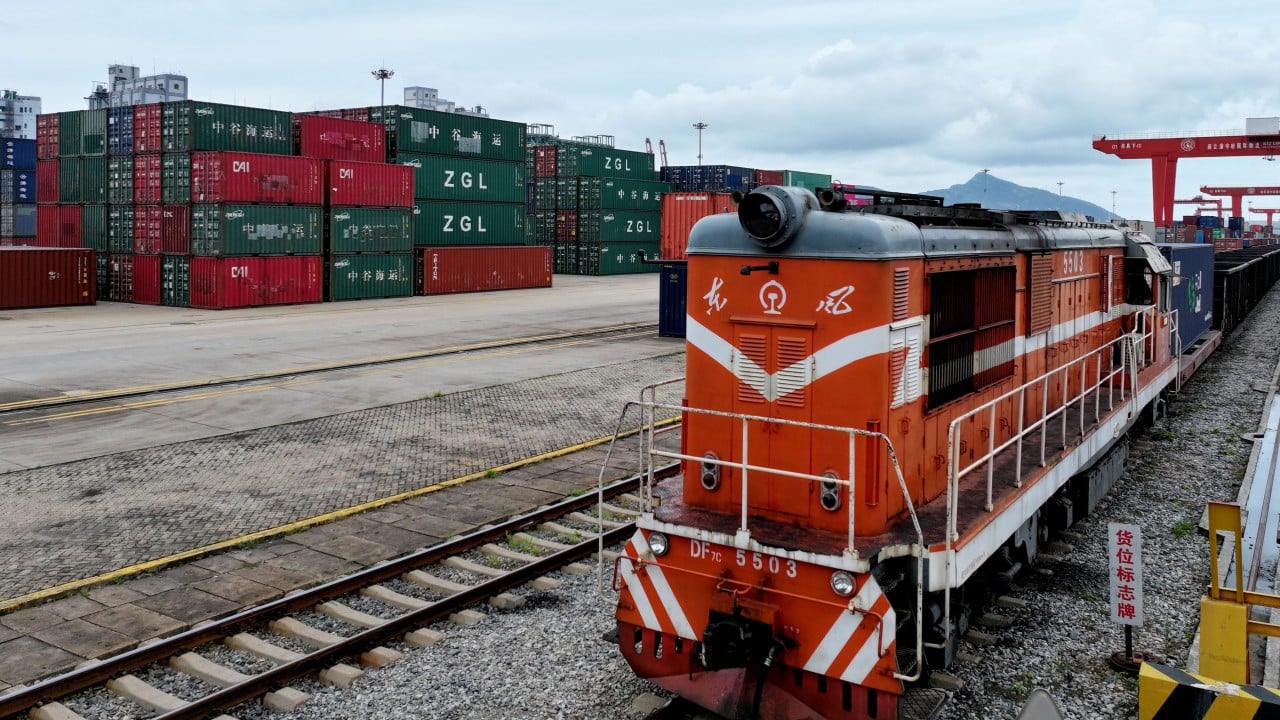
Britain is entirely unprepared to sustain its own population or military through a protracted geopolitical conflict, owing to a multi-decade corporate obsession with lean supply chains that has effectively eliminated national storage capacity.
A quiet warning delivered to ministers by the National Preparedness Commission confirms that the UK is lagging dangerously behind its European neighbours in safeguarding critical inputs. While continental states mandate months of strategic reserves, British industry operates on a razor-thin margin of error. The recent disruption in the Strait of Hormuz during the US-Israel-Iran conflict of March 2026 proved that global trade lanes can snap overnight. Yet, the systemic response from Whitehall remains confined to voluntary industry guidance and bureaucratic review.
The foundational flaw is not an absence of logistics infrastructure, but a corporate and political theology that treats stored inventory as financial waste.
The False Economy of Just in Time
For forty years, British boardrooms have worshiped at the altar of efficiency. By stripping out warehouses, minimizing safety stock, and relying on predictable global transit times, businesses successfully drove down holding costs. This asset-light model operates beautifully during peacetime. In an era of state-on-state friction and naval blockades, it functions as a national vulnerability.
When a crisis strikes, a supply chain optimized purely for cost becomes a transmission mechanism for panic. Consider the pharmaceutical sector. While certain European jurisdictions legally compel manufacturers to hold up to six months of buffer stock for essential medicines, the UK mandates a mere eight weeks for hospital suppliers. For primary care pharmacies, there is no mandatory buffer at all.
The state possesses no strategic stockpile of critical civilian medical equipment. This leaves the NHS entirely exposed to international bidding wars or export bans the moment a major security crisis closes European sea lines of communication.
The private sector exhibits identical fragility. Data from logistics analysts at SCALA reveals that nearly half of UK firms rely on just three primary customers for the majority of their revenue, creating extreme concentration risk. Simultaneously, only a third of these businesses have actually implemented actionable strategies to counter severe import blockages. The rest are coasting on hope, assuming the Royal Navy or government intervention will keep the container ships moving.
The Illusion of Domestic Subsidization
The standard political antidote to this vulnerability is the promise of domestic procurement. Government rhetoric frequently highlights a "whole-of-society" approach to resilience, pledging to prioritize British suppliers for contracts deemed vital to national security. In practice, this policy is an empty shell.
More than 75% of UK manufacturing exports rely directly on imported raw materials or sub-components. The British Chambers of Commerce points out that total trade accounts for over 60% of national GDP. You cannot manufacture a sovereign British defense asset or critical medical device if the specialized steel, chemical precursors, or microprocessors are stuck on a stranded vessel in the Red Sea.
The Critical Mineral Chasm
The transition toward automated defense systems and clean energy infrastructure has supercharged the demand for materials the UK simply does not possess.
- Lithium: National demand is projected to scale exponentially over the next decade to feed battery manufacturing.
- Copper: Industrial requirements are climbing rapidly, outstripping secure Western supply agreements.
- Specialist Steel: Despite the implementation of emergency steel tariffs to protect what remains of domestic production, the UK lacks the heavy industrial smelting capacity to supply marine-grade plating and ballistic armour at a wartime cadence without foreign ore and coke.
To illustrate the mechanism of failure, consider a hypothetical domestic electronics manufacturer tasked with supplying communication units for the Ministry of Defence. The assembly takes place in northern England, allowing politicians to claim the supply chain is domestic. However, the silicon wafers originate in Taiwan, the rare earth elements are processed in China, and the specialized resins are formulated in Germany. A blockade in the South China Sea or a cyber-attack on a European port immediately halts production in Yorkshire. The domestic label is a cosmetic fix for a global dependency.
The Cyber Backdoor
The vulnerability is not merely physical. As corporate supply chains have integrated digitally to enable automated ordering and real-time tracking, they have created an unmanageable attack surface for hostile nation-states.
Sophisticated actors rarely target the heavily fortified networks of the Ministry of Defence or a major aerospace prime directly. They target the third-tier supplier—the family-owned logistics firm, the component fabricator in the Midlands, or the commercial software vendor. Security audits indicate that four out of five cyber-attacks now originate within the supply chain.
[Hostile Actor]
       │
       ▼
[Tier-3 Subcontractor] (Weak Cyber Security)
       │
       ▼
[Tier-1 Defense Prime] (Shared Automated Inventory Systems)
       │
       ▼
[National Infrastructure / Military Procurement]
Under current MoD regulations, frameworks like Cyber Essentials Plus are mandatory for direct contractors. But as you descend the tiers into the small and medium enterprises that provide the actual nuts, bolts, and raw inputs, compliance drops off a cliff.
The financial damage of these digital failures is already measurable. When a major supplier network suffers a breach, the cascading contractual delays can drain millions from corporate balance sheets in weeks. When applied to national defense infrastructure, a coordinated cyber-blackout of logistics software would freeze transport networks before a single vehicle could deploy.
The Strategic Cost of Inertia
While Whitehall coordinates wargames with major defense primes to simulate demand surges under fire, the wider civilian economy is left to the whims of the market. European competitors are actively treating supply chain security as a core element of national deterrence. The UK is treating it as an administrative line item.
The solution is neither cheap nor politically palatable. It requires a forced return to warehousing, legislated minimum storage mandates for vital industries, and state-backed financing for uncompetitive domestic processing facilities. This will inevitably increase shelf prices for consumers and dent the short-term profitability of listed companies.
The alternative is to continue operating a nation on a delivery schedule that assumes global harmony. In a fractured world, that is a gamble Britain is on track to lose.