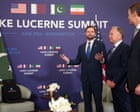
Washington is running a thirty-year-old software update on a foreign policy apparatus that completely melted down a decade ago.
The immediate media reaction to Donald Trump’s latest friction with Capitol Hill over the Joint Comprehensive Plan of Action (JCPOA)—coupled with JD Vance’s defense of backchannel peace talks—follows a script so stale you can taste the dust. Mainstream analysts are hyper-focusing on the "bipartisan blowback" and the breach of traditional diplomatic norms. They argue that breaking away from a unified, hardline stance damages American credibility and weakens our leverage.
They are entirely wrong. The premise itself is rotten.
The bipartisan consensus on Iran isn't a strategy; it's a security blanket for politicians who refuse to admit that the global financial system has permanently shifted. The critics crying foul over unconventional diplomacy are clinging to an era of American hegemony that died when the first non-Western financial clearing houses went live. Vance’s defense of open communication channels isn’t a betrayal of strategy. It is an accidental collision with reality.
The Sanctions Illusion and the Rise of the Parallel Economy
For two decades, the Washington playbook for Tehran has been remarkably simple: pile on primary and secondary economic sanctions, restrict SWIFT banking access, freeze foreign assets, and wait for a economic collapse that forces a capitulation.
I spent years tracking illicit capital flows and secondary market transactions within global trade networks. If you watch how money actually moves across borders—rather than reading press releases from think tanks—you quickly learn a brutal truth. Sanctions only work when the target has nowhere else to turn.
When the U.S. pulled out of the Iran deal in 2018 and reimposed "maximum pressure," it didn't isolate Iran permanently. It forced Iran to pioneer a blueprint for survival that the rest of the non-Western world has now copied, refined, and scaled.
Imagine a scenario where a state-owned Chinese refinery wants Iranian crude oil. Ten years ago, the threat of being cut off from the U.S. dollar clearing system would freeze that transaction instantly. Today, that trade bypasses the dollar entirely. It settles in digital yuan, uses non-SWIFT financial messaging systems, and relies on a "ghost fleet" of aging tankers running under flags of convenience with transponders turned off.
The data backs this up. Iranian crude exports reached multi-year highs recently, with the vast majority of the volume going directly to independent refineries in China. Washington can pass all the bipartisan resolutions it wants. It cannot sanction a supply chain that doesn't touch American soil, American banks, or American currency.
Why Bipartisan Consistency is Actually a Vulnerability
The core argument of the competitor article—and the wider foreign policy establishment—is that America must speak with one voice to maintain a credible deterrent. They view public disagreement between the executive branch and Congress as a dangerous weakness.
This assumes our adversaries are stupid. They aren't.
When American foreign policy is entirely predictable and locked into a permanent, unyielding posture, it becomes exceptionally easy to counter. Tehran knows exactly what a standard Republican or Democratic administration will do because the options are always selected from the same narrow menu: more sanctions, more public condemnation, and more regional troop deployments.
Predictability breeds stability for the target. They can price the pressure into their long-term economic planning. They build domestic resistance mechanisms, diversify trade partners, and establish state-backed smuggling networks.
Unpredictability, however, disrupts that calculus. When Vance defends direct, non-traditional peace talks while Trump simultaneously threatens catastrophic escalation, it shatters the predictable model. It introduces strategic ambiguity. The adversary is forced to calculate multiple conflicting scenarios simultaneously, preventing them from settling into a comfortable, defended posture.
Dismantling the Consensus on "Maximum Pressure"
Let’s address the standard questions that dominate the public discourse, usually framed around flawed assumptions.
Does cutting off diplomatic channels prevent state-sponsored escalation?
No. The historical record shows the exact opposite. When diplomatic lines are severed completely, the risk of miscalculation escalates exponentially. Without direct communication channels, every routine naval movement in the Strait of Hormuz or minor cyber incident is viewed through the lens of imminent war. Backchannels aren't concessions; they are safety valves designed to prevent a regional conflagration that serves nobody's interests.
Can multilateral agreements survive without absolute U.S. enforcement?
The establishment insists that unilateral moves destroy agreements like the JCPOA. The reality is that the original deal was structurally fragile from day one because it relied on the illusion that Western economic integration was a prize Iran would permanently trade its strategic depth to secure. The moment the domestic political wind shifted in Washington, the economic incentives evaporated. Agreements built solely on Western financial access are fundamentally unstable in a multipolar world.
The Real Cost of the Confrontation Playbook
Admitting that the old model is broken comes with a massive downside that hawks refuse to acknowledge: it means acknowledging the limits of American power.
By pretending that economic isolation still works, the United States is inadvertently accelerating the creation of an alternative global financial architecture. Every time the U.S. uses the dollar as a weapon, it gives mid-tier powers a massive incentive to de-dollarize. We are trading long-term systemic dominance for short-term political posturing on cable news.
The hard truth is that Iran has achieved a state of economic insulation that makes traditional containment impossible. They have integrated into Eurasian trade corridors, cemented ties with Moscow and Beijing, and secured domestic survival independent of Western approval.
Continuing to demand absolute capitulation through a unified congressional front isn't strength. It is theater. It is a group of policymakers shouting into a dead microphone, wondering why the crowd isn't moving.
The foreign policy elite can keep writing obituaries for diplomatic norms and weeping over the loss of bipartisan consensus. While they mourn a world that no longer exists, the actual game is being played by those willing to discard the old rulebook entirely, engage in uncomfortable transactions, and acknowledge the world as it is, rather than how it appeared in a 1990s geopolitical textbook.
Stop trying to fix a broken containment strategy. Start recognizing that the leverage you think you have vanished years ago.


