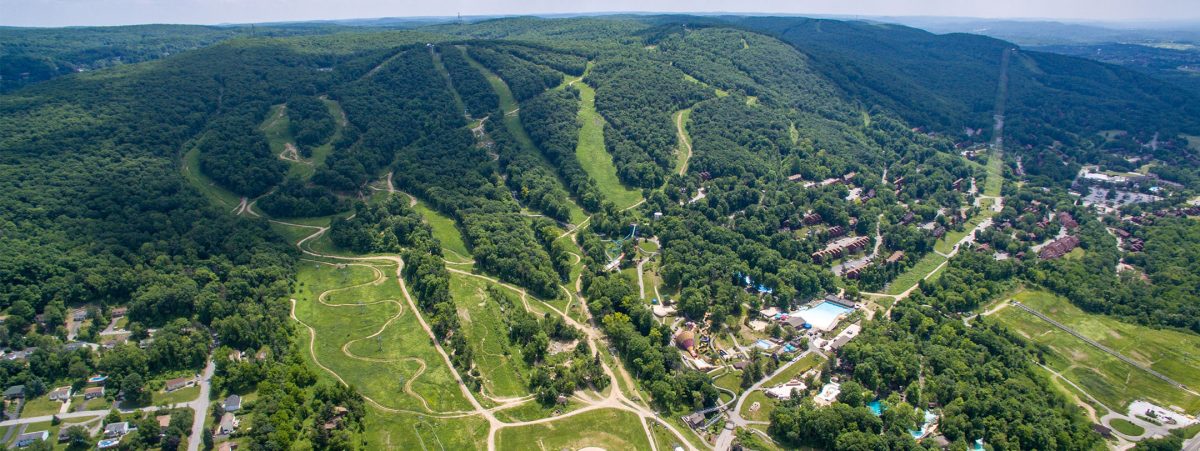
Maps lie. They present the world as flat ink and clean borders, neat lines drawn across deserts and valleys to reassure us that someone is in control. But anyone who has ever stood in the Zagros range knows better. Mountains do not care about diplomacy. They do not care about the speeches delivered behind podiums thousands of miles away, nor do they care about the fragile calculus of sanctions and ultimatums. They simply rise, ancient and indifferent, concealing what men build beneath their stone ribs.
Pickaxe Mountain is not a name whispered by poets. It is a dry designation, a cartographic coordinate that has recently been dragged from obscurity into the blinding glare of international brinkmanship. Donald Trump, returning to the center stage of global politics, has reiterated his threat to target specific subterranean nodes inside Iran, explicitly naming the mountain and its heavily fortified nuclear infrastructure should negotiations fail to produce a new deal. Read more on a related subject: this related article.
To understand why a jagged pile of rock in central Iran commands the attention of the White House, you have to look past the political rhetoric and examine the physics of modern paranoia.
Decades ago, nations built their most dangerous secrets out in the open. They erected cooling towers on flat plains and dug massive open-pit facilities that could be photographed by spy satellites with humiliating clarity. The world learned from those vulnerabilities. When a government decides to shelter its most sensitive enrichment programs, it buries them beneath hundreds of feet of granite. Additional reporting by Reuters delves into related perspectives on the subject.
Concrete. Steel. Earth.
Nuclear engineers discovered long ago that if you dig deep enough, the mountain itself becomes the shield.
Imagine walking through a tunnel carved straight into the heart of Pickaxe Mountain. The air is cool, smelling of ozone, diesel exhaust, and the faint, mineral tang of wet dust. Fluorescent lights stretch into a distance that feels deliberately deceptive. Heavy armored doors, thick enough to shrug off a conventional blast, segment the labyrinth. Down here, hundreds of feet beneath the surface, centrifuges spin in silent, relentless unison, separating isotopes in an invisible dance that could alter the balance of power across an entire hemisphere.
This is the sanctuary of the program. It was designed to survive.
And that design is precisely what haunts military planners.
Standard bombs bounce off granite. A conventional airstrike, no matter how precise, can do little more than scratch the surface of a facility buried deep within a mountain. This technological reality created a grim arms race beneath the earth, prompting the development of massive ordnance designed to drill deep before detonating. The threat to strike Pickaxe Mountain is not merely a rhetorical flourish tossed out during a campaign rally or an interview; it is an explicit acknowledgment of this grim architecture. It is a declaration that the United States possesses the tools—or is willing to use the tools—capable of reaching what was once considered unreachable.
Yet, weapons are easier to count than consequences.
When politicians speak of striking a mountain, they speak in the clean language of tactical maps and casualty estimates. They talk about degrading capabilities, setting back timelines, and sending messages. But war does not stay neatly contained inside a subterranean bunker.
Consider what happens next.
If a strike were ever ordered against Pickaxe Mountain, the shockwaves would not be limited to the Zagros range. They would ripple outward through the global economy, through the fragile networks of Middle Eastern energy supplies, and through the lives of millions of ordinary people who simply woke up to another Tuesday hoping to go to work and feed their families.
Tehran would not sit in silence. Retaliation is the currency of escalation. Proxy networks, cyber warfare, missile barrages directed at regional infrastructure—the menu of asymmetric response is long and varied. A single strike on a mountain could easily unspool into a regional conflagration that no one intended to start, yet everyone proved powerless to stop.
This is the invisible stakes of the game. We live in an era where deterrence is maintained by the terrifying promise of mutual ruin, yet we treat that ruin like a background noise, something to be scrolled past on a phone screen between sports scores and weather reports.
We have been down this road before. History is littered with the wrecks of leaders who believed they could execute a limited, surgical strike to solve a complex geopolitical knot, only to find that the knife slipped and severed an artery. The Cuban Missile Crisis taught us the agonizing fragility of the brink. The lead-up to the 2003 invasion of Iraq reminded us of the catastrophic cost of intelligence failures and hubris.
Yet, human nature remains stubbornly consistent. We rely on the belief that someone, somewhere, will pull the emergency brake before the train goes over the cliff.
Trump’s rhetoric taps into a deep, populist appetite for strength. It promises that complex, intractable problems can be solved through sheer force of will and the credible threat of overwhelming violence. For a domestic audience weary of endless foreign entanglements that yield no clear victory, the promise of a hard line has undeniable gravity. It sounds decisive. It sounds like leadership.
Walk through the neighborhoods of Tehran, however, and you will hear a very different frequency.
Talk to a young engineer sitting in a crowded café, watching the currency exchange rates fluctuate with sickening volatility. They do not talk about regional hegemony or the ideological purity of the regime. They talk about inflation. They talk about the cost of medicine. They talk about the quiet, crushing anxiety of knowing that their lives, their savings, and their futures are held hostage by old men in distant capitals who view their homeland as a chess board.
They are terrified of a deal that never comes, and they are equally terrified of the war that might replace it.
When a leader in Washington threatens to shatter a mountain, it sends a tremor through those cafes long before any missile leaves its silo. It hardens resolve among hardliners who use external threats to justify internal repression. It convinces the hesitant citizen that their government’s nuclear ambitions, however dangerous, are the only shield they have against a hostile world.
Fear is a poor architect of peace. It builds walls; it digs bunkers; it primes triggers.
The core tragedy of the standoff over Pickaxe Mountain is that both sides are trapped by their own narratives. Washington cannot afford to look weak, lest it invite further challenges to the global order it spent a century constructing. Tehran cannot afford to capitulate under duress, lest it signal to its domestic populace and regional rivals that resistance is futile.
So the dance continues. Threats are issued, reiterated, and amplified across digital airwaves. Analysts dissect every syllable for hidden meaning. Markets twitch. Diplomats exchange tight smiles in closed rooms while their principals posture for the cameras outside.
Meanwhile, the mountain waits.
At dusk, the last rays of the sun catch the jagged peaks of the Zagros range, turning the stone a deep, bruised violet. The shadows lengthen across the valleys, swallowing the roads, the checkpoints, and the hidden entrances carved into the earth. Down below, in the cool, fluorescent-lit hum of the facility, the machines keep spinning.
The rock is old. It has watched empires rise from the dust and crumble back into it. It has seen armies march past its base and vanish into history. It does not know who holds the codes, and it does not care which president speaks its name on television.
It only knows that the silence never lasts.


