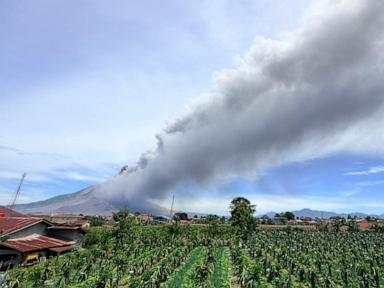
Mount Sinabung blew its top again. Ash plumes choked the skies over Karo Regency in North Sumatra, shooting columns of pulverized rock and superheated gas miles into the troposphere, yet initial reports confirmed zero casualties. Miraculous as that sounds on paper, the absence of bodies does not equal safety. It represents a recurring stroke of luck in a region where geological reality collides with stubborn human attachment.
For the tens of thousands of residents farming the fertile slopes of this Indonesian stratovolcano, the eruption is not a historic catastrophe. It is Tuesday. When Sinabung roared back to life in 2010 after four centuries of apparent dormancy, it shattered the local economy and displaced entire communities permanently. Yet, years later, villagers continue to creep back inside the official danger zones. They return because the volcanic ash churns out some of the richest agricultural soil on the planet. High-altitude chili peppers, coffee, and citrus grow here with a vigor unknown in lowland plains, effectively subsidizing a high-risk lifestyle with high-yield harvests.
Volcanologists from the Center for Volcanology and Geological Hazard Mitigation tracking these shifts note that Sinabung operates under unpredictable parameters. Unlike symmetric cones that vent predictably, this massive structure features a complex network of dome-building sequences and sudden dome collapses. When a dome fails, it triggers pyroclastic flows. These incandescent avalanches of gas, ash, and pumice race down the mountain flanks at highway speeds, scorching everything in their path. The fact that the latest explosion spared human life comes down to wind direction and the temporary absence of farmers working inside the exclusion zone, rather than any meaningful improvement in hazard management.
Living in the shadow of a waking giant requires a fragile psychological truce. Communities displaced by earlier eruptions were promised permanent relocation to safer ground in neighboring districts, but bureaucratic delays and land acquisition bottlenecks left many families stranded in temporary shelters for over a decade. Frustrated by stalled government aid and unable to sustain their traditional livelihoods on meager relocation allowances, many chose return over safety. They calculate that the odds of an immediate eruption are lower than the absolute certainty of poverty in the resettlement camps.
Government authorities face an impossible enforcement equation. Barbed wire and warning signs cannot compete with the economic imperative of a fertile harvest. Evacuation protocols function efficiently during major crises, but the constant rumble of a restless mountain creates disaster fatigue. People simply stop listening to sirens that sound too often for minor ash emissions. This normalisation of deviance places an extraordinary burden on local monitoring teams who must read the subtle seismic signatures of magma movement beneath the crust without triggering false alarms that bankrupt local farmers.
The broader lesson of Sinabung extends far beyond the borders of Sumatra. Across the Pacific Ring of Fire, millions of people inhabit high-risk volcanic zones for the exact same economic reasons. From the slopes of Merapi in Central Java to Popocatepetl in Mexico, human civilization consistently chooses short-term sustenance over long-term geological hazard. Until agricultural incentives shift or structural economic alternatives materialize for rural farmers, the people of Karo Regency will continue to gamble with the earth beneath their feet, waiting for the next eruption to test their luck once more.