Mount Olympus is suffocating under the weight of its own myth. For millennia, the tallest peak in Greece operated as a distant, terrifying concept—the cloud-cloaked throne of Zeus and the ancient Greek gods. Today, it is a crowded weekend destination. Thousands of hikers, tourists, and climbers pack the trails every year, frequently ignoring local regulations, leaving trash, and treating a volatile alpine ecosystem like an amusement park.
Greece wants to change this. The country has officially pushed Mount Olympus forward for inclusion on the UNESCO World Heritage List as a mixed cultural and natural site. The World Heritage Committee is debating the bid right now at its meeting in Busan, South Korea.
If you think this is just about getting a fancy international badge for a tourism brochure, you're missing the point. This bid isn't about attracting more people; it's about gaining the institutional teeth required to police the people who are already showing up.
The Myth Is Real But The Ecosystem Is Breaking
We all know the stories. Homer wrote about the gods eating ambrosia on these peaks, completely cut off from human misery. But look past the mythology, and the physical reality of the mountain is arguably more impressive.
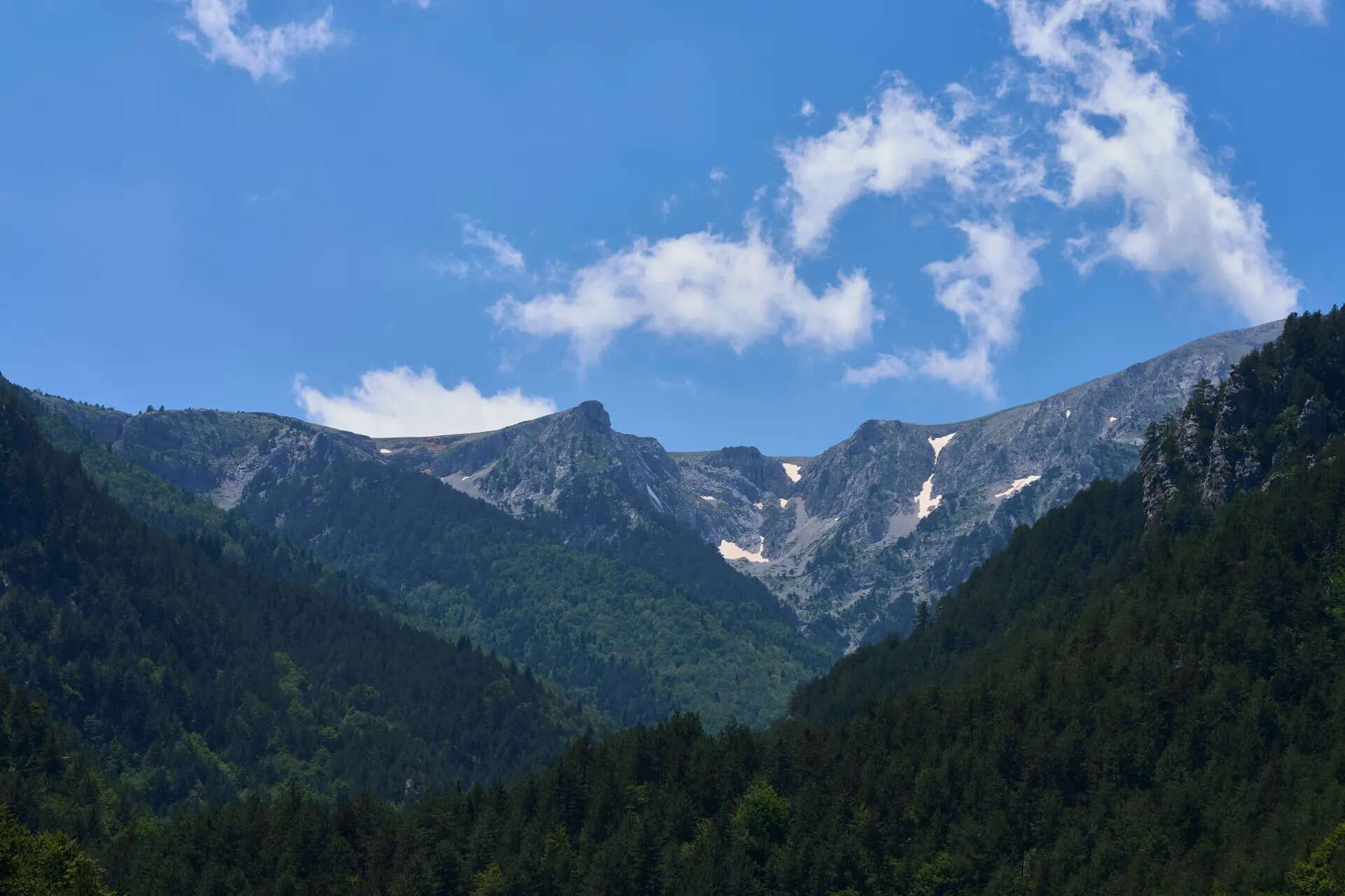
Olympus shoots straight up from near sea level to $2,918\text{ meters}$ ($9,573\text{ feet}$) at its highest peak, Mytikas. This absurdly steep vertical rise creates an ecological pressure cooker. The mountain holds over 1,700 distinct plant species, representing roughly a quarter of all flora found in Greece. More importantly, more than 20 of these species are endemic—meaning they don't exist anywhere else on Earth.
Local mountaineers and conservationists are shouting into the wind trying to protect this stuff. Babis Marinidis, president of the Litochoro Mountaineering Club, has pointed out that tourists regularly flout existing rules. They camp wherever they want, swim in sensitive mountain streams where swimming is banned, and trash the trails.
The current national park protections simply lack the bite to stop it. A UNESCO designation forces the Greek state to implement a binding, rigorous management plan. It shifts the mountain from a local park to a globally monitored zone.
What Most People Get Wrong About The UNESCO Process
Getting onto the World Heritage List isn't an automated reward for being famous. Greece started this specific journey way back in 2014 by placing the mountain on its Tentative List. It took years to compile the massive nomination dossier detailing the history, geology, and biological data of the site.
The current situation in Busan highlights exactly how strict the committee is. Early draft agendas indicate that UNESCO isn't ready to give Olympus a green light just yet. Instead, they're likely to refer the nomination back to Greece, demanding more specific evidence regarding its ecological processes and a tighter definition of its cultural impact.
Advisory bodies like the International Union for Conservation of Nature (IUCN) have even suggested expanding the nomination to include the ancient archaeological site of Dion at the base of the mountain to solidify the cultural connection. This pushback is a good thing. It proves the designation requires a bulletproof strategy for preservation, not just a marketing spin.
A Layered History of Worship
The cultural argument for Mount Olympus goes far deeper than classical Greek myths. The mountain has been an active site of human spiritual anxiety and worship for thousands of years.
- Ancient Sanctuaries: Archaeologists have dug up open-air sacrificial sites on the lower peaks dating back to the Hellenistic period. These match historical descriptions by writers like Plutarch, who detailed ancient processions climbing through the clouds to slaughter animals for Zeus.
- Orthodox Monasteries: When Christianity took over, the sacred geography shifted but didn't disappear. The peak of Prophet Elias features a stone chapel built at $2,803\text{ meters}$, making it the highest Orthodox chapel in the world. Lower down, the Enipeas Gorge contains the ruined 16th-century monastery of St. Dionysios, tucked away into the cliffs.
You can't separate the physical rock from the human belief systems that have clung to it. That's why the "mixed site" classification is so critical.
This Mountain Does Not Respect Amateurs
There's a dangerous trend of hikers treating Olympus like a casual nature walk. It's not. The weather shifts from blistering Mediterranean heat to freezing thunderstorms in a matter of minutes. The terrain is brutal, loose, and highly technical near the summits.
Just recently, a 64-year-old Greek hiker died on a trail after a collapse, and earlier rescue missions have recovered young climbers who underestimated the spring snow conditions. The mountain kills people who don't respect it. Part of the UNESCO management strategy involves improving safety infrastructure, managing climber flow, and establishing clearer, mandatory checking stations for anyone attempting the high peaks.
How To Hike Olympus Without Being Part Of The Problem
If you're planning to climb the home of the gods, you need to change your approach. Don't just show up looking for a selfie at Mytikas.
Start your journey in Litochoro, the base town where the local mountaineering clubs operate. Talk to the locals. Pay for a mountain guide if you aren't an experienced alpine hiker. Pack out every single piece of trash you generate—including organic waste like banana peels, which ruin the local soil composition. Stick strictly to the marked trails of the Enipeas Gorge, pack extreme weather gear even in mid-July, and leave the local flora completely alone. Treat the mountain like a fragile museum, because honestly, that's exactly what it is.
The final UNESCO vote will determine the administrative future of the peak, but your behavior on the trails determines its immediate survival. Respect the altitude, obey the signs, and stop treating ancient sanctuaries like public parks.