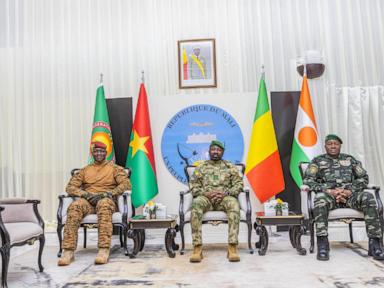
The palace guards in Niamey did not just stage a coup to secure their own promotions; they unlocked a doorway for Moscow that Western capitals spent decades trying to keep bolted. When Niger's military leadership stared down regional isolation and economic strangulation from the Economic Community of West African States, they did not look toward Paris or Washington for a lifeline. They dialed a number routing straight to private security networks operating under the Kremlin's umbrella. This shift marks a structural transformation in how authoritarian regimes survive in the twenty-first century. Security is no longer bartered for democratic reforms or institutional transparency. Instead, protection is traded directly for sovereign wealth, mineral concessions, and geopolitical positioning.
To understand why the junta in Niger survived its critical juncture, one must look past the ideological rhetoric broadcasted on state television. The survival strategy rests on a brutal calculation of transactional pragmatism. Western nations offer aid tied to governance benchmarks that military rulers cannot meet without surrendering power. Moscow offers a different package entirely. No lectures on human rights. No demands for electoral roadmaps. Just armed personnel, counter-insurgency training, and sophisticated information operations designed to neutralize domestic opposition and external threats simultaneously.
The Anatomy of the Protection Racket
Security assistance from the Russian state apparatus operates on a franchise model. It replaces traditional diplomatic engagement with commercialized militarism. When a government in the Sahel faces collapse, the response arrives via transport aircraft bearing no official insignias, carrying contractors formerly known as the Wagner Group, now repackaged under the Africa Corps banner. These units secure critical infrastructure, protect executive leadership, and suppress insurgent movements that threaten the capital.
The price tag is rarely paid in hard currency from depleted national treasuries. These cash-strapped administrations pay in subterranean assets. Gold mining rights, uranium concessions, and strategic airbases transform into the currency of survival. For foreign policy planners in Moscow, this arrangement achieves multiple objectives at minimal domestic cost. Sanctions imposed by Western economies are bypassed because the transactions rely on barter systems, precious metals, and localized supply chains that evade the global financial architecture.
Mali established the blueprint. Burkina Faso followed the template. Niger became the inevitable continuation of a regional domino effect. Each state that expels Western military advisors creates a larger vacuum, accelerating the contraction of traditional foreign influence across the Sahelian belt.
The Economic Realities Beneath the Uniforms
Military rulers inherit bankrupt states plagued by structural poverty and violent extremist insurgencies. When international donors freeze developmental assistance, the fiscal deficit widens immediately. Juntas cannot govern through ideology alone; they must pay the soldiers holding the rifles and keep basic commodities flowing into urban centers.
Western institutions demand austerity measures and structural adjustments that frequently trigger urban riots. Moscow provides an alternative economic cushion through resource extraction partnerships. Russian-backed entities secure exclusive access to high-grade raw materials. The extraction is fast, extraction sites are heavily fortified by foreign contractors, and the revenue streams bypass standard parliamentary oversight.
Uranium fields in Niger and gold deposits in Mali serve as physical collateral for regime survival. The local population sees little of this wealth. The extraction infrastructure operates behind barbed wire and heavily armed checkpoints. The bargain is explicit. The military leadership retains absolute political authority over the capital, while foreign extraction syndicates exploit the resource hinterlands with minimal regulatory interference.
+------------------------+---------------------------------------+--------------------------------------+
| Strategic Dimension    | Western Model                         | Moscow-Backed Junta Model            |
+------------------------+---------------------------------------+--------------------------------------+
| Primary Export         | Development Aid & Governance Metrics  | Private Security & Arms Supply       |
| Payment Mechanism      | Budget Support & Policy Compliance    | Mineral Concessions & Resource Rights|
| Political Condition    | Democratic Elections & Human Rights   | Regime Survival & Anti-Western Rhetoric|
| Intelligence Sharing   | Institutional Counter-Terrorism       | Direct Executive Protection          |
+------------------------+---------------------------------------+--------------------------------------+
Information Warfare as Statecraft
Physical force alone cannot sustain a military government through prolonged economic hardship. Information control forms the second pillar of the partnership. Traditional broadcasting networks from former colonial powers are routinely suspended, replaced by localized media campaigns orchestrated with external expertise.
Social media platforms across the region are saturated with narratives framing the military rulers as nationalist liberators engaged in an anti-imperialist crusade. Disinformation networks amplify grievances against historic exploitation while concealing the commercial realities of the new security agreements. Protests are organized, funded, and directed to project popular legitimacy onto regimes that seized power at gunpoint.
This information shield serves a dual purpose. Domestically, it neutralizes civil society resistance by branding dissent as foreign treason. Internationally, it creates plausible deniability, framing the expulsion of foreign diplomats and troops as a spontaneous surge of national dignity rather than a calculated geopolitical realignment.
The Regional Spillover
The consolidation of military-led states across West Africa creates a permanent fracture line on the continent. Regional bodies like ECOWAS find their enforcement mechanisms hollowed out. Economic sanctions fail because alternative trade routes open through neighboring authoritarian enclaves.
Borders in the Sahel are porous by design, tracing lines drawn by distant cartographers over a century ago. Insurgent groups exploit these fractures, moving fluidly between states regardless of who occupies the presidential palace. When one junta relies on external contractors for security, counter-terrorism operations become fragmented. Regional coordination collapses into mutual suspicion.
Neighbouring democratic or transitional states watch this model with acute anxiety. If survival requires dismantling democratic institutions and outsourcing national security to foreign mercenaries, the incentive structure for ambitious colonels across the continent shifts dangerously.
The Limits of Transactional Power
Foreign interventions built entirely on transactional security carry inherent expiration dates. Contractors answer to profit margins and strategic directives issued from thousands of miles away, not to the long-term stability of the host nation. When resource deposits are depleted or global priorities shift, external actors can withdraw as quickly as they arrived, leaving fragile institutions even more hollowed out than before.
The underlying drivers of instability—youth unemployment, climate degradation, systemic corruption, and marginalization of rural populations—remain unaddressed by rifle-toting contractors securing the perimeter of the presidential palace. Military governments have traded one form of dependency for another, swapping institutional oversight for personalized protection.
The juntas have bought themselves time. They have insulated their palaces against mutinies and regional blockades. But a fortress built on extracted wealth and outsourced protection remains vulnerable to the very dynamics that brought these officers to power in the first place.