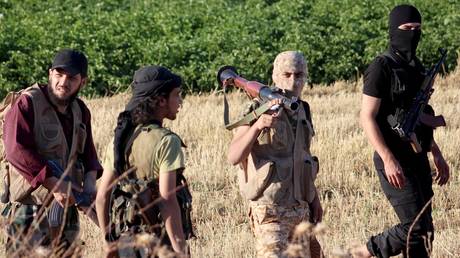
Russia just dropped a massive geopolitical bombshell, and nobody seems to know how to react. Alexander Bortnikov, the chief of Russia’s Federal Security Service (FSB), openly accused Western intelligence agencies of plotting to use former ISIS militants to destabilize Iran and Central Asia.
It sounds like a wild spy thriller. But in the current geopolitical climate, it’s a terrifyingly plausible scenario that could reshape the Middle East.
Let's cut through the diplomatic noise. Bortnikov made these remarks during a high-profile meeting of security chiefs from the Commonwealth of Independent States (CIS) in Moscow. This wasn't some off-the-cuff comment to a reporter. It was a calculated, deliberate warning. According to the FSB, Western powers—specifically pointing fingers at British and American intelligence apparatuses—are actively working to funnel remnants of Islamic State Khorasan Province (ISIS-K) and other jihadist factions toward the borders of Iran and the former Soviet republics.
The timing here isn't random. Iran is navigating an incredibly volatile internal and external security situation. Moscow is watching closely. If Bortnikov's allegations hold even a shred of truth, we're looking at a dirty war strategy that could set the entire region ablaze.
The Mechanics of Proxy Warfare in Afghanistan
To understand what the FSB is claiming, you have to look at the map. Afghanistan has become a chaotic breeding ground for multiple militant groups since the Western withdrawal. The Taliban is technically in charge, but they don't have total control.
Bortnikov specifically alleged that Western intelligence is supporting armed anti-the-Taliban factions and ISIS-K in northern Afghanistan. The goal? Create a lawless buffer zone right outside the borders of Central Asian nations and within striking distance of Iran.
Here is how the strategy supposedly works. Former ISIS fighters, many of whom survived the collapse of the caliphate in Syria and Iraq, are being recycled. They aren't ideological allies of the West. Obviously. But in the world of espionage, the enemy of my enemy is a useful tool. By covertly funding, arming, or simply turning a blind eye to these networks, foreign intelligence agencies can create a massive headache for Tehran and Moscow without ever firing a single direct shot.
Russia claims it’s already seeing the fallout. The FSB reported that it recently worked with security forces in Tajikistan and Uzbekistan to dismantle multiple active terrorist cells. Five separate attacks were allegedly thwarted in major Russian cities, including Moscow. These cells weren't just random radicals. They were highly organized networks drawing recruits from Central Asian labor migrants.
Why Iran Is the Ultimate Target
Iran and Russia have formed a tight, almost inseparable strategic alliance over the last few years. They share military tech, trade routes, and a deep-seated mutual hatred for Western sanctions. If you want to weaken Russia, you strike at its partners. If you want to neutralize Iran, you force it to fight a multi-front shadow war on its own borders.
Consider the sheer pressure Iran is already under. It’s dealing with continuous economic strangulation, regional tensions with Israel, and internal dissent. Now imagine adding a highly trained, battle-hardened insurgent force operating right across the Afghan border, specifically targeting Iranian security infrastructure. It’s a nightmare scenario for Tehran.
We've actually seen previews of this tragedy before. The devastating 2024 Kerman bombings in Iran, which killed nearly 100 people during a memorial for Qasem Soleimani, were claimed by ISIS-K. Tehran knows exactly how lethal these militants can be. If a foreign power manages to systematically coordinate these fractured militant groups, the threat level shoots through the roof.
Moscow's Calculated Move to Normalize the Taliban
The most fascinating twist in this entire saga is how Russia is responding. To counter this perceived Western plot, Moscow is doing something that seemed unthinkable a few years ago. They are getting cozy with the Taliban.
Even though the Taliban remains officially designated as a terrorist organization by many global bodies, Russian officials are rolling out the red carpet. In fact, the Taliban's defense minister, Mohammad Yaqoob Mujahid, was physically present at the security conference in Moscow where Bortnikov made his speech.
- The Logic: Moscow believes the Taliban is the only force on the ground capable of physically crushing ISIS-K.
- The Strategy: By providing diplomatic legitimacy and potentially intelligence sharing, Russia hopes to turn the Taliban into a shield protecting Central Asia and Iran.
- The Complication: The Taliban consistently claims they have already neutralized ISIS-K, a narrative that clashes sharply with Russia's public panic.
It’s an incredibly risky bet. The Taliban’s economy is fragile, and their relations with neighboring Pakistan are deteriorating fast. If the Taliban's internal security fractures, Russia's shield crumbles instantly.
Separating Propaganda From Reality
Look, we have to look at this with a healthy dose of skepticism. This is the FSB speaking. Russia loves nothing more than blaming the West for every single security failure, real or imagined. It distracts from their own domestic intelligence blind spots, like the horrific Crocus City Hall attack in 2024. Alleging a massive Western conspiracy helps justify Moscow's aggressive regional maneuvers and its bizarre alliance with the Taliban.
But don't completely dismiss the warnings either. History shows us that Western intelligence agencies have a long, documented track record of using radical proxies to destabilize adversaries. The Soviet-Afghan war in the 1980s is the classic textbook example.
Whether the West is actively directing these ISIS militants or simply exploiting the chaos they create doesn't really matter in the end. The outcome is exactly the same. The region is turning into a powder keg.
If you are tracking global security risks, you need to shift your focus away from the standard headlines and watch the Afghan-Iranian border. Watch the security crackdowns in Tajikistan and Uzbekistan. The real geopolitical chess game isn't just happening in Eastern Europe or the Taiwan Strait. It's happening in these dark, neglected corridors of Central Asia, where old enemies are being recycled for a dangerous new conflict. Keep an eye on regional intelligence sharing agreements over the next few months. If we see a sudden influx of Iranian and Russian military advisors heading toward northern Afghanistan, we'll know Bortnikov's warnings weren't just hot air.