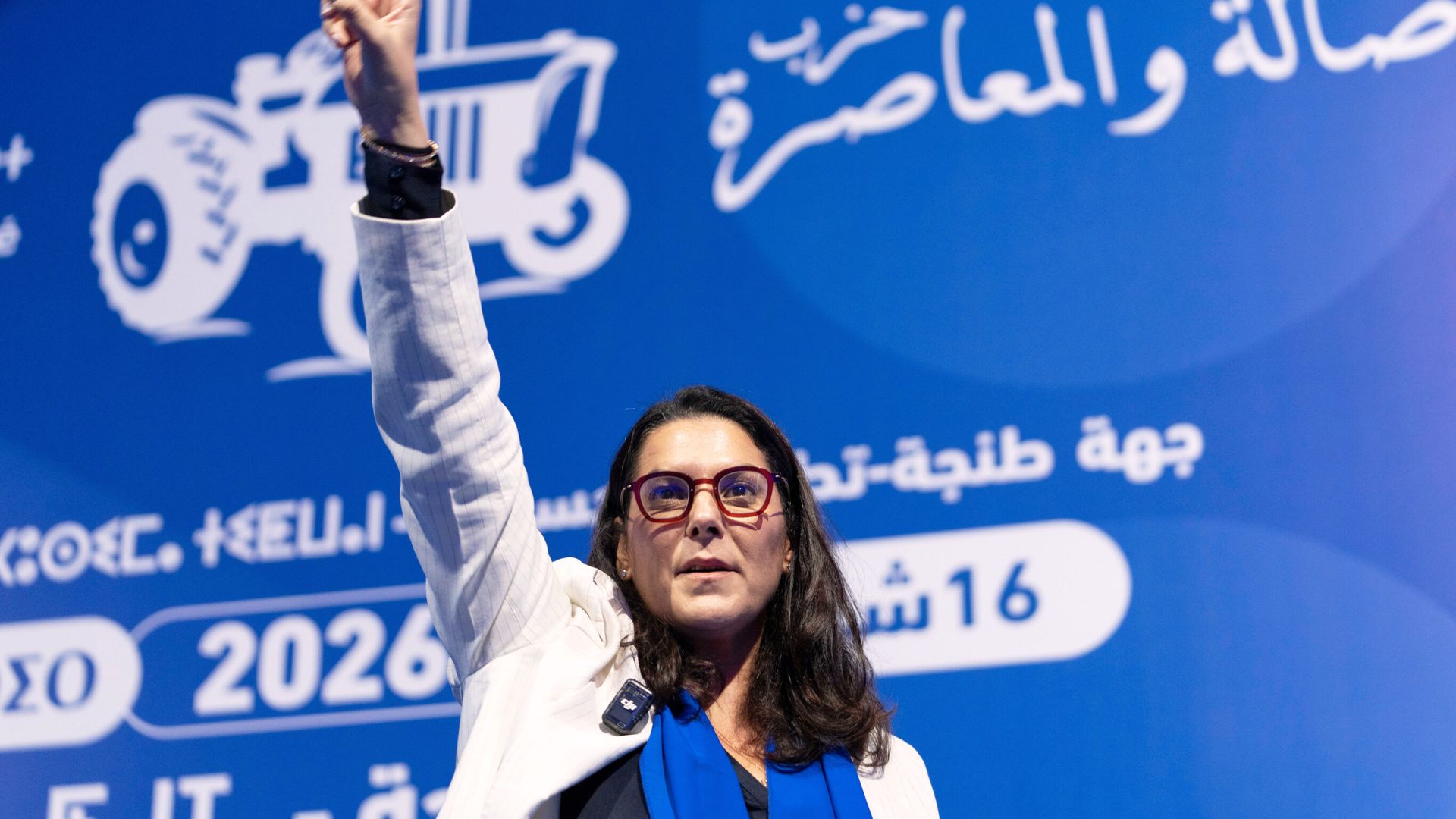
The headlines write themselves. Morocco has appointed its first female prime minister following a sweeping parliamentary election, shattering a political ceiling that has stood since the kingdom gained independence in 1956. While global observers celebrate the milestone as a triumph for gender representation in North Africa, the reality inside Rabat tells a much more complicated story. Beneath the historic appointment lies a grueling set of economic pressures, a constitutional framework where ultimate executive authority rests with the monarchy, and a public demanding immediate relief from inflation and youth unemployment.
History makes for great television. Governance does not.
To understand what this appointment actually means for the 37 million people living between the Atlas Mountains and the Atlantic coast, you have to look past the ceremonial handshakes at the Royal Palace. The new head of government inherits a state caught between ambitious modernization goals and stubborn structural bottlenecks. She is stepping into the ring at a moment when the margin for error is virtually zero.
How the Palace and the Parliament Actually Share Power
Anyone covering North African politics for more than a decade learns one rule early. Never confuse a prime minister in Rabat with a prime minister in London or Madrid.
Under Morocco’s 2011 Constitution, drafted in the heat of the regional uprisings, the king is required to appoint the head of government from the political party that wins the most seats in the House of Representatives. That rule gave the recent election its democratic weight. Voters went to the polls, delivered a decisive mandate, and triggered the constitutional mechanism that placed a woman at the head of the cabinet.
Yet the constitution also draws a sharp line around where her authority begins and ends. King Mohammed VI retains sweeping executive powers. He chairs the Council of Ministers, where strategic policies, military appointments, and major state orientations are decided. He commands the armed forces, directs foreign policy, and holds the title of Commander of the Faithful, giving him supreme religious authority alongside his political mandate.
The prime minister, by contrast, chairs the Government Council. Her domain is the day-to-day administration of the state. She manages the ministries, drafts the annual finance bill, oversees public spending, and takes the heat when fuel prices spike or hospital beds run short. In practice, the palace sets the twenty-year vision, and the prime minister is tasked with figuring out how to pay for it without sparking street protests.
This division of labor creates a unique political hazard. When megaprojects succeed—like the high-speed rail line connecting Tangier and Casablanca or the massive solar complexes in Ouarzazate—credit naturally flows upward toward the throne. When bureaucratic delays stall a local clinic or drought devastates the agricultural sector, the blame lands squarely on the head of government.
The Architecture of a Coalition
Winning the most seats in Morocco rarely means governing alone. The country’s proportional representation system is designed to prevent any single party from achieving total dominance, forcing the prime minister to assemble a multi-party coalition before a single law can be passed.
Building that coalition requires weeks of closed-door horse-trading. Cabinet portfolios must be divided among rival party leaders who spent the campaign trail attacking one another's records. The new prime minister will have to keep ideological bedfellows aligned while enforcing discipline across ministries that often operate like independent fiefdoms. If a junior coalition partner threatens to walk out over a controversial pension reform or tax hike, the entire legislative agenda grinds to a halt.
Why Voters Broke the Mold Now
The election result did not happen in a vacuum. For years, Morocco has quietly engineered a top-down expansion of women’s political participation through strict legislative gender quotas. National lists reserved seats specifically for women, ensuring a baseline presence in parliament and municipal councils. Critics once dismissed those quotas as window dressing, arguing they produced female lawmakers who remained loyal to male party bosses rather than independent power brokers.
Over two decades, however, the pipeline matured. Women moved from reserved seats into cabinet ministries, taking over complex portfolios like economy and finance, energy transition, and housing. By the time voters cast their ballots in this cycle, the idea of a woman running the government no longer felt like an abstract experiment. It felt like the logical next step for an electorate tired of the same rotating cast of veteran male politicians.
Turnout data and post-election surveys tell a clear story. Voters were not primarily casting ballots to make a feminist statement for international applause. They were voting out of frustration with the status quo.
Consider the economic backdrop leading up to election day:
- Persistent Drought: Six consecutive years of severe water scarcity have hammered the agricultural sector, which still employs roughly a third of the Moroccan workforce.
- Cost of Living: Global supply chain shocks and subsidy reforms drove up the price of basic staples, squeezing middle-class households in Casablanca, Rabat, and Marrakech.
- Youth Unemployment: Despite booming automotive and aerospace export zones in the north, urban youth unemployment remains stubbornly high, fueling resentment among university graduates.
Voters looked at the traditional political establishment and saw fatigue. Backing a slate led by a technocratic, results-oriented female leader offered a break from the past without risking the institutional stability Moroccans fiercely protect.
The Three Crises Waiting on Her Desk
The honeymoon will last roughly until the first cabinet meeting ends. Once the celebratory cables from foreign capitals are filed away, the new prime minister faces three immediate structural tests that will define her tenure.
1. The Water Emergency
Forget oil or gas. Water is the single greatest threat to Morocco’s social and economic stability. Reservoir levels across the kingdom have dropped to critical lows in recent years, forcing authorities to ration irrigation water and ban car washes and hammams on certain days in major cities.
The government has bet billions of dollars on an ambitious desalination program, building massive plants along the Atlantic coast to supply drinking water to Casablanca and irrigate commercial farms in the south. Desalination works, but it is expensive and energy-intensive. The new prime minister must accelerate construction timelines while managing the fiscal impact on the state budget, all while praying for rain to save small-scale farmers who cannot afford desalinated water.
2. Fixing the Social State Without Breaking the Bank
Morocco is in the middle of its most ambitious social welfare overhaul since independence. The state is rolling out universal health insurance and direct cash transfers to millions of low-income families, replacing an outdated system of universal price subsidies that disproportionately benefited wealthier citizens who consumed more fuel and gas.
On paper, targeted cash transfers are far more efficient. In reality, rolling out a biometric registry and verifying household incomes across remote villages in the Rif and Atlas mountains is an administrative nightmare. Complaints over flawed eligibility scoring have already triggered local frustration. Meanwhile, public hospitals lack enough doctors and nurses to meet the sudden surge in insured patients. Thousands of Moroccan medical graduates leave for France, Germany, and Canada every year because domestic salaries and working conditions cannot compete. You cannot legislate a functioning healthcare system into existence if the staff is boarding flights at Mohammed V Airport.
3. The 2030 World Cup Pressure Cooker
Co-hosting the 2030 FIFA World Cup alongside Spain and Portugal is a massive diplomatic victory for Rabat. It is also an unforgiving deadline.
Stadiums must be built or renovated. High-speed rail lines must be extended south toward Marrakech and Agadir. Airport capacity must double, and urban transit networks need urgent upgrades. International investors love the infrastructure boom, and construction companies are thriving. Yet ordinary citizens are already asking a sharp question: why is there limitless money for world-class stadiums when rural schools lack basic heating and public transit in working-class neighborhoods remains overcrowded?
If the new prime minister fails to balance World Cup spending with visible improvements in everyday public services, she will hand populist critics a devastating political weapon.
What Critics Get Wrong About Representation
Whenever a country in the Middle East or North Africa achieves a milestone like this, Western commentary tends to split into two predictable camps.
The first camp treats the appointment as an instant cure-all. They assume that simply placing a woman in the prime minister’s office will automatically dismantle patriarchal structures, rewrite family law overnight, and transform gender equality across society. That view ignores how deeply entrenched bureaucratic resistance can be. A prime minister does not wave a wand and change judicial attitudes in regional courts or hiring practices in family-owned conglomerates.
The second camp goes to the opposite extreme, dismissing the victory entirely as a cynical public relations exercise designed to polish Morocco’s image abroad while real power stays locked inside the palace. That view is equally lazy. It erases decades of relentless organizing by Moroccan women’s rights groups, female union leaders, and local councilors who fought tooth and nail for every inch of institutional space they now occupy.
Both perspectives miss the real significance of the moment.
Representation is not a magic wand, nor is it an empty illusion. It is leverage. Having a woman chair the Government Council changes which issues get prioritized during budget negotiations. It alters the dynamics in rooms where infrastructure contracts, education reforms, and labor laws are drafted. When the person signing off on ministerial budgets understands firsthand how a lack of safe public transit or affordable childcare keeps half the population out of the formal economy, policy outcomes begin to shift.
The Moudawana Test
The sharpest test of that leverage will come over the ongoing reform of the Moudawana, Morocco’s family code. Originally overhauled in 2004 in a landmark victory for women’s rights, the code governs marriage, divorce, child custody, and inheritance. Two decades later, glaring loopholes remain—particularly regarding underage marriage waivers, unequal inheritance rules, and financial protections for divorced mothers.
Reforming the family code is political dynamite. Conservative factions and traditionalists view any changes to inheritance or marriage rules as an assault on religious norms, while progressive activists demand full legal equality. The king has already initiated a review process involving religious scholars, judicial officials, and human rights councils, but the parliament and the government must translate those recommendations into enforceable law. Navigating that minefield without fracturing her coalition will require every ounce of political skill the new prime minister possesses.
The Burden of the Glass Cliff
Corporate researchers have a term for what happens when women are finally elevated to top leadership roles during periods of severe crisis: the glass cliff. When things are booming, the old guard rarely steps aside. When the economy is battered by drought, inflation, and soaring public expectations, the door suddenly opens.
Morocco’s first female prime minister is standing squarely on that cliff.
If she succeeds in stabilizing food prices, keeping the welfare rollout on track, and delivering infrastructure projects on budget, she will permanently rewrite the rules of Moroccan politics. She will prove that executive competence has no gender and open the door for a generation of women across the region to claim top office on merit rather than quotas.
If she stumbles under the weight of global economic headwinds or coalition infighting, detractors will not blame external shocks or structural limits on her office. They will blame her gender, using one difficult term to argue that the experiment failed.
She has the title, the constitutional mandate, and the eyes of the world watching her every move. Now she has to survive the job.